
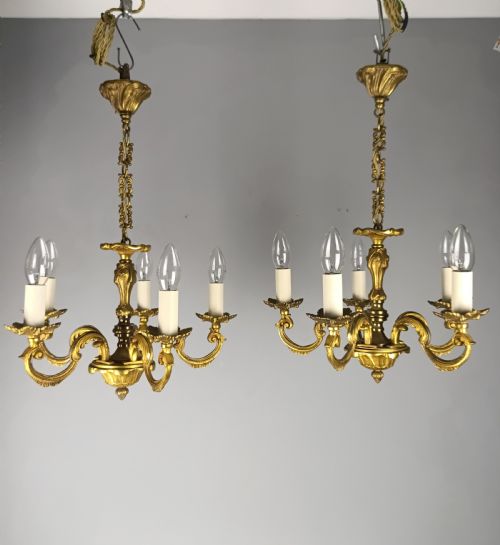


Traditional Ceiling Light Pair
A traditional ceiling light pair brings balanced illumination and period character to a grand room, spanning heavy bronze fixtures to delicate crystal designs.
Traditional Ceiling Light Pair
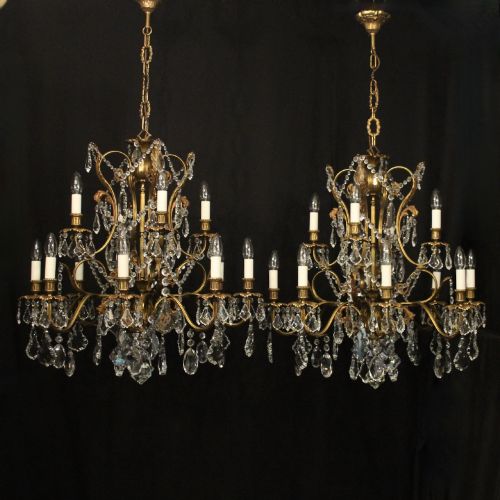
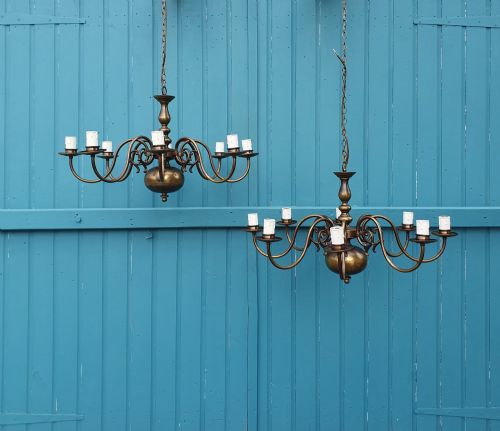
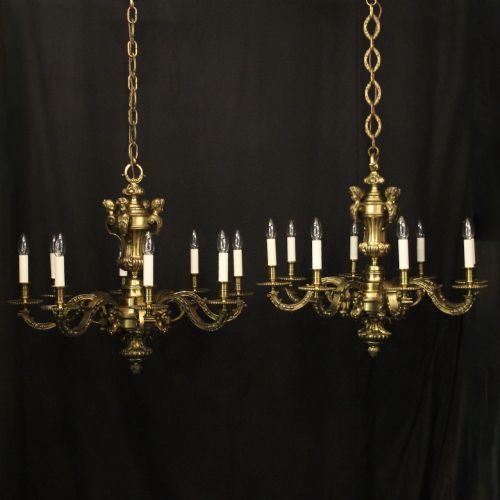
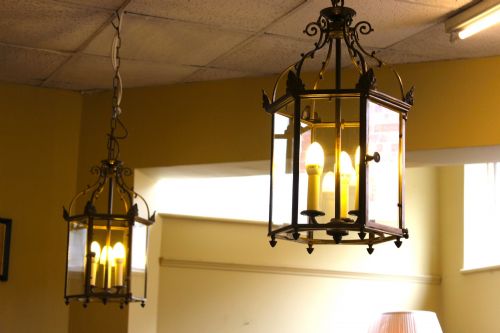
A traditional ceiling light pair comprises matched hanging light fixtures designed to illuminate larger spaces with symmetry and presence. When searching for a traditional ceiling light pair, buyers encounter multi-arm chandeliers, hexagonal brass lanterns, and coaching lanterns originating from the nineteenth and early twentieth centuries.
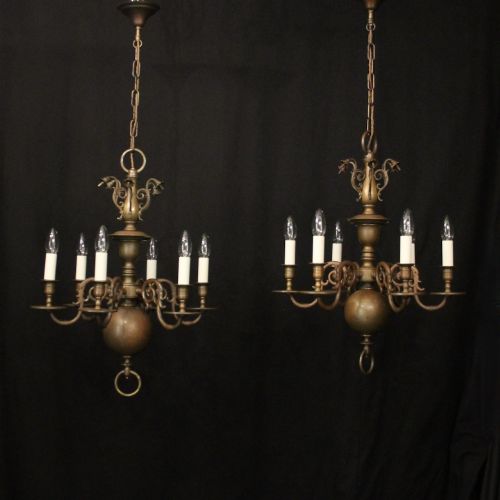
The selections available here lean heavily into Edwardian taste alongside French Rococo, Flemish Renaissance, and English Country House aesthetics. Most examples deploy multiple candle-style arms or enclosed glass panels designed to distribute warm light evenly across high ceilings.
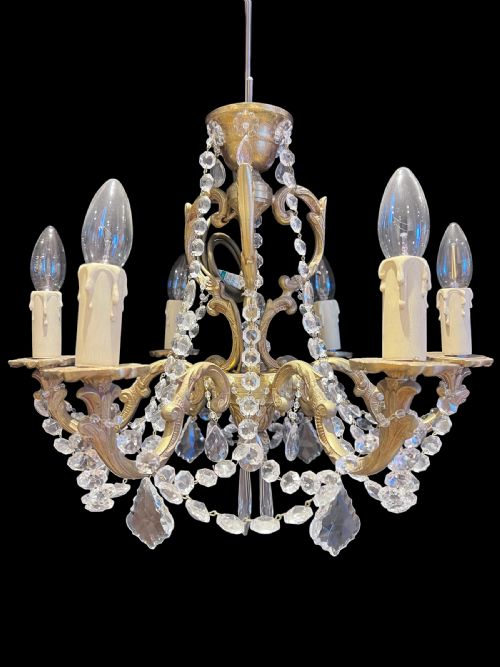
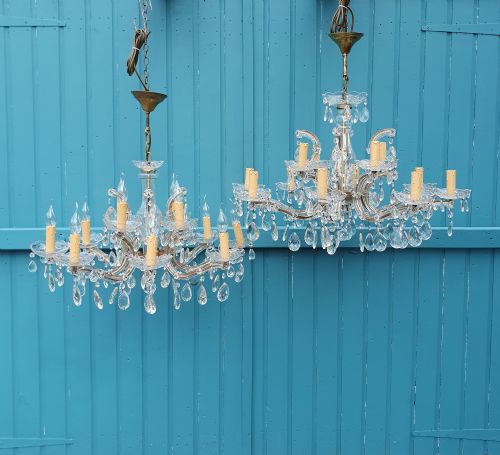
Maroons of brass, bronze, and gilt metal dominate the forms, frequently dressed with crystal drops or lead crystal prisms. Buyers find everything from intimate five-light configurations up to sprawling twelve-light arrangements and massive ballroom centrepieces.
Materials and construction
Foundry work forms the backbone of these fixtures, utilising cast bronze, solid brass, and gilded or gilt brass to build rigid structural frames. Metal components are shaped into scrolled arms, decorative bands, and lantern housings designed to bear the weight of heavy glass elements.
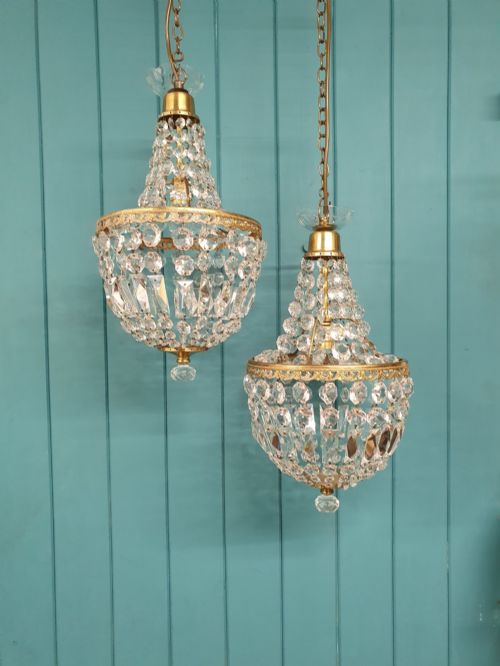
Glass and crystal integration defines the visual impact, employing cut lead crystal drops, waterfall beads, and clear glass panels secured within metal framing. Artisans wired these frames carefully, combining metal casting, hand-cut glass, and surface gilding to achieve lasting structural integrity.
Object forms include grand multi-arm chandeliers, hexagonal brass lanterns, and functional coaching lanterns designed for high ceilings.
Quality factors in period lighting
Distinctions in quality arise from the crispness of the metal casting and the depth of the hand-finishing on bronze and brass surfaces. Finer pieces demonstrate intricate chased detail across the arms and mounts, whereas simpler examples rely on basic turned or stamped components.
The clarity and weight of the crystal drops dictate upper tiers of craftsmanship, alongside the structural rigidity of the multi-arm frame. Superior pairs maintain absolute symmetry between the two fixtures, ensuring that candle-pans, drip trays, and suspension loops align perfectly.
The Traditional Ceiling Light Pair Glossary
- Chandelier
- A branched ornamental light fixture suspended from the ceiling. These multi-arm designs hold numerous light sources.
- Gilt Brass
- Brass treated with a thin layer of gold or gold-like alloy. This technique provides a rich metallic lustre.
- Lead Crystal
- Glass containing lead oxide to increase brilliance and weight. It refracts light sharply through cut facets.
- Tent and Waterfall
- A lighting style featuring upper strings of beads forming a tent shape above a cascading waterfall of crystals. This configuration maximises light reflection.
- Hexagonal Lantern
- A six-sided hanging light enclosure featuring glass panes. It protects the interior light source from drafts.
Traditional Ceiling Light Pair: Frequently Asked Questions
How do I hang a heavy pair?
Heavy bronze and crystal fixtures require secure ceiling joist reinforcement to support their considerable weight safely. Professional installation is essential to handle the structural load and complex wiring of multi-arm period lights.
Matching fixtures must be hung at identical heights to maintain proper visual balance within a room. Consideration should be given to clearance below the lowest crystal drop for walking traffic.
What rooms suit these pairs?
Large reception rooms, formal dining spaces, and high-ceilinged entrance halls provide ideal settings for substantial multi-arm chandeliers. Their symmetrical distribution creates a strong visual anchor in expansive residential interiors.
Smaller lanterns and compact five-light fixtures work effectively in hallways, landings, or high-ceilinged bedrooms. The key is matching the fixture scale and light output to the proportions of the space.
How do I date these lights?
Dating relies on examining metal casting techniques, mounting hardware, and the style of the glass components. Edwardian and early twentieth-century pieces often combine traditional foundry work with early electrical adaptations.
Nineteenth-century examples display heavier bronze construction and hand-cut lead crystal with distinct patination. Comparing the screw threads, wiring channels, and decorative motifs helps establish the period of manufacture.
Can modern bulbs be used?
Most period fixtures accept standard contemporary LED candle bulbs designed to replicate traditional flame shapes. Selecting the right colour temperature ensures the light flatters the brass and crystal materials properly.
Rewiring is often carried out to meet current electrical standards while retaining the original sockets and candle sleeves. Consulting a specialist ensures safe operation without altering the historic character of the fixtures.