
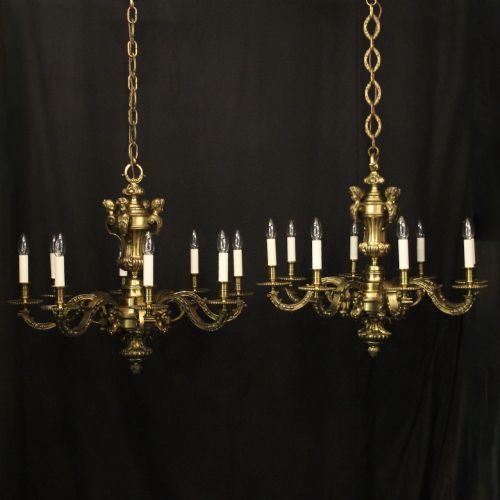
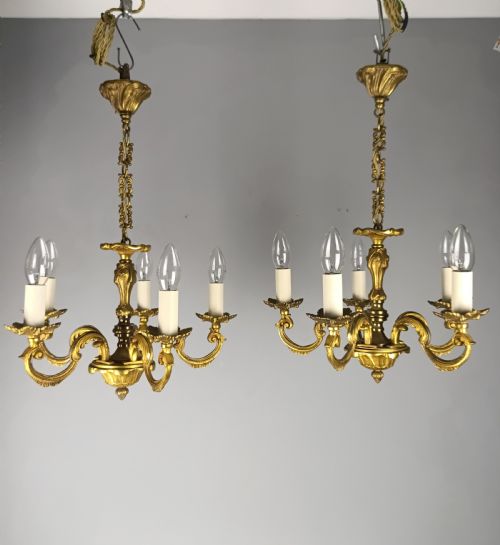


Pair Brass Ceiling Fittings
Pair brass ceiling fittings are dual overhead fixtures designed to illuminate grand spaces with period elegance and proportion.
Pair Brass Ceiling Fittings
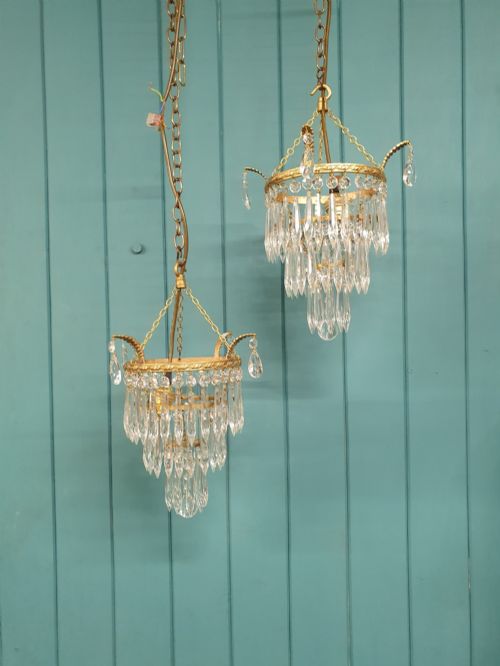
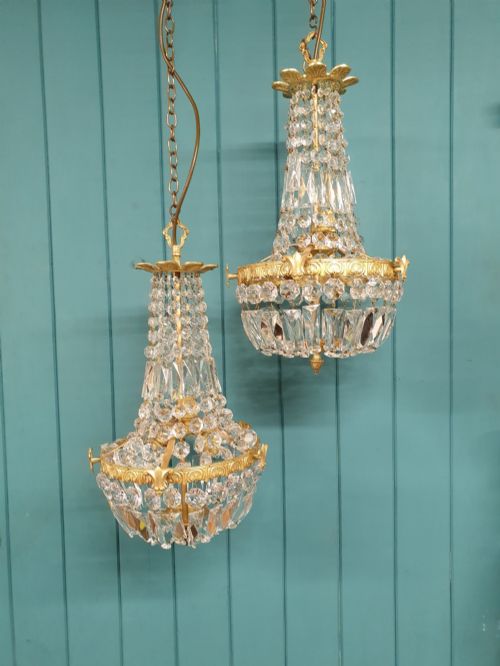
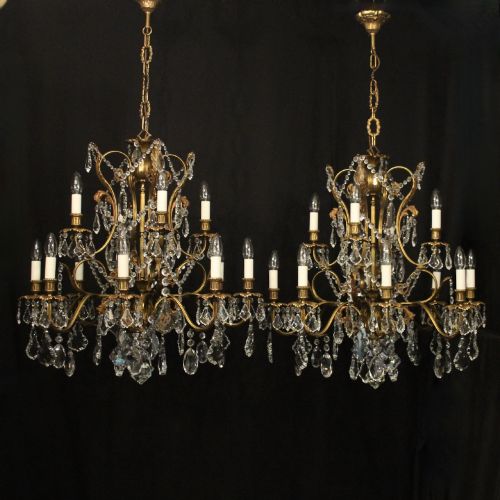
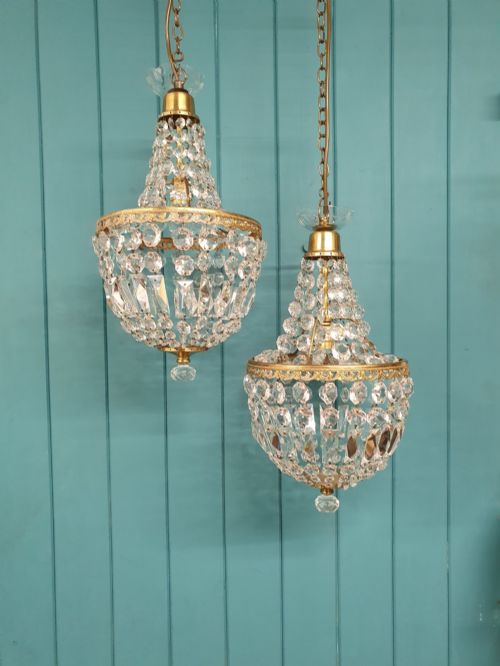
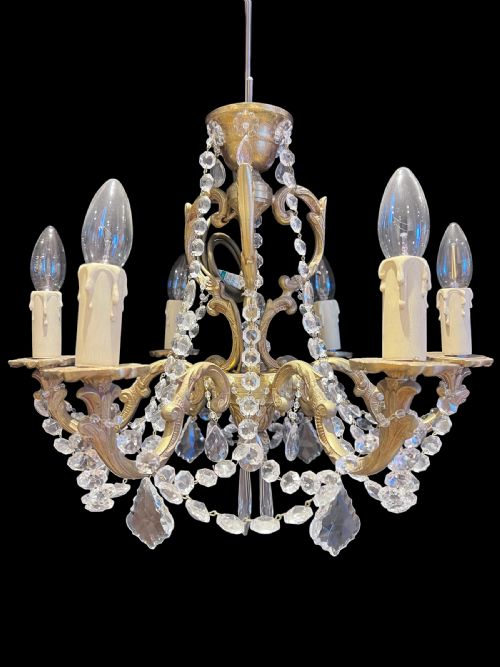
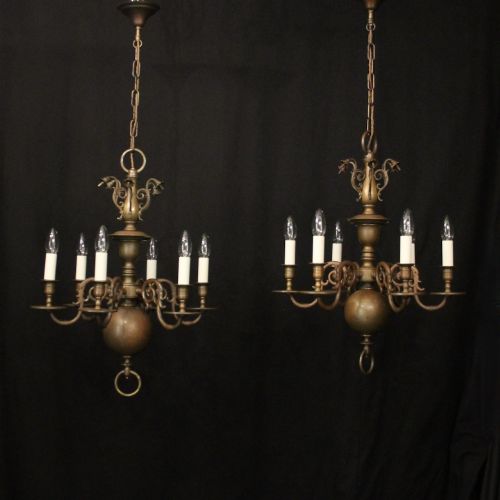
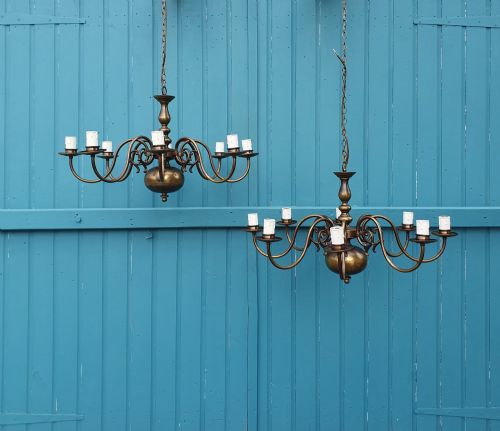
When you search for pair brass ceiling fittings, you are looking at matched dual overhead luminaires designed to balance large rooms and formal hallways. These objects emerge primarily as chandeliers, pendant lights, and ceiling lights originating from the nineteenth century through the interwar decades.
The selections span distinct stylistic traditions including French Chateau, French Empire, French Rococo, Art Deco, Flemish Renaissance, Dutch Baroque, French Neoclassical, and Edwardian Industrial. Buyers encounter formats ranging from substantial multi-light chandeliers down to compact pendant lights and hall lights with glass shades.
Examples date from the 19th Century, Edwardian era, 1900, 1910, 1920, and 1930. The most frequent discoveries on this page are matched pairs of twentieth-century French chandeliers and pendant lights utilising brass, bronze, and glass.
Materials and construction
The primary structural metal is brass, frequently accompanied by bronze, gilt brass, and gilded bronze or ormolu. Workshops shaped these metals into complex armatures, birdcage frames, and tent and waterfall configurations to support illumination.
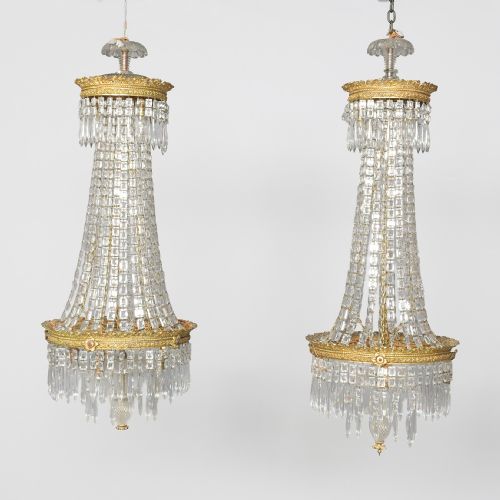
Glass and crystal elements form an essential part of the construction, featuring cut crystal, crystal glass, mercury mirrored glass, smoked glass, and moulded glass shades. These transparent and reflective components were assembled by hand to refract light across the room.
Some Edwardian hall lights arrive with frilly glass shades that somehow survived a century of accidental bumps and housekeeping.
Judging the standard of manufacture
Quality rests in the precision of the metal casting and the clarity of the crystal or glass elements. Finer examples display crisp chasing on the bronze or brass frames and heavy, well-cut crystal drops that catch the light cleanly.
The integrity of the structural design separates superior pieces from simpler utilitarian production. Robust armatures and secure fixings ensure that large multi-light fixtures hang true and support their substantial weight safely.
The Pair Brass Ceiling Fittings Glossary
- Ormolu
- Gilded bronze used for decorative mounts and framing on high-status lighting fixtures. It provides a rich, warm metallic finish that does not tarnish easily.
- Birdcage
- A rounded framework style enclosing the central shaft of a chandelier, resembling an aviary. This form is common in French lighting design from the early twentieth century.
- Tent and waterfall
- A configuration where strands of crystal beads form an upper conical tent shape above a cascading lower fall of drops. This design creates a layered prismatic effect.
- Holophane
- A brand of prismatic glass designed to direct and diffuse light efficiently while reducing glare. These industrial shades are prized for their optical performance and ribbed texture.
- Spike chandelier
- A compact style featuring a central vertical spike or drop element, often seen in smaller early twentieth-century formats.
Pair Brass Ceiling Fittings: Frequently Asked Questions
How do I hang a heavy pair?
Heavy fixtures require direct anchorage into ceiling joists or the use of substantial steel backing plates. Professional electrical installation is essential to bear the total weight safely.
Ensuring the structural support matches the combined mass of both fittings prevents any movement or strain on the plasterwork.
Can these be rewired for modern bulbs?
Most antique fixtures accept modern wiring and standard lamp holders installed by a qualified professional. Rewiring preserves the historical metalwork while meeting current safety standards.
Standard modern bulbs or dimmable LED alternatives fit neatly into historical sockets without altering the visible exterior appearance.
How do I clean crystal drops?
Cleaning requires removing individual crystal elements or wiping them carefully in situ using a mild soapy solution and a soft cloth. Rinsing with clear water prevents any residue from dulling the facets.
Keeping the brass framework dry during this process protects any historical patination or delicate gilding from damage.
Are matched pairs rare?
Finding two identical overhead fixtures that survived together in original condition is uncommon because lighting is frequently altered or separated during interior renovations. Surviving pairs offer symmetry that single fixtures cannot provide.
Matching proportions and patination confirm that the two pieces belong to the same historical context.