
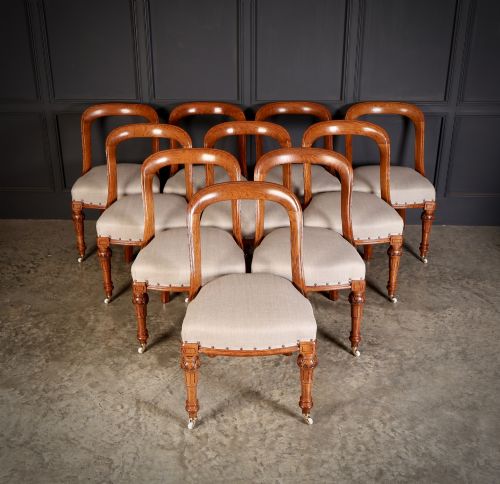
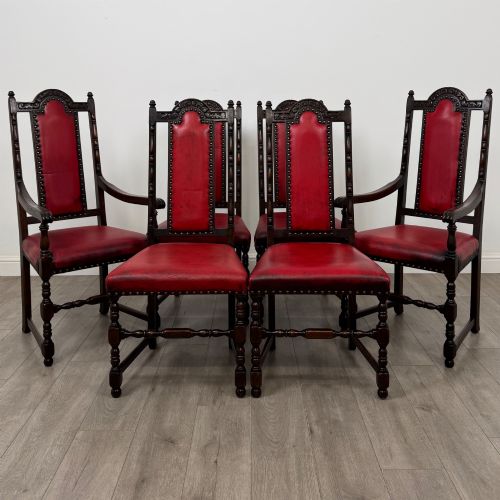
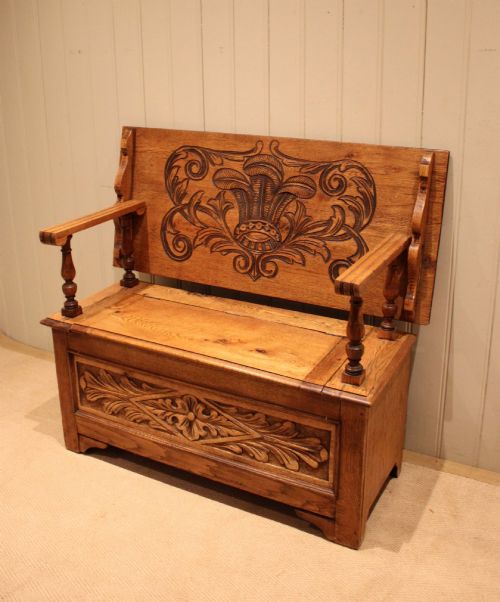
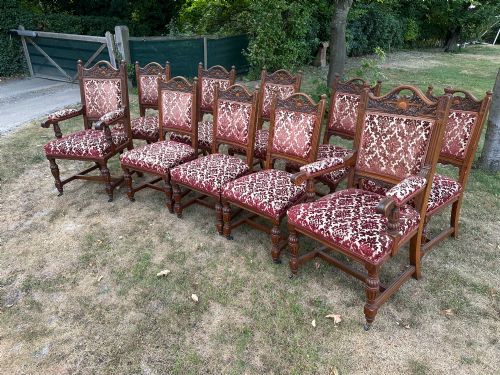
Traditional Carved Oak Chair
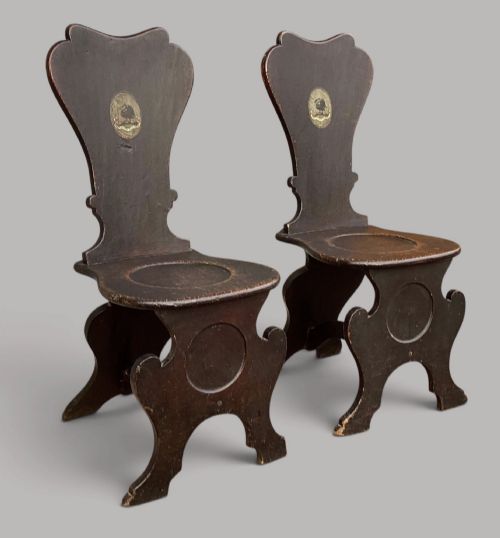
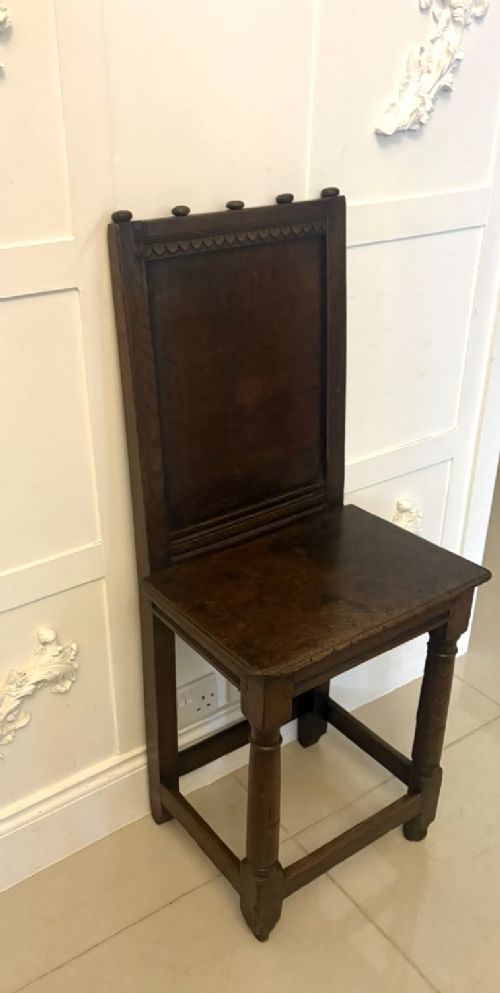
A traditional carved oak chair brings heavy timber, turned spindles and panelled backs straight into a modern room.
Traditional Carved Oak Chair
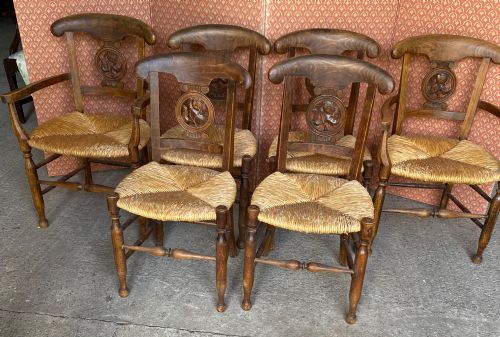
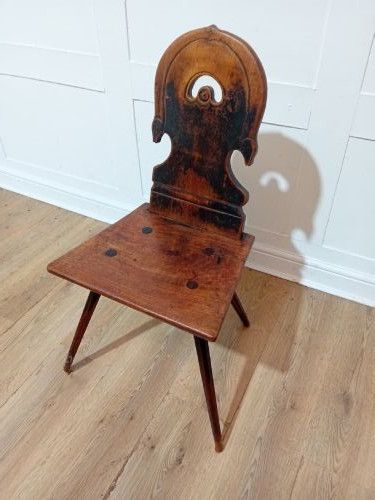
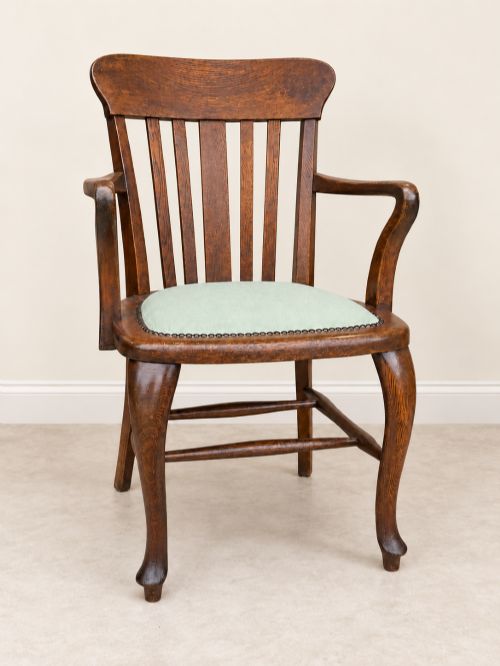
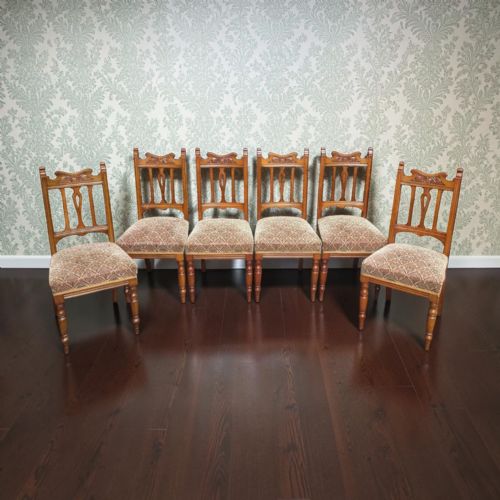
A traditional carved oak chair spans centuries of domestic seating, from early wainscot and panel-backed designs to Victorian and Edwardian revival styles. Buyers search for these pieces to anchor a dining room, hallway or study with durable timber furniture holding deep historical character.
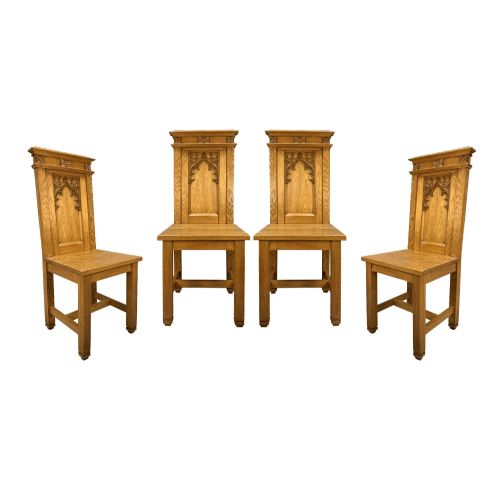
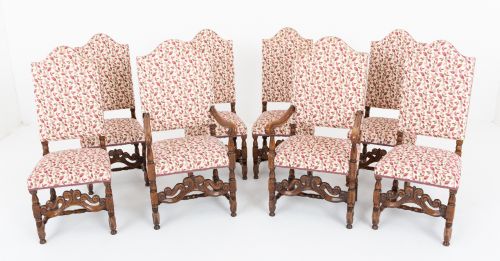
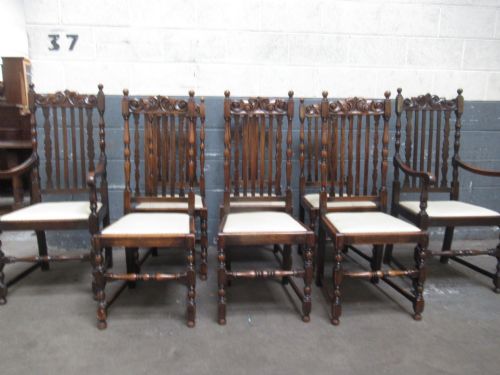
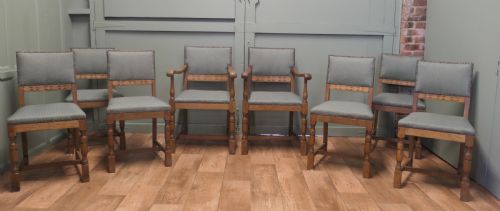
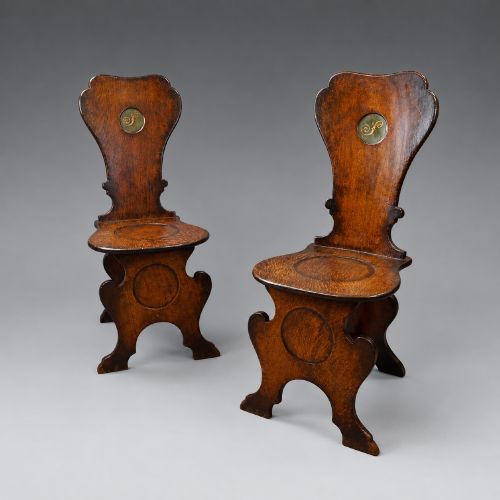
The versions met most often on this page include sturdy dining sets from the Victorian and Edwardian eras, alongside singular carvers, hall seats and farmhouse rocking chairs. Oak forms the principal structure across these examples, occasionally paired with elm or beech components.
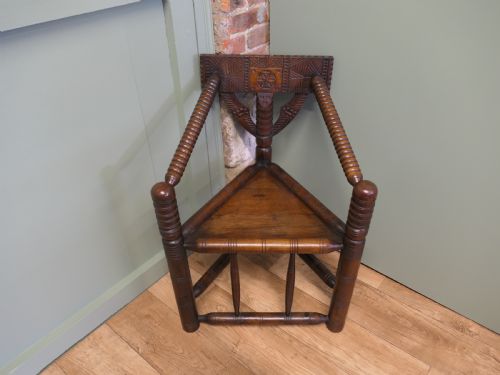
Originating largely from English, Scottish and regional workshops, these chairs display vernacular traditions such as bobbin turning, barley twists and flat relief carving. The forms range from simple side chairs to high-backed wainscot armchairs built for domestic warmth.
How they were made
Joiners and cabinet makers constructed these frames predominantly from solid oak, utilising traditional mortise and tenon joints secured with wooden pegs. Secondary timbers like elm and beech appear in vernacular seating such as Windsor and stick-back chairs.
Surface ornamentation relied on hand tool work, including gouge carving, chip carving and geometric punchwork applied directly to the timber. Turning lathes shaped components into bobbin, barley twist and baluster spindles for legs and stretchers.
Upholstery materials evolved from bare timber boards and squab cushions to integrated pads finished in leather, fabric, velvet or woven bergere cane. Brass tacks and webbing fastened these textile additions to the structural frames.
Listings span multiple centuries, ranging from 17th-century wainscot pieces to Edwardian dining sets and 1930s garden room armchairs.
What varies in quality
The distinction between standard utility seating and superior examples lies in the depth and crispness of the hand carving, alongside the selection of figured quarter-sawn oak. Well-defined relief work and balanced proportions indicate a maker working with greater skill and intention.
Structural integrity depends on the retention of original pegged joints and the minimisation of replacement timber in high-stress areas like legs and arm supports. Chairs retaining their original patination and uncompromised joinery command higher regard among collectors.
The Traditional Carved Oak Chair Glossary
- Wainscot armchair
- A heavy wooden armchair dating from the 17th century or earlier, constructed with panelled backs and solid armrests. These pieces derived their name from wainscot oak boards imported for fine panelling.
- Bobbin turning
- A method of lathe-turning timber into a series of rounded, spool-like shapes resembling bobbins of thread. This decorative turning technique appears frequently on 17th and 19th-century chairs.
- Bergere
- A closed upholstered armchair featuring woven cane panels on the back and sides. This French-influenced style gained popularity in various revival periods using oak frames.
- Smoker's bow
- A low-backed Windsor armchair featuring a rounded continuous arm rail supported by turned spindles. These country chairs were common in British inns and rural homes.
- Draw leaf table
- A dining table fitted with pull-out extension leaves stored beneath the main top. They frequently accompany matching sets of oak chairs in domestic listings.
Traditional Carved Oak Chair: Frequently Asked Questions
How do I date an oak chair?
Dating relies on examining construction methods, tool marks and timber preparation techniques visible on the underside and frame joints. Hand-riven boards, pegged mortises and specific turning styles point toward distinct periods like the 17th century or later Victorian revivals.
Stylistic cues such as Jacobean strapwork or Arts and Crafts simplicity further narrow the timeframe. Comparing the joinery against documented examples helps distinguish period originals from later revival pieces.
Are oak chairs comfortable for daily use?
Many traditional oak chairs were built with solid wooden seats designed for durability rather than soft lounging. Adding loose squab cushions or selecting upholstered variants provides extra comfort for modern dining or desk work.
Chairs with supportive raked backs and adequate seat heights function well in daily settings. Proper ergonomic matching to your table ensures a comfortable seating experience.
How should I care for antique oak?
Maintain antique oak by applying a traditional beeswax polish occasionally to nourish the dry timber and preserve the historic patina. Avoid placing wooden furniture near direct heat sources or in fluctuating humidity to prevent splitting.
Dust the carved recesses regularly with a soft dry brush to prevent dirt accumulation. Gentle cleaning preserves the surface finish without stripping away centuries of accumulated character.
What is the difference between a side chair and an armchair?
Side chairs are built without armrests, designed primarily to tuck neatly around dining tables or line a hallway. Armchairs feature structural arm supports, offering a more commanding presence suited for desk work or head-of-table placement.
Both forms share matching stylistic details when produced as part of a larger dining set. Scale and intended room placement usually dictate which type to select.