



Traditional Canine Oil Painting
A traditional canine oil painting captures the distinct character and spirit of dogs through enduring brushwork.
Traditional Canine Oil Painting
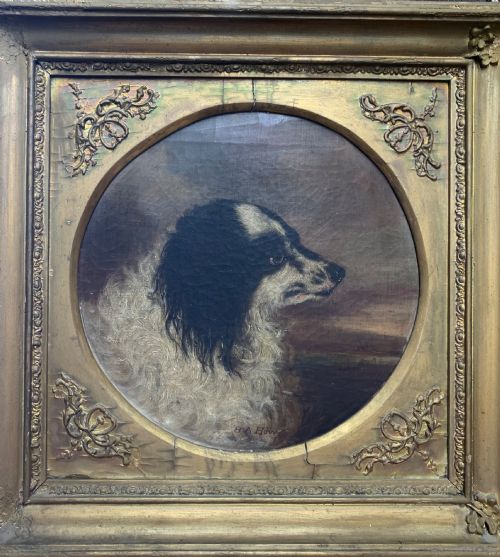
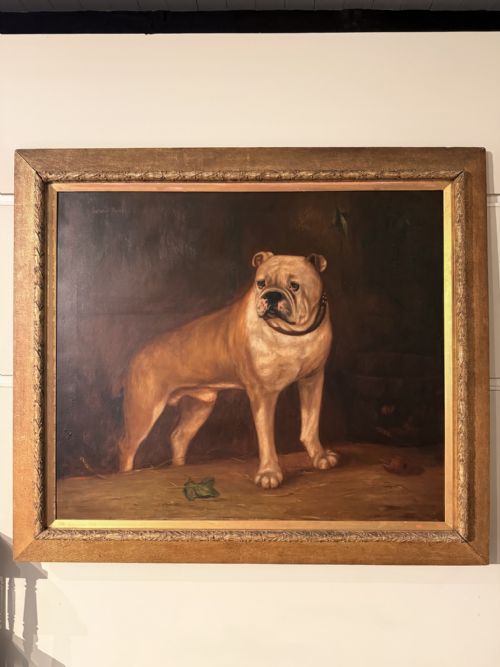
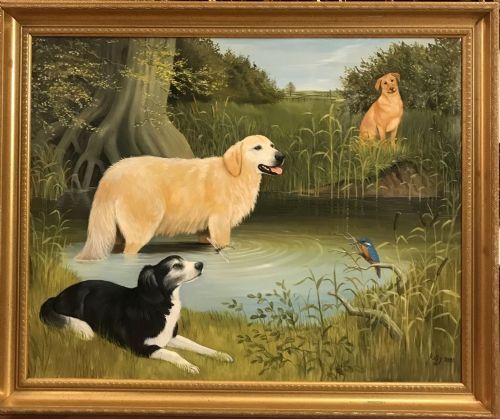
A traditional canine oil painting portrays dogs in various settings, ranging from intimate head studies to expansive sporting scenes in landscapes. These works record prized greyhounds, gun dogs, terriers, and spaniels with individual personality.
The pieces encountered most frequently on this page originate in the nineteenth century, including Victorian fine art and sporting art. Later examples extend through the interwar period and mid-century realism.
Subjects include named champions, working dogs with their day's bag, and beloved family pets posed in interiors or walled gardens. Some canvases follow established masters such as Landseer or John Sargent Noble.
How traditional canine oil painting works were made
Artists built these works using oil paint applied to canvas, wood panels, or board supports. Canvases were stretched over wooden frames, providing a flexible ground for layered brushwork.
Many works feature original or period-appropriate gilt and giltwood frames that complement the rich tones of the oil paint. Pigments were carefully blended to capture the texture of fur, expression in the eyes, and natural light within landscapes or interiors.
Featured styles include Victorian realisms, British sporting art, and mid-century realism.
What varies in quality
Quality rests upon the artist's command of anatomy, proportion, and the living expression of the animal. Finer hands capture the intelligence and stance of a specific breed with assured, confident brushwork.
The depth of the surrounding composition distinguishes exceptional works from simpler records, as master painters integrate the animal successfully into a coherent landscape, interior, or garden setting.
B A Howe·John Sargent Noble·LM Webb·C W Tuck·William Barraud·Colin Graeme Roe·M E Hankinson·John Emms·Valentine Thomas Garland·James Ward·Charles Bilger Spalding·Samuel John Carter·William Albert Clark
The Traditional Canine Oil Painting Glossary
- Oil on canvas
- A painting medium where pigments bound in drying oil are applied to a woven fabric stretched across a wooden frame. This combination allows for rich blending and subtle shifts in tone.
- Giltwood
- Wood carved and covered with a thin layer of gold leaf or metallic gilt powder. It is commonly found on antique picture frames housing these portraits.
- Sporting art
- Genre of painting that depicts rural pursuits, game, horses, and hounds. These works often record prized field champions and working dogs in open landscapes.
- Naïve school
- Art produced by painters without formal academic training, often characterised by a direct perspective and honest charm. Such works offer a distinct view of everyday dogs and working animals.
- Panel
- A rigid support made of wood used by artists instead of fabric canvas. Panels provide a stable, solid surface for detailed oil painting.
Traditional Canine Oil Painting: Frequently Asked Questions
What is a traditional canine oil painting?
A traditional canine oil painting is a portrait or sporting scene featuring dogs, executed in oil paint upon canvas, board, or wood panel. These artworks range from naive depictions to highly detailed Victorian fine art.
They record individual animals, from spaniels and terriers to prized racing greyhounds, often set within domestic interiors or rural landscapes.
How do I date a dog painting?
Dating relies upon stylistic clues, costume hints in human figures if present, framing materials, and the canvas preparation methods. Nineteenth-century works frequently display specific Victorian approaches to realism and sporting subjects.
Signatures, inscriptions on the reverse, and artist biographical details also help narrow the period of creation to specific decades like the eighteen-eighties or nineteen-twenties.
Where were these dog portraits displayed?
Historical dog paintings typically hung in country houses, sporting estates, and Victorian drawing rooms. Owners commissioned portraits to celebrate valued gun dogs, show champions, or cherished household companions.
Today, they suit similar domestic spaces, adding character and historical depth to studies, living rooms, and hallways.
Are these paintings signed by artists?
Many works bear visible artist signatures, monograms, or studio inscriptions on the front canvas or wooden panel. Others carry attribution notes, or remain unsigned while reflecting the distinctive hand of a known school or follower.
Unsigned pieces often possess equal artistic merit, capturing the authentic likeness and spirit of the subject through accomplished brushwork.