

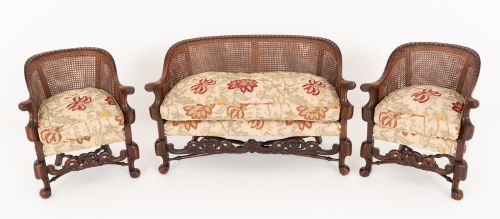
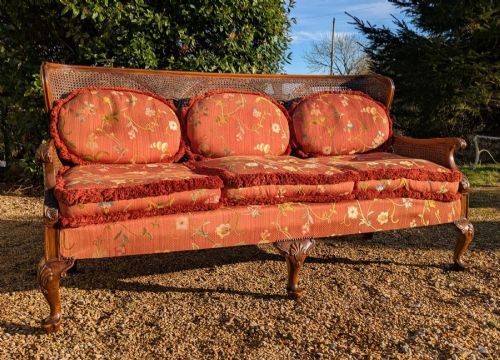
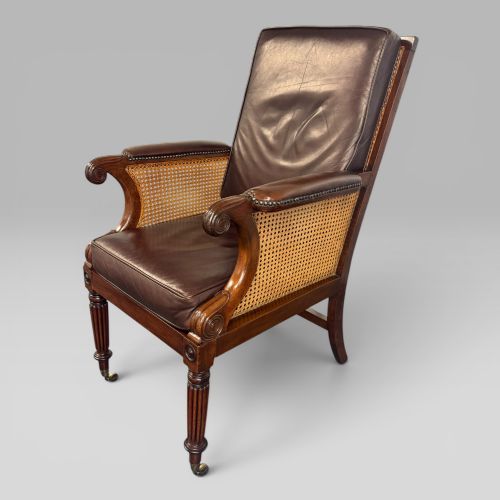

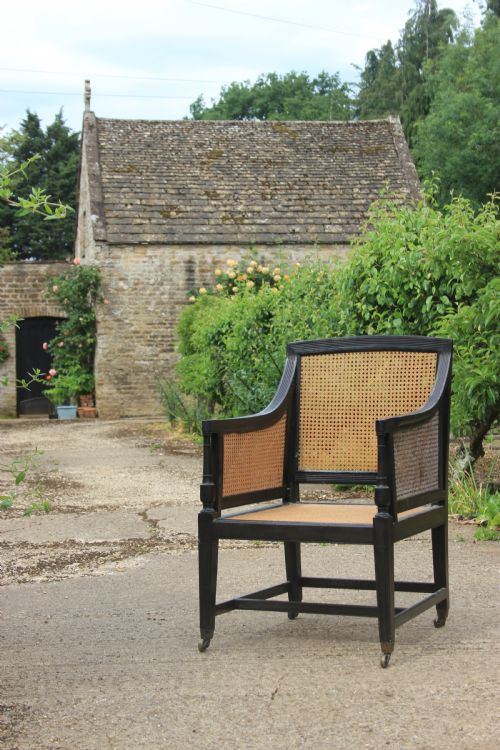


Traditional Caned Bergere
These traditional caned bergere chairs and seating pieces offer classic woven comfort, bringing period elegance and enduring craftsmanship to any library or drawing room.
Traditional Caned Bergere
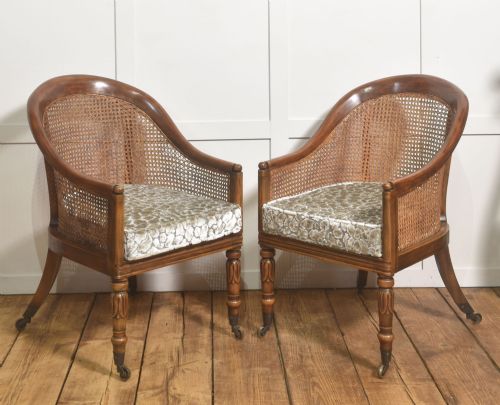
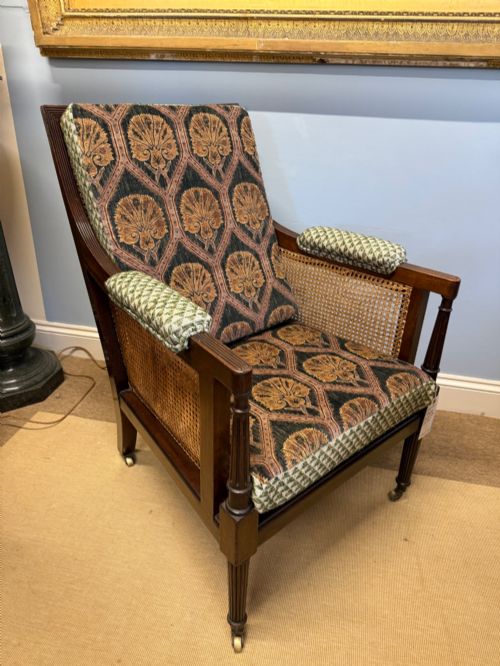
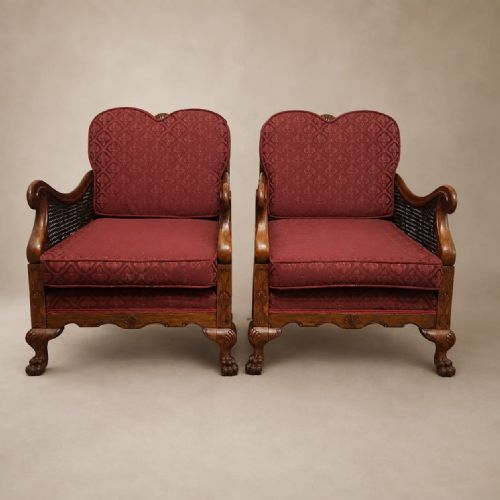
A traditional caned bergere is an enclosed upholstered armchair or seating piece characterised by woven cane panels set within a rigid wooden frame. These chairs originate in various historic periods, including the Regency, Victorian, and William IV eras, alongside later revival styles.
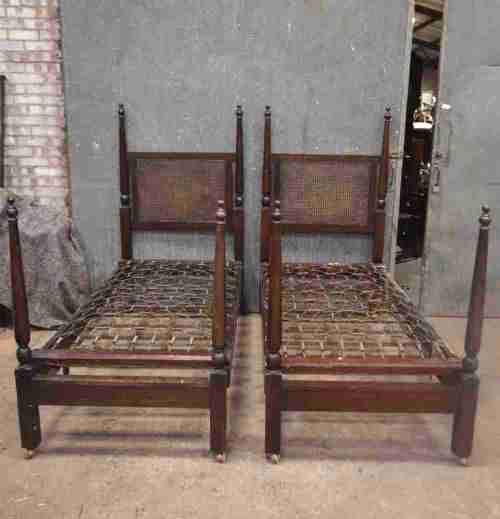
The selections available here span from single armchairs and library chairs to expansive sofas, suites, four poster single beds, and even childrens high chairs. Mahogany and oak dominate the offerings, frequently accompanied by walnut and solid ebony.
Buyers most frequently encounter mahogany armchairs dating from the nineteenth century, alongside oak examples from the early twentieth century. These pieces serve as practical seating while maintaining distinct historical character through their frames and woven panels.
How traditional caned bergere items were made
Makers constructed the structural frames of these pieces using dense hardwoods such as mahogany, oak, and walnut, often shaping them with carved details, inlay, or brass elements. The timber frames provide the necessary rigidity to support the tension of the woven cane.
Cane panels are meticulously threaded through pre-drilled holes in the wooden framework, creating breathable and resilient seats and backs. Additional comfort is introduced through fitted cushions upholstered in fabric, leather, or velvet.
Traditional Caned Bergere Retail Price Guide 2026
Typical asking prices for traditional caned bergere among the pieces listed under this phrase on Sellingantiques today, from the lower quarter to the upper quarter. They describe what is for sale here now, not the wider market.
Listings feature items spanning the nineteenth and twentieth centuries, utilising mahogany, oak, and walnut alongside cane, leather, and brass.
What varies in quality in traditional caned bergere pieces
The tightness and uniformity of the cane weaving dictate the baseline refinement of the piece, requiring expert handwork to distribute tension evenly across the frame. Tighter, smoother weaves indicate greater skill in execution.
Frame construction and timber selection also differentiate examples, with finely carved mahogany, detailed inlays, and solid secondary woods separating standard production from finer cabinet work. The condition of the original joints and timber finish further distinguishes individual items.
The Traditional Caned Bergere Glossary
- Bergere
- An enclosed upholstered armchair featuring solid sides filled with cane or upholstery. This seating form developed in France and gained popularity across subsequent British periods.
- Caning
- A technique of weaving plant material into panels to form flexible seats and backs. This method provides both support and ventilation.
- Klismos
- An ancient Greek chair style characterised by curved legs and a concave backrest. Nineteenth-century interpretations occasionally incorporate woven cane seats.
- Library Chair
- A sturdy, comfortable armchair designed for reading rooms and studies. These often feature generous proportions and supportive armrests.
- Split Cane
- Cane sliced or processed to present a flat outer surface while retaining flexibility. This material forms the woven panels on various vintage armchairs.
Traditional Caned Bergere: Frequently Asked Questions
What is a bergere chair?
A bergere is an enclosed upholstered armchair featuring solid wooden sides filled with woven cane. They are designed for relaxed sitting and reading in studies and drawing rooms.
These chairs date across multiple historic periods and incorporate timber frames ranging from mahogany to oak.
How do I care for cane seating?
Cane requires moderate humidity to prevent the natural material from drying out and becoming brittle. Dusting regularly with a soft brush keeps the weave clean.
Avoid placing these items near direct heat sources or in overly dry environments to preserve the flexibility of the woven panels.
Are these chairs comfortable?
The combination of a supportive woven cane back and seat panels offers a firm yet yielding sit. Many examples include fitted cushions filled with feathers or down for added softness.
Their enclosed proportions provide substantial support for extended periods of reading or resting.
How do I date a bergere?
Dating relies on identifying the timber species, carving styles, and structural characteristics of the frame. Regency and Victorian examples exhibit distinct turnings and proportions compared to later revival pieces.
The specific style of the woodwork and the manufacturing methods used on the frame offer clear chronological indicators.