
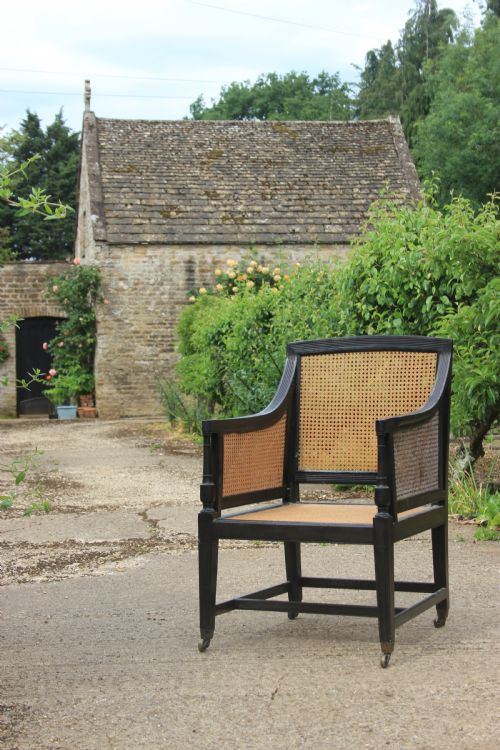


Traditional Cane Armchair
A traditional cane armchair brings woven texture and solid timber frames into a room, offering a supportive seat with centuries of craftsmanship behind it.
Traditional Cane Armchair
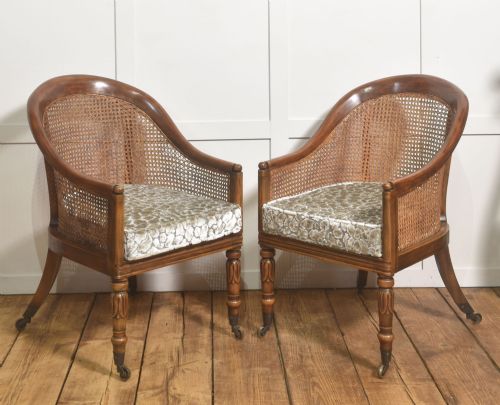
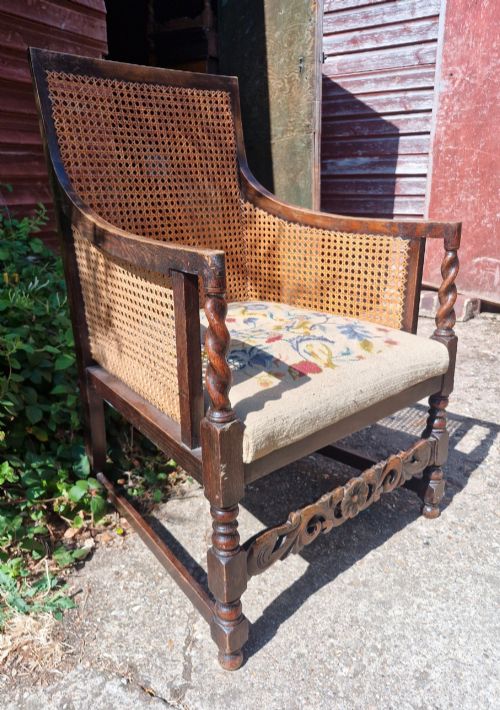
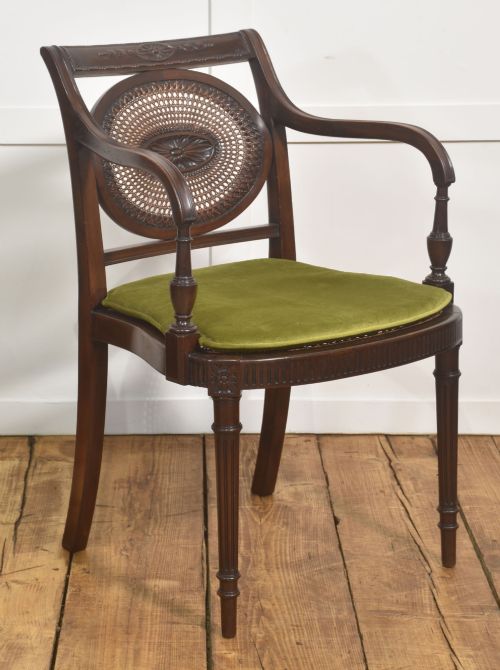
A traditional cane armchair combines a rigid wooden frame with woven plant material forming the back, seat, or both. These seats span periods from the Georgian era through the Victorian years and into the 1920s.
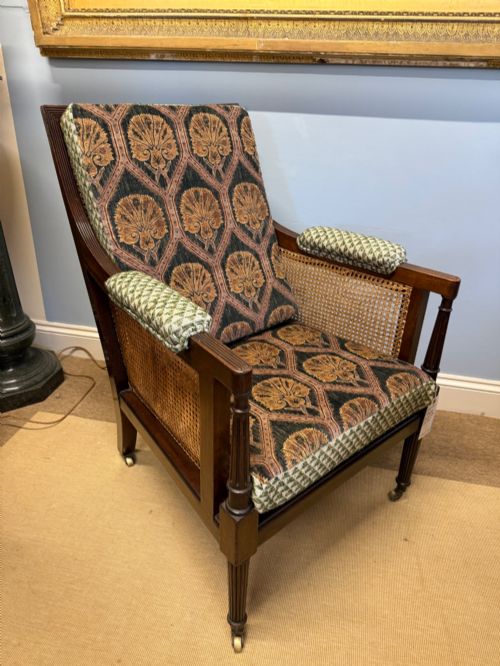
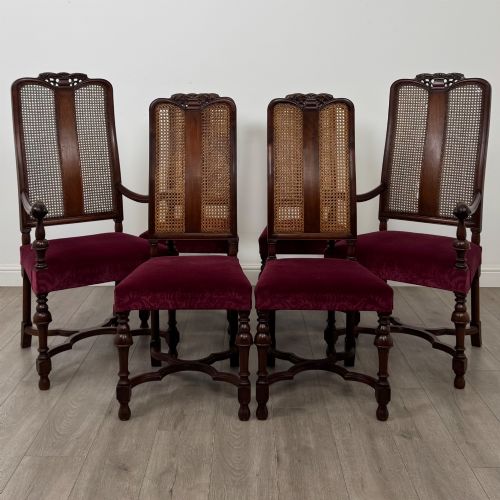
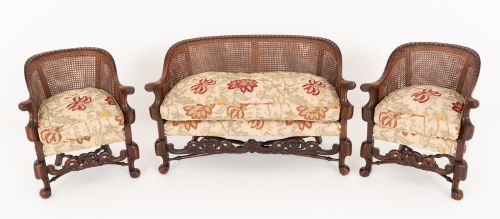
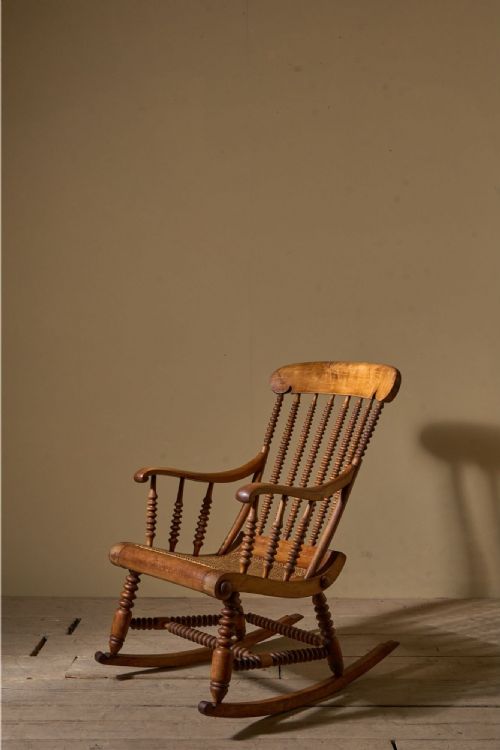
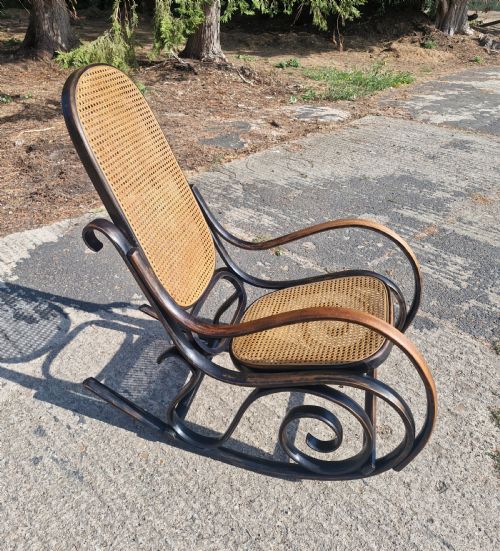
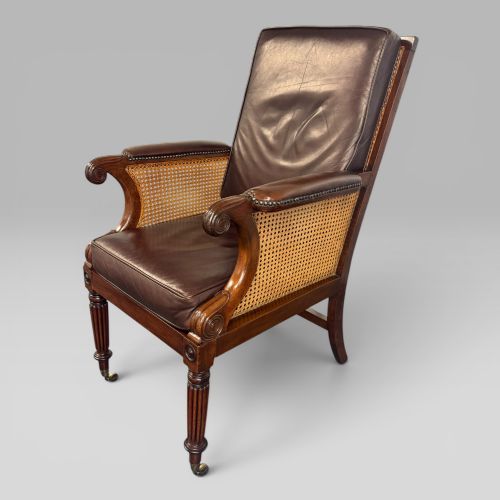
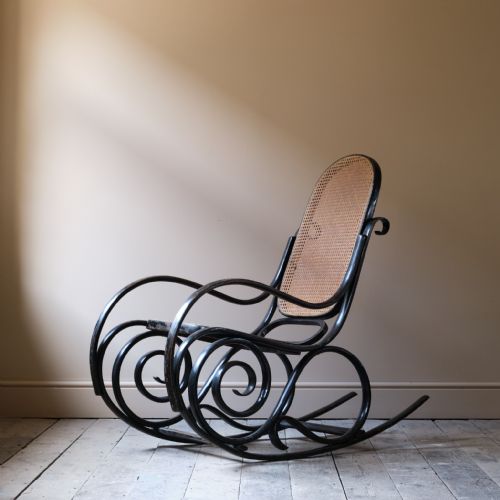
The most common forms on this page are library bergères and rocking chairs, alongside dining chairs and reclining variants. Woods range from mahogany and walnut to oak and ebonised beech.
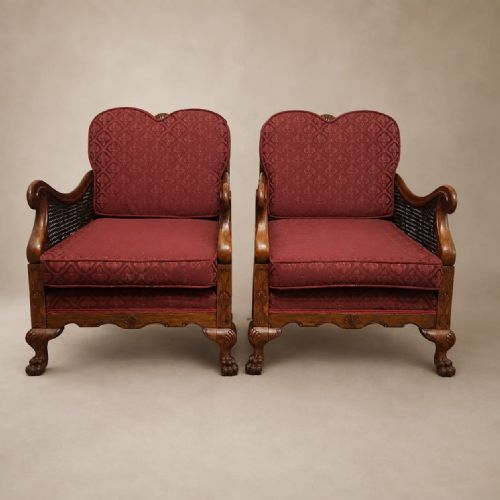
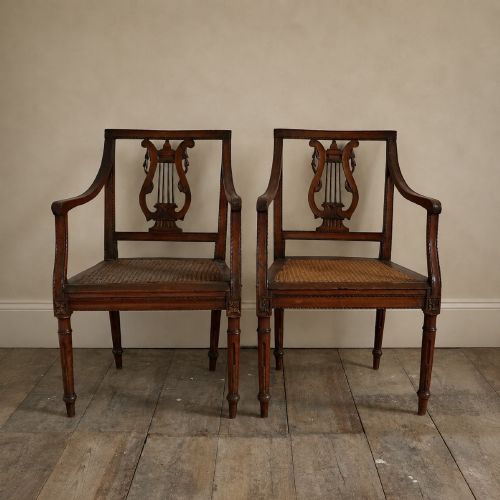
Makers drew on various design vocabularies including Regency, Jacobean Revival, Carolean Revival, and Edwardian styles. Some examples incorporate loose cushions upholstered in leather, velvet, or fabric.
How they were made
Frames rely on hardwoods such as mahogany, walnut, and oak, shaped through turning, bending, or carving. Bentwood techniques appear in twentieth-century pieces, while earlier examples utilise solid timber joinery.
Caning uses strips of rattan plant woven through holes drilled in the wooden frame or slotted into channels. Secondary materials like brass fittings, bamboo, and ebonised finishes complete the construction of specific pieces.
Children join the seating hierarchy through miniature bobbin turned ebonised child's chairs and high chairs.
What varies in quality
Quality rests in the precision of the timber framing and the tightness of the woven caning. Denser wood grain and refined carving on mahogany or walnut frames separate superior pieces from simpler beech or oak versions.
The neatness of the hand-woven cane mesh and the structural integrity of the joints dictate the overall standard. Original frames retaining their factory structure command attention over heavily altered examples.
The Traditional Cane Armchair Glossary
- Caning
- A method of weaving plant material, usually rattan, to create a porous panel for chair backs and seats. This technique provides flexible support.
- Bobbin turned
- A style of furniture turning that creates a series of rounded spheres resembling bobbins along the wooden legs or stretchers. This decorative profile appears frequently on nineteenth-century frames.
- Bentwood
- Wood softened by steam and bent into curved shapes under pressure. It defines numerous rocking chairs from the twentieth century.
Traditional Cane Armchair: Frequently Asked Questions
How do I care for cane seating?
Keep cane work away from direct heat sources and strong sunlight to prevent the natural fibres from drying out and snapping.
Light dusting with a soft brush helps maintain the material, while occasional damp sponging keeps the rattan supple.
Are these chairs comfortable for daily use?
Many bergères and library armchairs come with upholstered seat cushions designed to add softness to the woven base. The angled backs provide ergonomic support for reading or relaxing.
Rocking variants offer movement, while upright dining chairs suit formal seating.
How can I tell a Regency chair from an Edwardian one?
Regency pieces often utilise dark mahogany with classical revival motifs, reflecting early nineteenth-century tastes. Edwardian examples frequently show lighter woods or revival styles inspired by earlier centuries.
Checking the turning styles and structural joints clarifies the period.
Can damaged cane be repaired?
Skilled craftspeople can re-weave broken sections of cane by threading new rattan through the existing holes in the wooden frame. Traditional hand-caned panels require patience to match the original tension and pattern.
Professional restoration preserves the integrity of older frames.