



Traditional Camelback Couch
A traditional camelback couch brings serpentine grace and classic upholstery to a room.
Traditional Camelback Couch
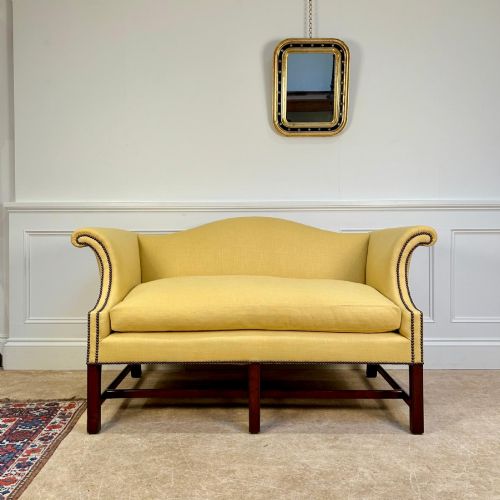
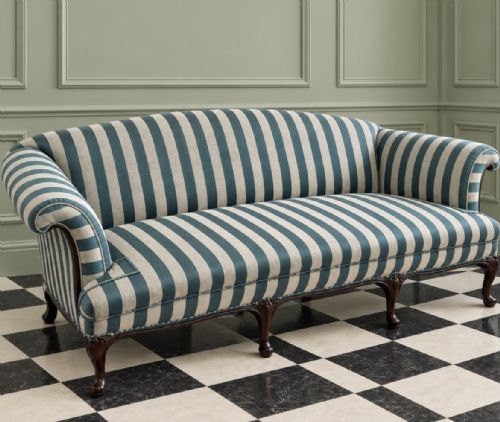
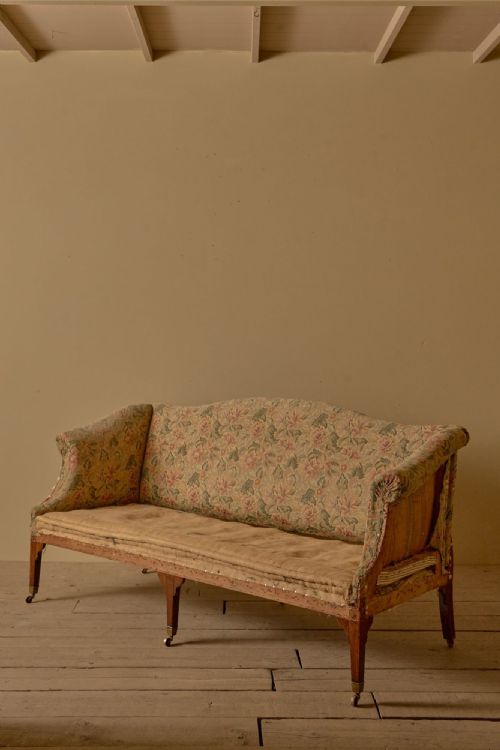
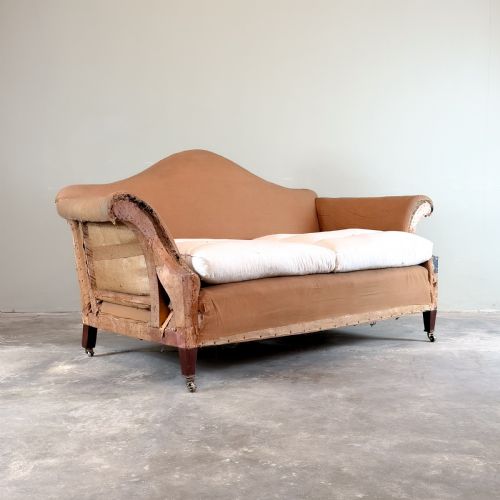
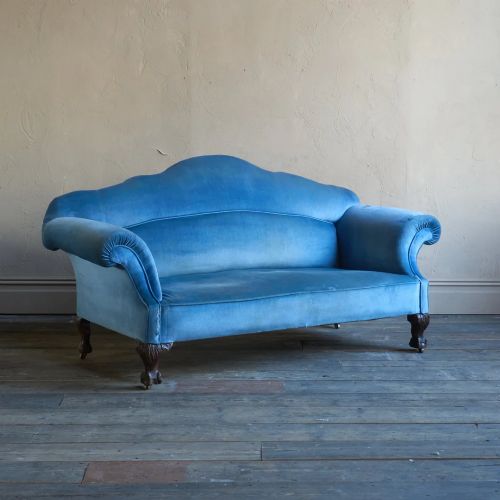
A traditional camelback couch is defined by its characteristic arched backrest, rising in a smooth curve that mimics the hump of a camel before sloping down to scrolled arms. When searching for a traditional camelback couch, buyers encounter pieces spanning from the eighteenth century through to the mid-twentieth century, with nineteenth-century revivals and Edwardian examples appearing frequently on the market.
These seating forms are variously listed as sofas, settees, or sofas and settees, taking their design cues from historical periods such as Georgian, George III, and later revivals including Chippendale and Hepplewhite styles. Proportions range from intimate two-seater settees to larger serpentine-fronted sofas designed to anchor a formal interior.
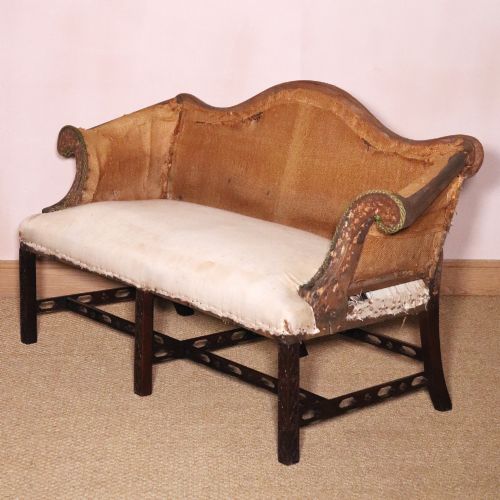
The construction of these pieces often incorporates mahogany for the exposed frame members, particularly on the legs and stretchers. Examples from this selection showcase stylistic details like ball and claw feet alongside simpler straight or carved legs.
Materials and construction methods
The structural framework of these seating pieces relies primarily on hardwoods such as mahogany, providing the necessary strength to support the sweeping architectural lines of the backrest and the tension of the upholstery. Artisans shaped the wood for exposed elements like legs, arm supports, and underframes, frequently employing revival styles that mirrored earlier cabinet-making traditions.
Upholstery defines the visual weight of the piece, utilising fabrics such as damask, velvet, and patterned textiles stretched tightly over internal stuffing. Historically, these materials were secured with traditional methods that created firm, supportive seating surfaces suited to formal domestic spaces.
Traditional Camelback Couch Retail Price Guide 2026
Typical asking prices for traditional camelback couch among the pieces listed under this phrase on Sellingantiques today, from the lower quarter to the upper quarter. They describe what is for sale here now, not the wider market.
Even the humpiest camel back manages to keep a straight face when tucked beneath a Georgian parlour window.
Assessing quality in traditional seating
Quality in these pieces rests upon the precision of the timber frame's joinery and the fluidity of the backrest's arched line. Superior examples demonstrate a balanced proportion between the height of the camel hump and the length of the seat, ensuring the silhouette remains harmonious from every angle.
The refinement of the carving on exposed mahogany components, such as ball and claw feet or subtle leg ornamentation, distinguishes master workshops from standard production. Furthermore, the integrity of the upholstery work and the choice of textile contribute significantly to the overall presence of the furniture.
The Traditional Camelback Couch Glossary
- Camel back
- A sofa or settee backrest featuring a distinctive undulating curve that rises in the centre resembling a camel's hump. This profile became popular during the eighteenth century and inspired numerous later revival periods.
- Serpentine front
- A furniture edge or frame that curves outward in the middle and inward toward the ends in a gentle wave. This contour adds visual movement and sophistication to the base of the seating.
- Chippendale style
- A decorative style inspired by the eighteenth-century cabinet maker Thomas Chippendale, characterised by carved mahogany, intricate leg designs, and classical motifs. Revivals of this aesthetic emerged strongly in the nineteenth and early twentieth centuries.
- Hepplewhite style
- A design tradition associated with cabinet maker George Hepplewhite, known for elegant proportions, shield-back chairs, and graceful sofas with tapered legs. Pieces in this style emphasise lightness and refined neoclassical ornamentation.
- Ball and claw
- A furniture foot carved to resemble a bird's talon or animal paw grasping a spherical ball. This decorative feature appears frequently on mahogany furniture from the eighteenth century and subsequent revival eras.
Traditional Camelback Couch: Frequently Asked Questions
What is a traditional camelback couch?
A traditional camelback couch is a formal upholstered seating piece distinguished by its arched, undulating backrest. These sofas typically feature exposed wooden legs and arms shaped in historical styles.
Originating in earlier centuries, these pieces continued to be produced through various revival movements, resulting in a range of proportions from compact settees to expansive formal sofas.
How do I date a camelback sofa?
Dating a camelback sofa involves examining the timber species, the style of the legs, and the construction methods used in the frame. Characteristics such as ball and claw feet or specific mahogany grain patterns often point toward particular periods.
Revival pieces from the nineteenth and early twentieth centuries frequently emulate eighteenth-century proportions, requiring careful inspection of the underlying woodwork to determine age.
Where were these sofas used historically?
Historically, these elegant seating pieces were placed in formal drawing rooms, reception spaces, and parlours. Their refined silhouettes and upholstered finishes suited domestic settings designed for entertaining guests.
Today, they function well as statement pieces in living rooms or studies, blending classical design with comfortable everyday seating.
What fabrics are common on these couches?
Upholstery materials on traditional camelback couches often include damask, heavy woven fabrics, and velvet. These textiles provide the durability and texture required for formal furniture upholstery.
Many pieces have been reupholstered over their lifespan to suit changing decorative tastes, while retaining their historic wooden frames.