



Traditional Button Back Couch
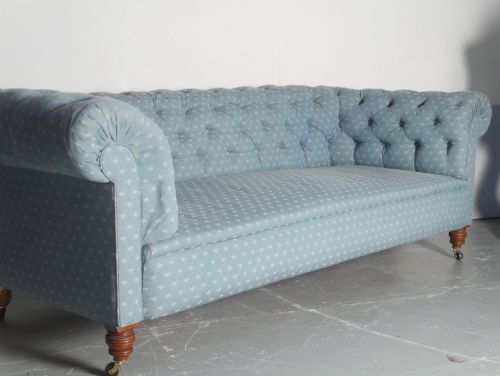
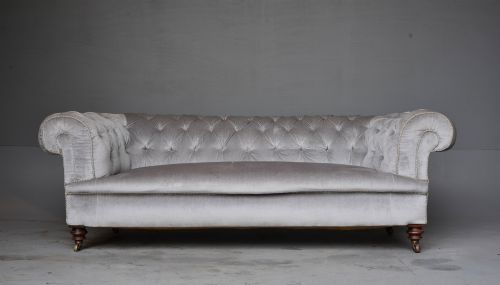
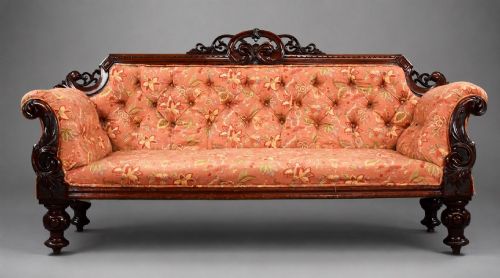
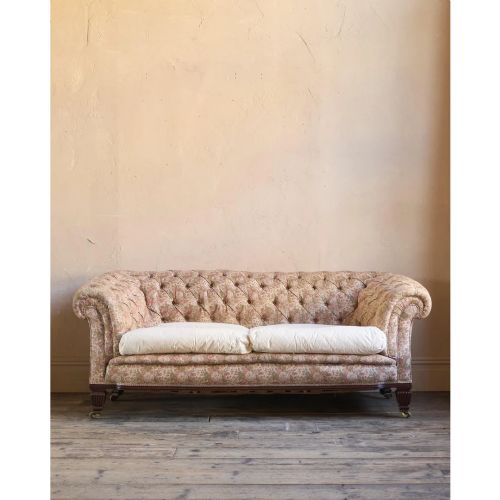
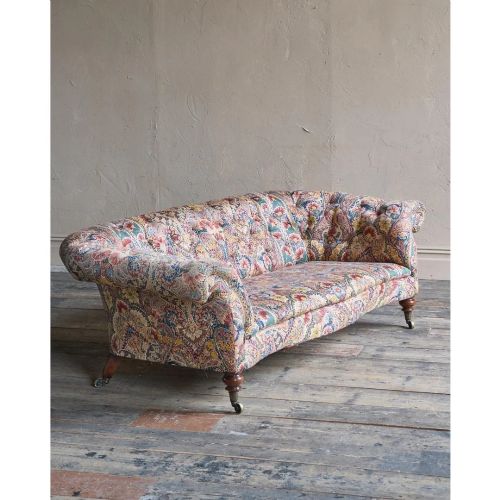
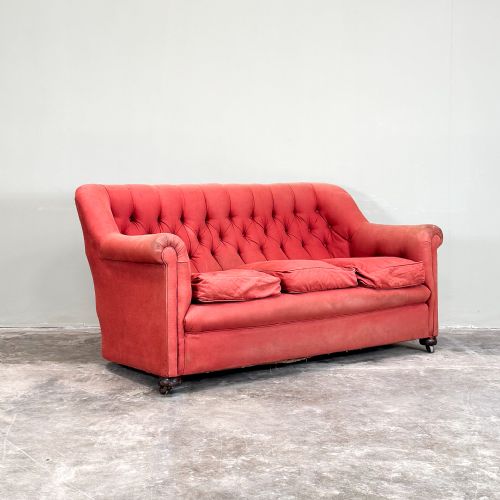
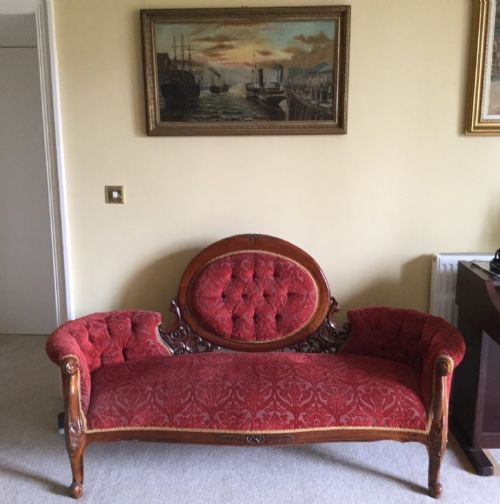
A traditional button back couch is a deep-seated piece defined by tufted upholstery, meeting you here primarily as Victorian and Edwardian Chesterfields, settees, and chaise longues.
Traditional Button Back Couch
When searching for a traditional button back couch, buyers encounter a lineage of nineteenth and early twentieth century seating dominated by the classic Chesterfield sofa, alongside double-ended settees and chaise longues. These forms emerge from periods spanning the mid-nineteenth century through to the nineteen-thirties, reflecting diverse domestic interiors from grand libraries to boudoirs.
The nineteenth-century examples lean heavily towards robust proportions, deep seats, and low backs designed for formal lounging. Alongside standard three-seater and two-seater Chesterfaces, the selection includes open arm sofas, daybeds, and canapés upholstered in period hides, velvets, and brocades.
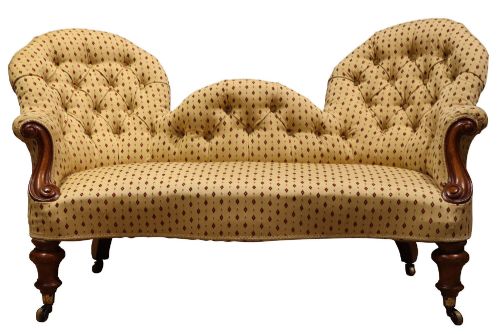
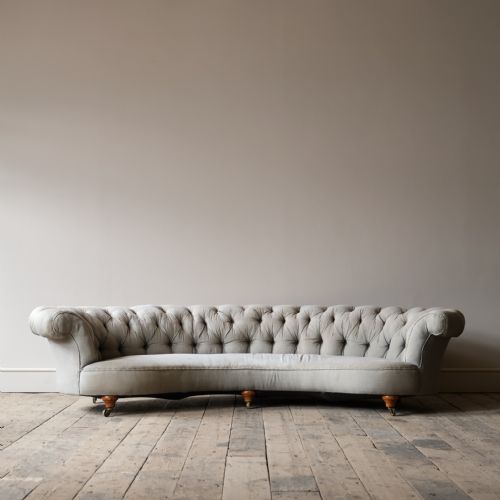
Victorian and Edwardian pieces form the backbone of this collection, often constructed with serpentine fronts or double-ended wooden frames. Walnut, mahogany, and rosewood timber frames frequently anchor these upholstered bodies, bringing substantial weight and structural presence to each room.
How they were made
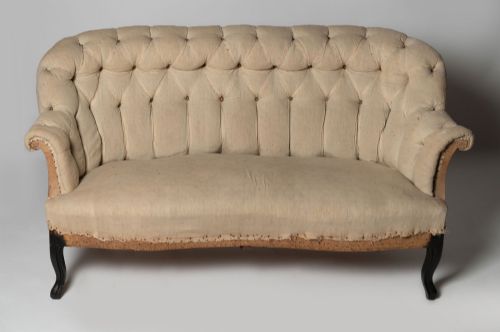
Traditional construction relies upon dense timber frames of mahogany, walnut, or general hardwood, paired with complex sprung settee bases. Makers secured the upholstery through deep buttoning techniques, pulling fabric or leather tightly into the interior stuffing to create distinct geometric diamond patterns across the backrest and arms.
Surface materials vary between heavy woven brocades, plush velvet, and raw or hand-dyed leather secured with brass nailhead trim. Frames exhibit hand-carved woodwork on exposed wooden rails, legs, and scrolled arm supports, utilising traditional joinery methods that predate modern manufacturing.
Traditional Button Back Couch Retail Price Guide 2026
Typical asking prices for traditional button back couch among the pieces listed under this phrase on Sellingantiques today, from the lower quarter to the upper quarter. They describe what is for sale here now, not the wider market.
Several pieces arrive ready for total transformation, awaiting an entirely new life under the upholsterer's needle.
What varies in quality
The integrity of the internal springing and the depth of the button tufting dictate the structural caliber of each piece. Superior examples maintain firm, supportive webbing and resilient underlying padding that sustains the characteristic low, deep seat without sagging.
Material selection and maker attribution separate standard domestic seating from elite workshop production. Fine examples display carefully matched timber grains, substantial brass detailing, and superior grades of supple leather or heavy pile textiles that age with distinct character.
Howard and Sons·Hampton and Sons of Pall Mall·Gillows
The Traditional Button Back Couch Glossary
- Chesterfield
- A large padded sofa with button-tufted upholstery and arms of the same height as the back. This form serves as the predominant style found within nineteenth-century seating.
- Chaise Longue
- An elongated upholstered chair designed for reclining, often featuring a single raised endrest. These pieces appear frequently in Victorian bedroom and drawing-room listings.
- Double-Ended Settee
- A sofa featuring symmetrically curved or raised ends at both sides rather than a traditional back and distinct armrests. They allow lounging from either direction.
- Canapé
- An ornamental nineteenth-century French-style sofa with an exposed wooden frame and upholstered seat and back. They bring lighter, decorative forms to traditional seating.
- Serpentine Front
- A curved furniture front shaped in a continuous wave line, swelling outward in the centre and receding at the sides. This contour frequently defines high-end Victorian frames.
Traditional Button Back Couch: Frequently Asked Questions
What defines a traditional button back couch?
These pieces are characterised by deep upholstery secured with recessed buttons, creating a distinct quilted or diamond pattern across the backrest. They originate primarily from the nineteenth and early twentieth centuries.
Built around sturdy timber frames with sprung bases, these sofas and settees prioritise low, deep seating designed for formal domestic comfort.
How do I distinguish a Victorian Chesterfield?
Nineteenth-century examples typically feature heavy wooden frames beneath hand-dyed leather, raw leather, or velvet upholstery. Look for traditional proportions with robust scrolled arms matching the height of the back.
Maker attribution stamps on castors or wooden rails often help confirm the period and workshop origin of these specific items.
Where were these couches used originally?
These seating forms occupied grand nineteenth-century libraries, smoking rooms, and drawing rooms where formal entertaining and lounging took place. Chaise longues and daybeds were frequently placed in private boudoirs or bedrooms.
Larger configurations served communal family spaces, while more decorative frames suited formal reception rooms.
How should I care for antique leather?
Period leather requires regular conditioning to maintain flexibility and prevent the natural hide from drying out. Avoid placing these pieces near direct heat sources or strong sunlight.
Gentle dusting and appropriate balms preserve the hand-dyed finish and distinctive patina developed over the centuries.