


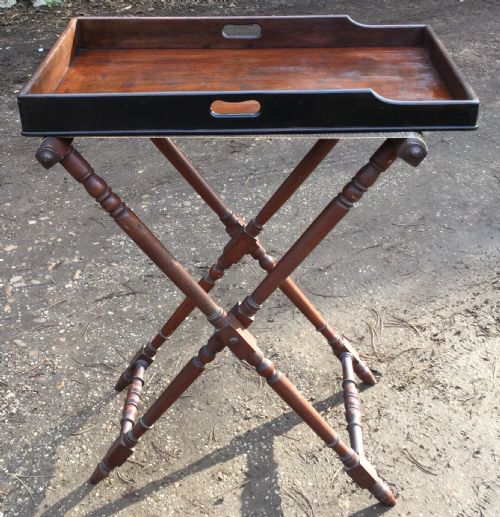


Traditional Butler Tray
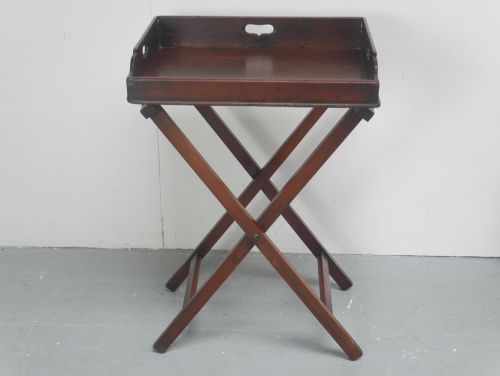
A traditional butler tray is a portable serving surface with hinged or carrying handles, often paired with a folding stand to create a versatile table.
Traditional Butler Tray
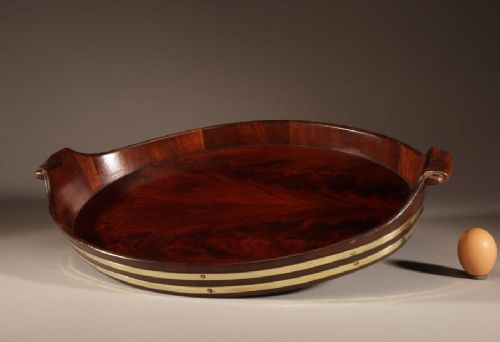
When you search for a traditional butler tray, you encounter everything from standalone serving dishes to substantial tray tables resting on collapsible X-frames. The pieces span Georgian, Victorian, and Edwardian periods, appearing in forms such as tray tables, coffee tables, and occasional tables.
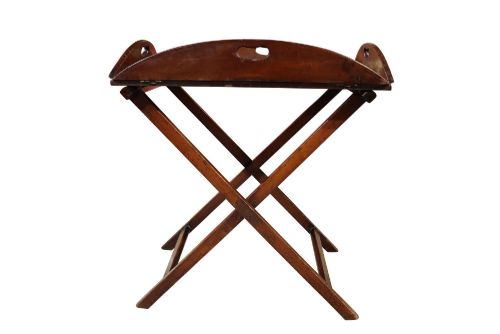
The version most commonly met on this page is the nineteenth century mahogany butler's tray on a folding stand. These items transition easily from portable servers to permanent side or coffee tables in modern interiors.
Materials and construction
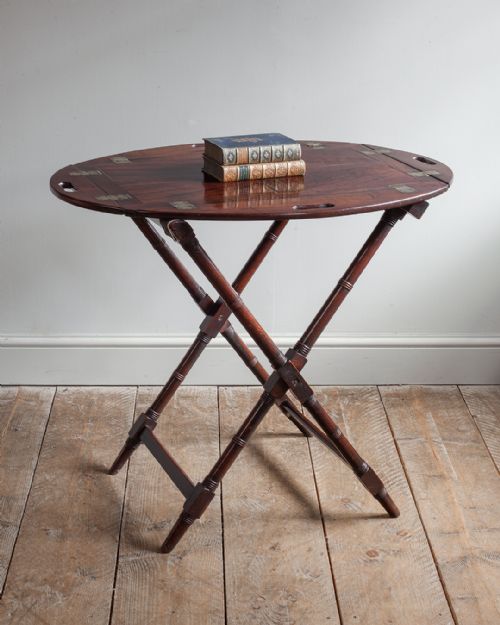
Makers relied heavily on dense hardwoods like mahogany and oak, often utilising brass for hinges, handles, and corner mounts to reinforce the portable structure. Some examples incorporate canvas webbing or baize lining within the tray interiors.
Surface treatments range from simple polished wood grains to decorative elements like paint, gilding, and intricate carving seen on Victorian and Venetian pieces.
Listings feature pieces spanning the eighteenth century through to the 1930s, constructed primarily from mahogany and oak.
Assessing quality and craftsmanship
Quality rests in the precision of the joinery on both the tray gallery and the folding stand, where tight joints and well-fitted hinges ensure stability. The choice of timber grain and the crispness of any hand-carved details or coopered edges further distinguish finer examples.
Original stands matching the exact period of the tray elevate a piece above married sets where components from different decades have been combined later.
The Traditional Butler Tray Glossary
- Butler tray
- A portable wooden tray with a raised gallery and cut-out handles designed for carrying service items. They are frequently paired with folding wooden stands.
- Folding stand
- A collapsible X-frame support designed to hold a removable tray at table height. This mechanism allowed servants to store the furniture away when not in service.
- Gallery
- The raised wooden rim surrounding the edge of a tray to prevent items from sliding off during transport. Galleries can be plain, shaped, or pierced with handholds.
- Coopered
- Constructed from vertical staves of wood joined tightly together with curved edges, traditionally mimicking barrel-making techniques. This method provides robust strength to oval or round trays.
Traditional Butler Tray: Frequently Asked Questions
Can I use a butler tray as a coffee table?
Many people adapt traditional butler trays for coffee tables by pairing the shallow tray with a sturdy folding stand at the correct height.
This provides a practical surface for living rooms while retaining the historic character and portability of the original design.
How do I spot a reproduction stand?
Examine the timber species, wear patterns, and hardware construction to see if the stand matches the age of the tray above it.
Stands manufactured decades apart from their trays often exhibit different patination and modern screw types or machine-cut joints.
What is the difference between a serving tray and a tray table?
A serving tray is built solely for carrying food and drink by hand, lacking any dedicated base or stand.
A tray table includes either integrated legs or a separate folding stand designed to transform the portable tray into stable furniture.
How do I care for antique mahogany wood?
Keep wooden trays away from direct sunlight and strong heat sources to prevent the timber from drying out or splitting.
Apply a traditional beeswax polish occasionally to nourish the grain and maintain the natural lustre of the polished surface.