


Traditional Bureau
A traditional bureau brings centuries of cabinet-making directly to the study, offering fitted drawers and a drop-front writing surface.
Traditional Bureau
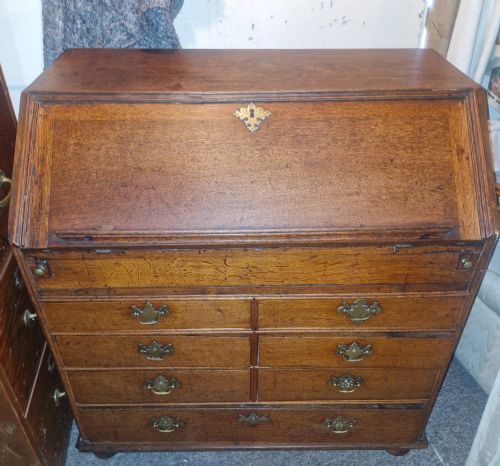
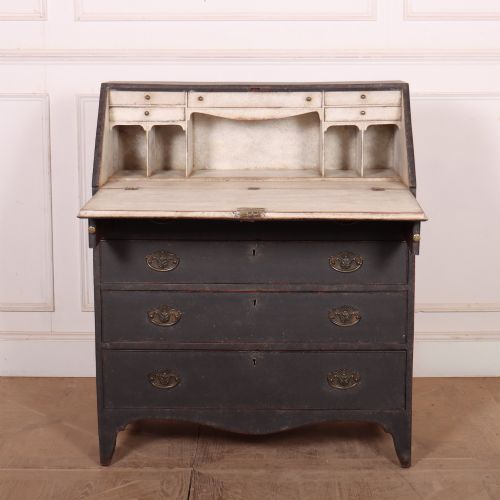
A traditional bureau provides a compact writing desk equipped with a hinged flap that conceals an internal arrangement of small drawers and pigeon holes. These pieces span the eighteenth, nineteenth and early twentieth centuries, drawing on Georgian, Victorian and Edwardian design traditions.
The selections here include simple oak workspaces alongside taller bureau bookcases featuring glazed upper sections. Buyers encounter compact walnut writing desks, elm examples and revival pieces built in the early twentieth century.
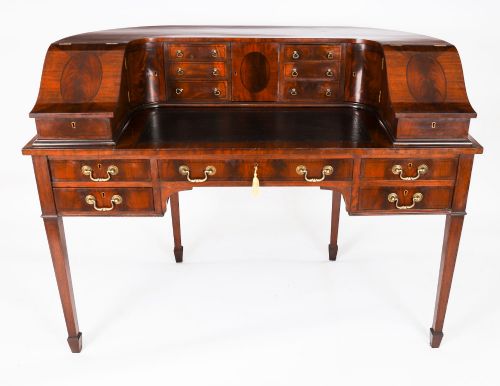
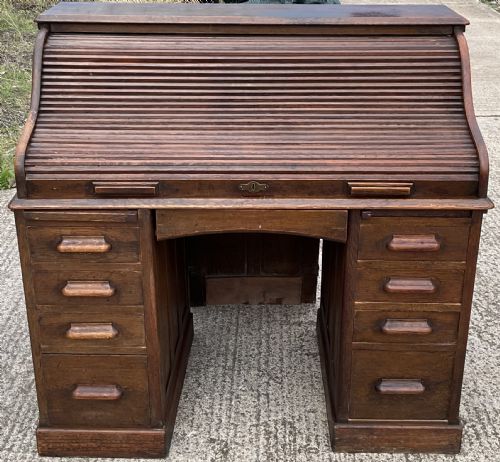
Beyond the standard fall-front writing desk, the category encompasses related writing furniture such as pedestal desks, tambour desks and bureau bookcases. These forms reflect the changing domestic requirements for storage and correspondence across successive periods.
Materials and construction
Cabinet-makers relied heavily on hardwoods such as mahogany, oak and walnut, often selecting figured veneers for primary display surfaces. Secondary timbers like pine appeared in internal drawer construction and carcases.
Construction techniques combined traditional dovetailed drawer joints with solid brass hardware, leather writing inserts and glazed doors on taller bookcase variants. The joinery ensured rigid housings for complex internal pigeon holes and sliding compartments.
Traditional Bureau Retail Price Guide 2026
Typical asking prices for traditional bureau among the pieces listed under this phrase on Sellingantiques today, from the lower quarter to the upper quarter. They describe what is for sale here now, not the wider market.
Listings feature timbers including oak, mahogany, walnut, elm, satinwood and pine across Georgian, Victorian and Edwardian periods.
Quality variations
The standard of a traditional bureau rests on the selection of timber veneers, the complexity of the fitted interior and the precision of the pigeon hole joinery. Superior pieces display carefully figured walnut or mahogany grains matched symmetrically across the fall-front flap.
Structural integrity of the drop-front hinges and the smoothness of secondary internal drawers further distinguish finer examples. Original brass handles, intact leather writing surfaces and well-proportioned bracket or cabriole feet elevate the execution of the piece.
The Traditional Bureau Glossary
- Bureau
- A desk featuring a sloping hinged lid that drops down to form a writing surface, typically revealing internal drawers and pigeon holes.
- Bureau bookcase
- A taller combination piece pairing a lower writing bureau with an upper shelving cabinet enclosed by glass doors.
- Pigeon hole
- A small, open compartment within a desk interior designed for sorting letters, stationery and documents.
- Fall-front
- The hinged writing flap of a bureau that pulls down into a horizontal position for writing.
- Bracket foot
- A simple, outwardly curving foot supporting the corners of case furniture like chests of drawers and bureaux.
Traditional Bureau: Frequently Asked Questions
What is a traditional bureau?
A traditional bureau is a writing desk with a sloping flap that drops down to reveal a fitted interior of small drawers and compartments.
These pieces combine enclosed storage with a functional writing surface designed for domestic study use.
How do I date a bureau?
Dating relies on identifying the primary timber, hardware style, construction methods and overall decorative motifs. Georgian pieces lean towards figured mahogany and walnut, while Edwardian examples often feature lighter oak and revival styling.
Secondary woods and drawer dovetailing techniques provide additional clues to the era of manufacture.
How do I use a bureau today?
A bureau serves as a compact desk for a home office or living room, providing hidden storage for laptops and stationery when the flap is closed.
The internal compartments organise mail and small accessories without taking up significant floor space.
What is a bureau bookcase?
A bureau bookcase is a dual-purpose item consisting of a lower writing bureau topped with a glazed display cabinet for books or porcelain.
This taller configuration maximises vertical wall storage in traditional rooms.