





Traditional Brass Hearth Guard
A traditional brass hearth guard brings warmth and safety to the fireplace, combining practical metal mesh or solid rails with period character.
Traditional Brass Hearth Guard
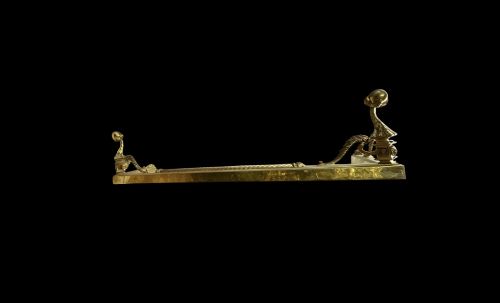
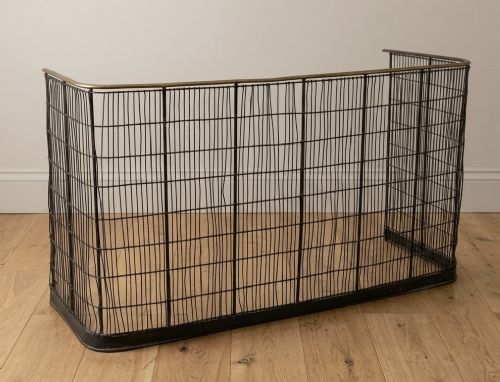
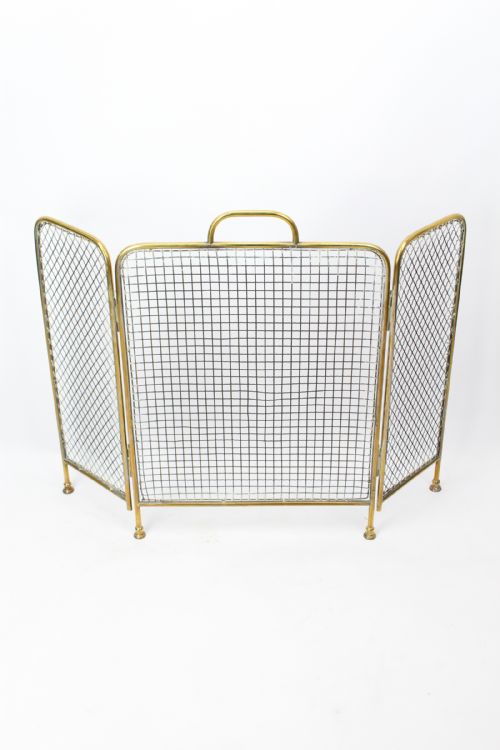
When you search for a traditional brass hearth guard, you encounter a range of protective barriers designed for open fireplaces, spanning simple spark screens to substantial club fenders. The pieces on this page are predominantly Victorian and Edwardian items, alongside early twentieth-century examples that protect rooms from stray embers while framing the hearth.
The selection includes folding spark guards made from brass and wire mesh, heavy nursing fenders designed to keep children at a safe distance, and club fenders featuring leather-upholstered seats. These objects originate from the nineteenth and early twentieth centuries, reflecting the domestic habits of country houses and urban drawing rooms alike.
How they were made
Traditional hearth guards rely primarily on polished or pierced brass combined with structural iron, steel, and copper to achieve both rigidity and decorative appeal. Workshops utilised cast iron and steel frames to provide weight and durability, overlaying them with brass panels, wire mesh, or woven spark screens.
Upholstered club fenders incorporate leather seating surfaces supported by metal or wooden internal structures, often secured with brass studding. Folding spark guards utilise multi-section hinges connecting fine wire mesh frames, allowing the guard to adjust to the contours of the hearth.
Some nineteenth-century nursery fenders arrived equipped with integrated rails specifically intended for warming children's nightwear before bed.
What varies in quality
Quality in these hearth guards rests upon the thickness of the brass, the crispness of any pierced or scrolled metalwork, and the structural integrity of the frame. Heavy gauge brass and cast iron provide a substantial feel that lighter, later reproductions fail to match.
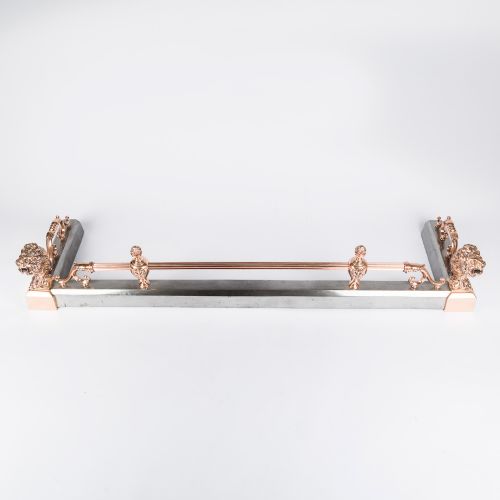
Finer examples display careful hand-finishing, such as neatly riveted wire mesh, tightly stitched leather upholstery on club seats, and securely fixed decorative lions or Neoclassical details. The precision of the joints and the resilience of the folding mechanisms distinguish standard utilitarian guards from superior domestic pieces.
The Traditional Brass Hearth Guard Glossary
- Club fender
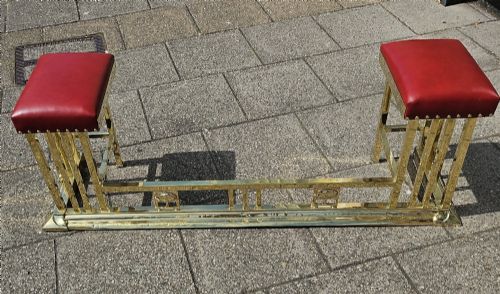
- A low, U-shaped hearth guard featuring padded leather seats on either side of the fireplace opening. This design originated in gentlemen's clubs to allow close seating by the fire.
- Spark guard
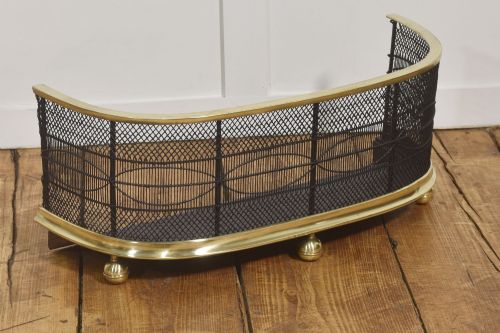
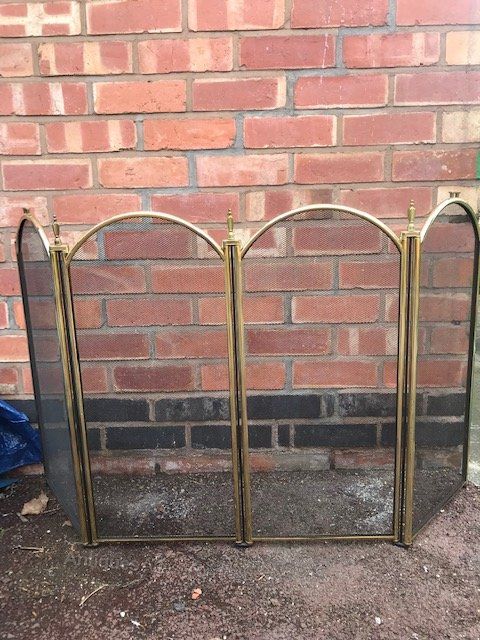
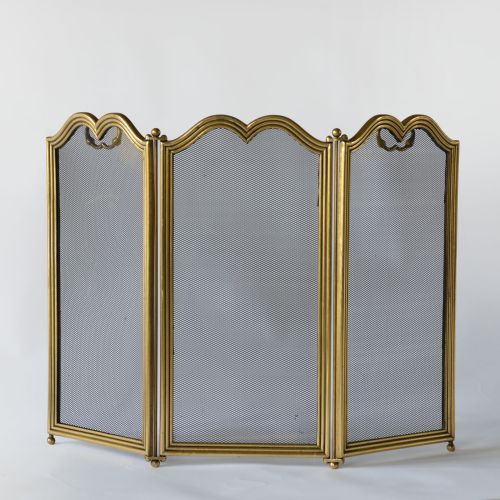
- A folding or curved screen constructed from fine wire mesh and metal framing. Its primary purpose is to contain flying embers from an open fire.
- Nursery fender
- An extra-tall protective barrier designed to prevent children and pets from getting too close to the flames. Some versions include an integrated rail for airing clothes.
- Kerb fender
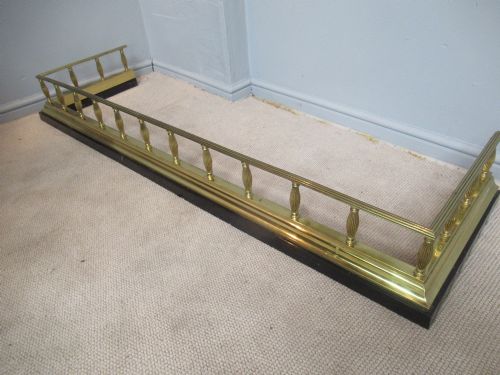
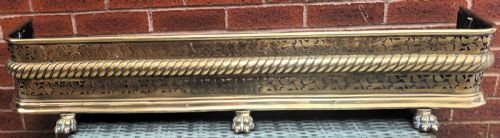
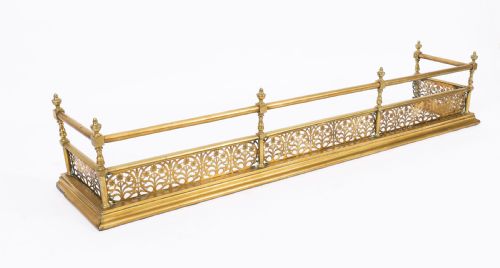
- A low metal barrier that sits directly on the hearthstone to define the perimeter of the fireplace. These pieces are often pierced or cast in Neoclassical and traditional English styles.
- Demi-lune
- A half-moon or semicircular shape common in freestanding spark guards designed to curve around the hearth.
Traditional Brass Hearth Guard: Frequently Asked Questions
How do I choose the right size guard?
Measure the width and depth of your hearthstone carefully before browsing to ensure the guard sits comfortably within the space without obstructing the fire opening.
Consider whether you need a folding spark guard that adjusts to the hearth or a fixed club fender that requires precise dimensions to fit the surround.
What is the difference between a fender and a spark guard?
A fender is typically a low structural barrier that sits around the hearth edge, sometimes incorporating a seat, while a spark guard is a taller screen made of mesh.
Guards are designed specifically to catch flying embers, whereas many fenders serve a decorative and boundary-defining purpose with open rails.
Can I sit on a club fender?
Many traditional club fenders were built specifically with leather-upholstered top rails to provide extra seating close to the hearth during colder months.
You should check the internal frame construction and leather condition to ensure it remains sturdy enough for regular seating use.
How do I date an antique brass guard?
Dating relies on examining the manufacturing techniques, such as hand-pierced brass work, cast iron components, and the style of the period like Victorian or Edwardian.
Heavier gauge metals and specific design motifs, including Neoclassical or Adam style details, often point towards nineteenth-century origins.