



Traditional Brass Fire Kerb
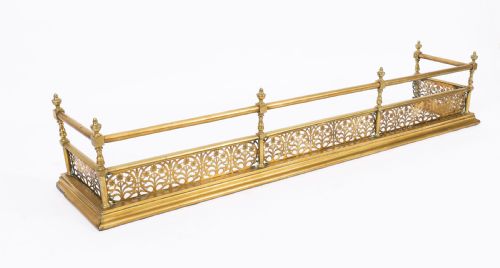
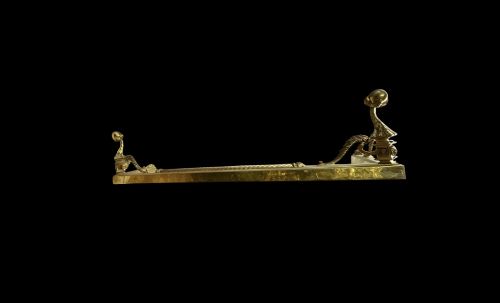
A traditional brass fire kerb frames the hearth with polished metal and pierced detail, containing stray embers while anchoring the room's fireplace.
Traditional Brass Fire Kerb
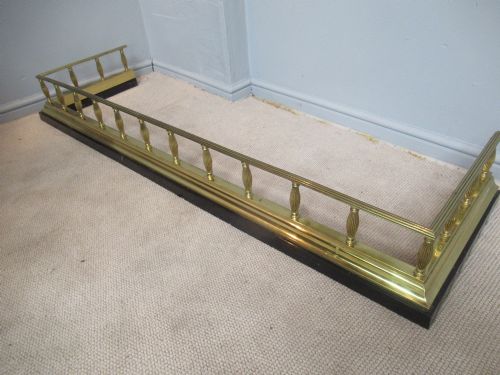
A traditional brass fire kerb acts as a fender around the hearth, establishing a clear barrier between the open fire and the room. These pieces appear most frequently in Victorian and Edwardian forms, spanning styles from simple pierced galleries to ornate Neoclassical and club fender designs.
Makers shaped these guards from heavy gauge brass, often pairing the metal with iron, steel, or copper elements. Buyers encounter straight and curved formats, alongside extending versions designed to fit varying hearth dimensions.
Materials and construction methods
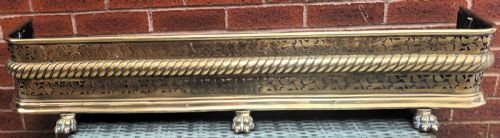
Craftsmen utilised sheet brass and cast brass, piercing the metal with intricate floral or geometric patterns to lighten the heavy visual mass. Many examples incorporate robust iron or steel internal frames to ensure structural rigidity under daily hearth use.
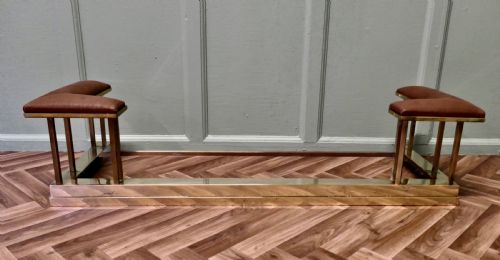
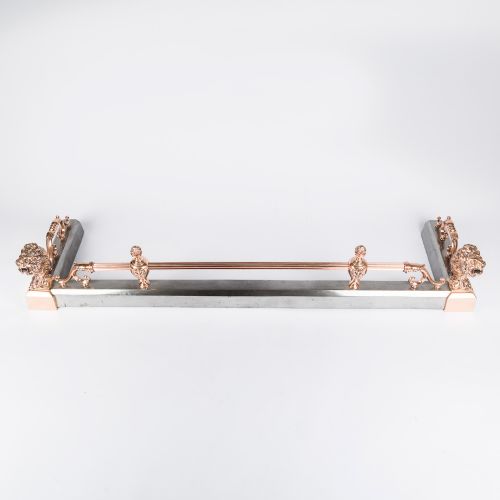
Decorative details included applied brass garlands, lions, and scrolled ornamentation fixed to the primary body. Club fender variants added leather-upholstered seats, combining the functional hearth guard with fireside seating.
Some Victorian brass fenders arrived with built-in rests for your toasting fork.
Judging quality in brass fire kerbs
Quality rests primarily upon the gauge of the brass and the crispness of the pierced or cast ornamentation. Finer examples display deep, sharp detailing in floral motifs and substantial weight that prevents movement on the floor.
The integrity of the structural frame, whether iron or steel, determines how well the fender survives decades of heat and foot traffic. Superior pieces maintain tight joints and well-preserved surface finishes without excessive thinning from past polishing.
The Traditional Brass Fire Kerb Glossary
- Brass fire kerb
- A metal barrier placed on the floor around a fireplace opening to contain ash and embers. It is also commonly referred to as a fire fender.
- Club fender
- A low fireside guard featuring upholstered leather top rails designed for seating. These pieces originated in gentlemen's clubs.
- Pierced brass
- Sheet metal perforated with decorative holes or fretwork patterns. This technique reduced weight while creating intricate visual designs.
- Extending fender
- A metal hearth guard built with sliding sections to adjust the overall width. This design accommodated different fireplace openings.
Traditional Brass Fire Kerb: Frequently Asked Questions
What is a traditional brass fire kerb?
A traditional brass fire kerb is a metal barrier placed on the floor directly in front of an open fireplace. It serves to keep burning logs, hot coals, and sparks safely contained within the hearth area.
Beyond safety, these pieces define the focal point of a room. They bring warmth and reflective metallic texture to Victorian and Edwardian interior schemes.
How do I measure for a fire fender?
Measure the width and depth of your hearth stone or the opening of the fireplace recess. Ensure the internal dimensions of the kerb allow adequate clearance around the grate.
Take note of whether you need a fixed size or an extending model. Extending versions provide flexibility if you plan to move the fender to a different room later.
How do I clean polished brass?
Dust the surface gently with a soft cloth to remove loose debris and ash. Apply a mild, non-abrasive brass cleaner sparingly if you wish to maintain a bright, polished appearance.
Many collectors prefer to leave an aged patina intact rather than polishing the metal to a high shine. Avoid harsh chemical dips that strip away historical character.
What is the difference between a fender and a club fender?
A standard fender consists solely of a metal frame, often pierced or decorated with cast ornaments, standing low to the floor. It acts purely as a physical barrier for the hearth.
A club fender incorporates padded leather top rails that function as low seats. This design allowed Victorians and Edwardians to sit comfortably close to the warmth of the fire.