




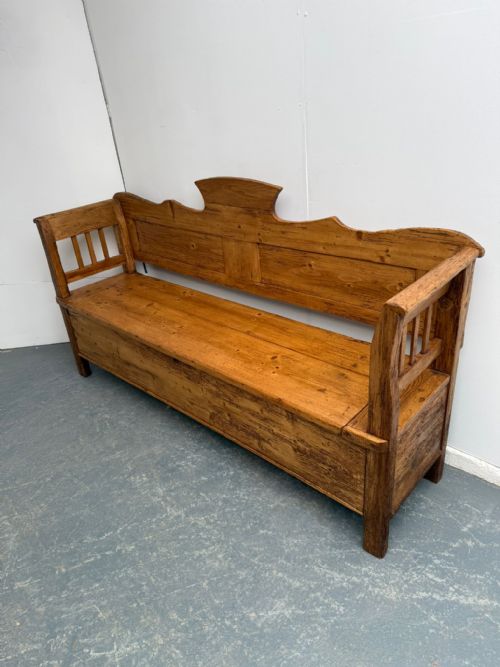
Traditional Box Bench
Traditional box bench designs combine seating with hidden storage, offering a practical seat that keeps household goods tucked neatly out of sight.
Traditional Box Bench
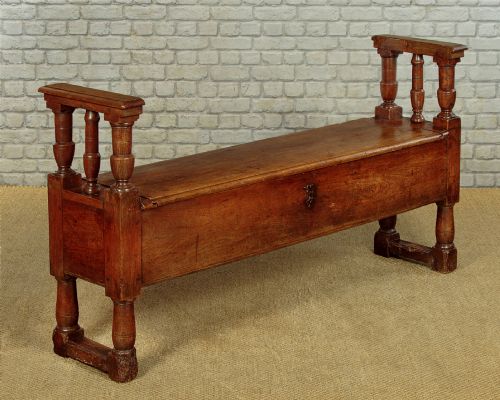
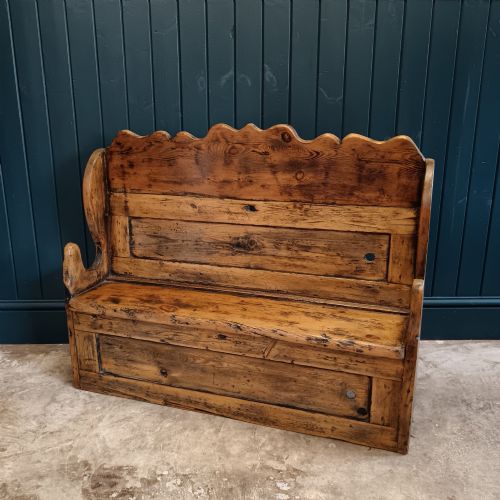
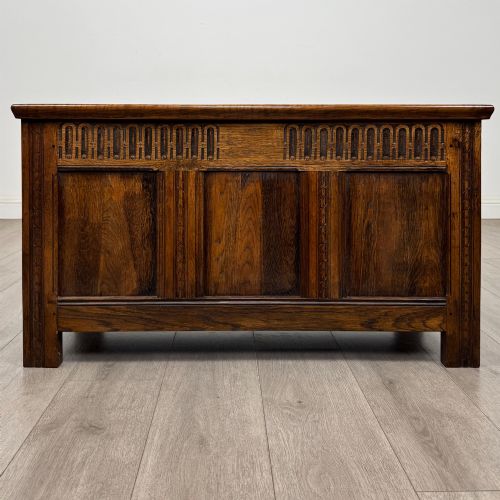
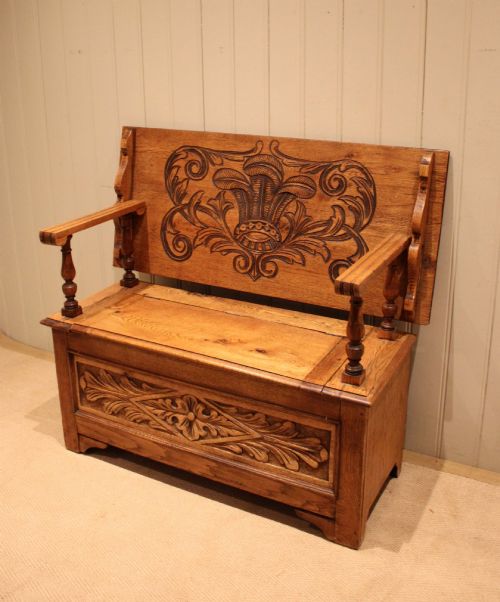
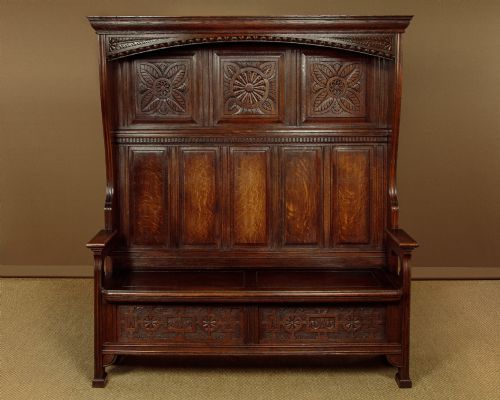
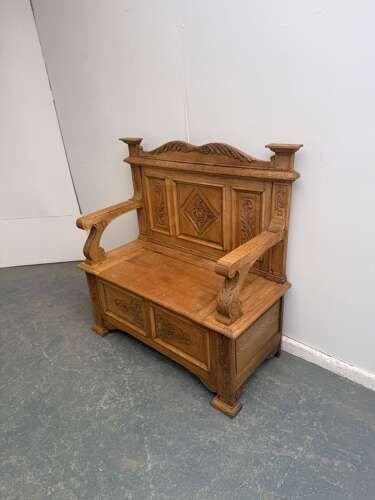
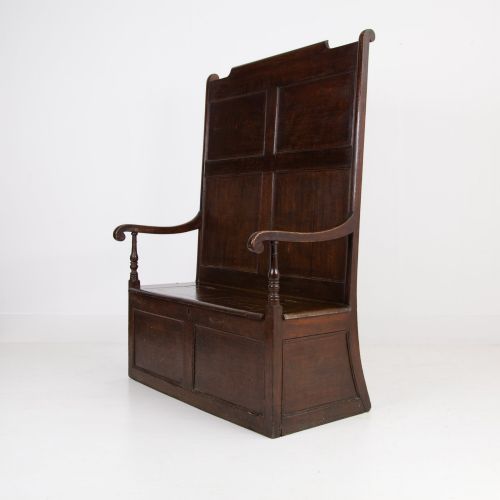
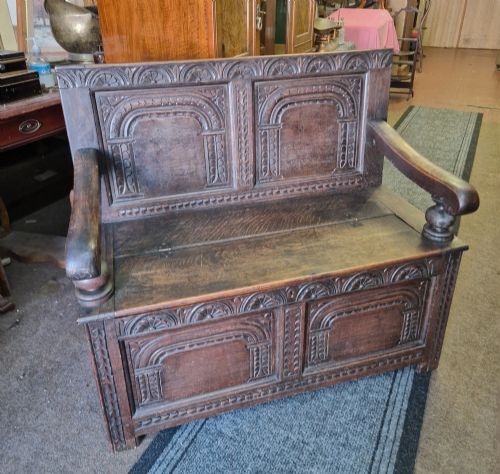
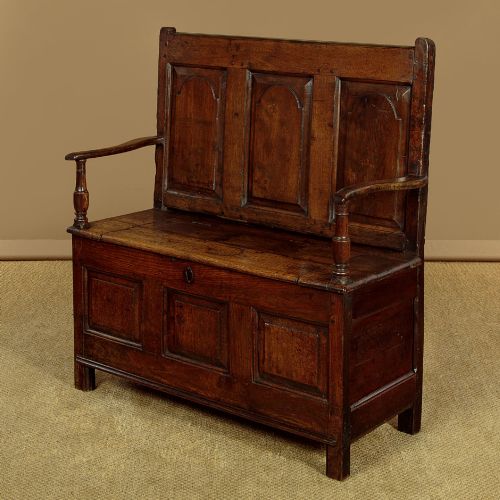
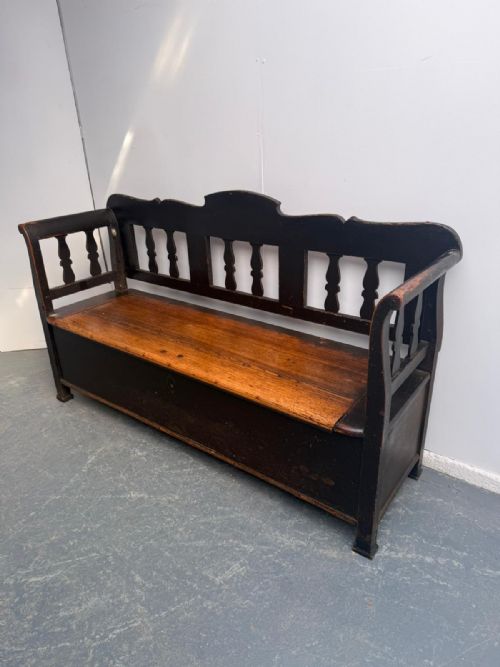
A traditional box bench provides a dual purpose as a seat and a trunk, appearing across several centuries in forms like settles, mule chests, and hall seats. These pieces range from compact hallway seats to wide three-seater and four-seater versions designed for communal rooms.
The selection includes regional styles spanning English, Welsh, and Scandinavian traditions, alongside Hungarian painted examples. Buyers frequently encounter pine and oak constructions shaped by vernacular craftsmanship during the Georgian and Victorian eras.
Materials and Construction
Carpenters built these benches using solid timbers such as oak, elm, and pine, often joined with sturdy pegged joints and panelled backs. Many pieces feature hinged lids or lift-up seats that grant access to the storage compartment underneath.
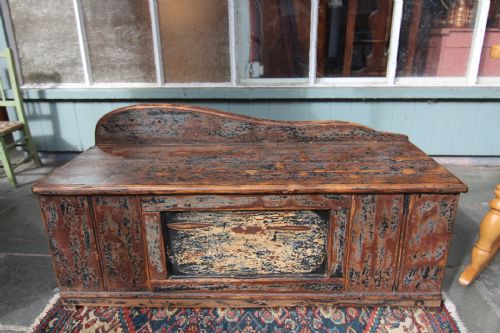
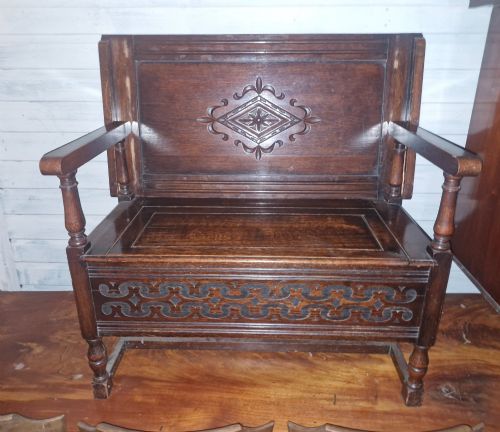
Surface treatments vary from waxed finishes that highlight the natural grain to original painted coats in grey, cream, and green. Details like carved ornamentation, canopy tops, and iron hardware appear on specific regional and period variants.
Traditional Box Bench Retail Price Guide 2026
Typical asking prices for traditional box bench among the pieces listed under this phrase on Sellingantiques today, from the lower quarter to the upper quarter. They describe what is for sale here now, not the wider market.
Some eighteenth-century elm bacon settles double as a clever curing cupboard for household provisions.
Assessing Quality
Quality rests in the integrity of the timber, the originality of the hardware, and the preservation of early surface treatments such as original paint or period wax. Superior examples retain their structural cohesion without extensive timber replacement.
Finer pieces display deliberate craftsmanship in carved details, balanced proportions, and well-fitted storage lids that operate smoothly within the historical joinery.
The Traditional Box Bench Glossary
- Box settle
- A wooden bench featuring a high back, solid armrests, and a concealed storage box beneath the seat. This form protected occupants from draughts in older homes.
- Mule chest
- A storage chest fitted with one or more drawers at the base beneath the main compartment. These pieces bridge the gap between simple coffers and full drawer chests.
- Bacon settle
- An eighteenth-century variant featuring a high panelled back designed for curing meat or storing provisions. They represent specialised vernacular joinery.
- Vernacular
- Everyday furniture built by local craftsmen using regional materials rather than following high-style academic designs. These objects reflect local domestic needs.
Traditional Box Bench: Frequently Asked Questions
Where should I place a box bench?
These benches suit hallways, boot rooms, and kitchens where seating and concealed storage serve daily routines.
Their narrow footprints also allow them to function well along corridors or at the foot of larger rooms.
How do I maintain the wood surface?
Waxed timber benefits from occasional applications of traditional beeswax to nourish the grain and protect against drying out.
Painted surfaces require gentle dusting and should be kept away from direct heat sources to preserve the finish.
Can I use the storage safely?
The interior compartments provide sturdy space for blankets, shoes, and household items once checked for cleanliness.
Lids with heavy timber construction should be lifted carefully to protect original hinges.
How do I identify the period?
Joinery methods, timber species, and tool marks offer primary clues to whether a piece originates from the eighteenth or nineteenth century.
Stylistic elements like panel carving and original paint layers help narrow down the specific decade.