



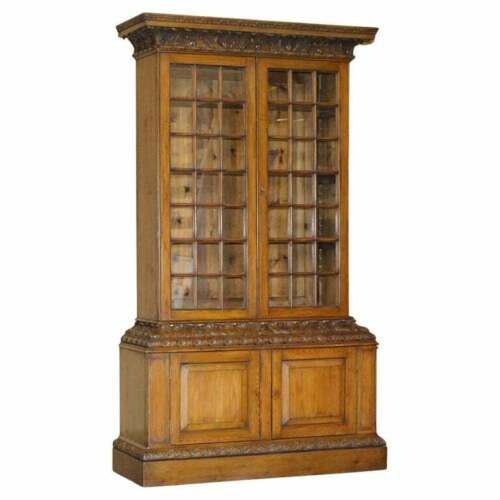
Traditional Book Press
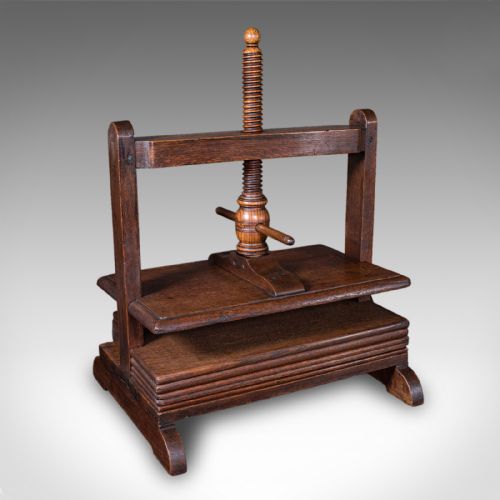
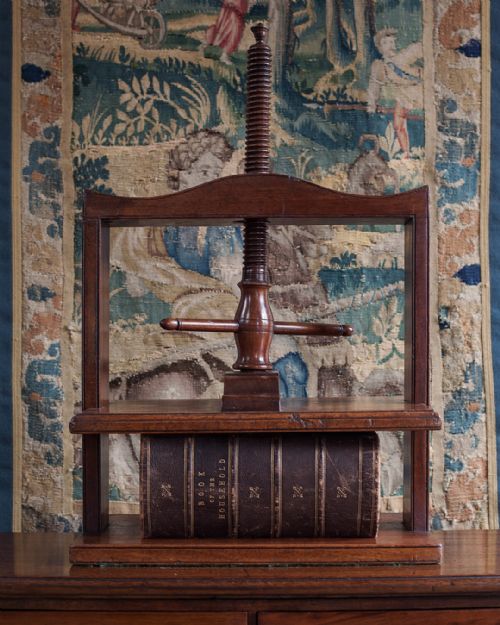
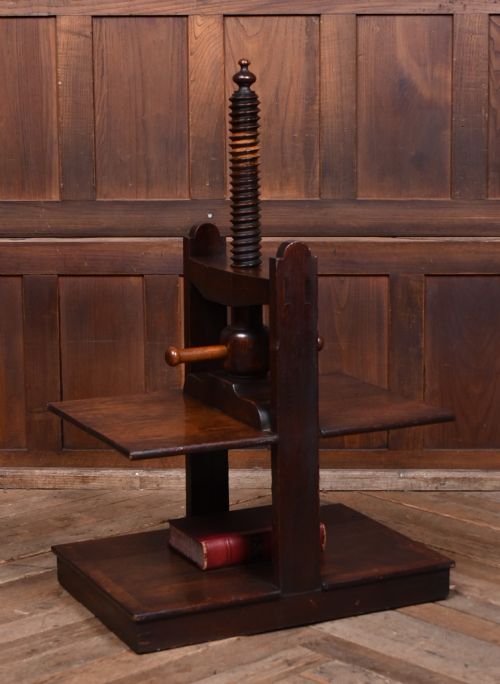
A traditional book press combines heavy timber and metal mechanics to flatten pages or bind volumes with steady pressure.
Traditional Book Press
A traditional book press is a heavy desktop or table-top apparatus designed for flattening paper or binding volumes, appearing in forms such as a book press, bookbinding press, or flower press. When searching for a traditional book press, buyers encounter sturdy desktop examples alongside related pieces of furniture and utility items like press chests, linen presses, and library bookcases. These pieces span several historical periods, most frequently emerging from the Georgian, Regency, and Victorian eras.
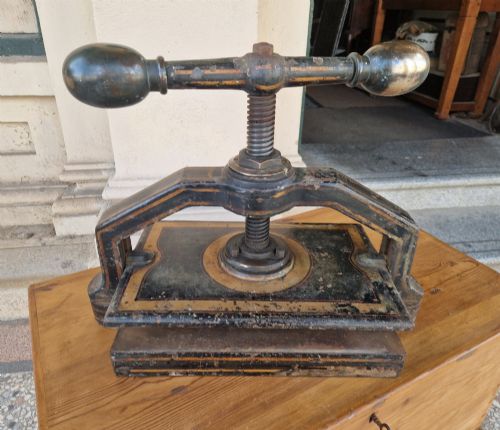
The materials utilised in these presses reflect a practical, utilitarian approach to construction, combining robust timbers with metal hardware. Oak and mahogany dominate the wooden elements, sometimes complemented by elm, while iron and brass provide the mechanical strength needed for the screw mechanisms. Styles range from plain country house furniture to formal Georgian and Regency designs, alongside mid-nineteenth-century interpretations.
How they were made
Makers constructed these presses using durable hardwoods like oak, mahogany, and elm for the primary frames, platens, and supporting tables. These timbers provided the structural stability required to withstand the immense mechanical pressure exerted during the pressing and binding process.
Cast iron and brass components, including threaded screws and handles, were integrated into the wooden framework to drive the platens evenly downwards. This combination of dense wood and metal engineering created functional apparatuses built for heavy, daily workshop or library use.
Traditional Book Press Retail Price Guide 2026
Typical asking prices for traditional book press among the pieces listed under this phrase on Sellingantiques today, from the lower quarter to the upper quarter. They describe what is for sale here now, not the wider market.
Listings for this phrase feature pieces from the Georgian, Regency, and Victorian periods, constructed predominantly in oak and mahogany with cast iron and brass elements.
What varies in quality
Quality in a traditional book press rests on the selection of timber and the precision of the mechanical components. Fine examples display carefully chosen grains in woods like mahogany or oak, paired with substantial iron or brass hardware that operates smoothly.
The architectural proportion and joinery of the surrounding housing or table also distinguish finer pieces from standard utilitarian items. Superior execution shows in the integration of the press mechanism with the timber base or table structure.
The Traditional Book Press Glossary
- Platen
- The flat heavy block or board that moves downward under pressure to press the contents placed beneath it. This component distributes the force evenly across the surface of the paper or book.
- Breakfront
- A large cabinet or bookcase whose central section projects forward from the flanking sections. This architectural form provides visual depth and grandeur to large library furniture.
- Country House
- A descriptive term for furnishings made for large rural estates, favouring sturdy local woods like oak and elm over exotic imports. These items emphasise practicality and robust construction.
- George IV
- The historical period spanning the reign of George IV from 1820 to 1830, or furniture executed in the characteristic Regency style of those years. Design during this phase often refined earlier classical lines.
Traditional Book Press: Frequently Asked Questions
What is a traditional book press used for?
These presses were originally utilised in binderies and libraries to flatten pages, press newly bound volumes, or squeeze moisture from botanical specimens in flower presses.
Today, they serve both as functional tools for contemporary bookbinders and as decorative historical objects in studies and libraries.
How do I date a wooden book press?
Dating relies on identifying the prevailing furniture styles, the character of the timber, and the manufacturing methods of the metal components. Georgian and Regency pieces typically show different joinery details and wood selections compared to mid-Victorian examples.
Examining the wear patterns on the wooden screws and iron threads also helps determine the approximate period of manufacture.
Are these presses heavy to move?
Traditional book presses are exceptionally heavy because they combine dense hardwoods like oak or mahogany with cast iron screws and platens.
Larger table-top versions and press chests require two people to lift and position them safely on a sturdy surface.
How should I care for the wood and metal?
Maintenance involves applying a light coat of appropriate wax to nourish the timber and prevent it from drying out over time. The metal screws and iron parts benefit from a very light application of oil to keep the mechanism moving smoothly.
Keep these objects away from direct heat sources and excessive moisture to protect the timber joints.