

Traditional Bedding Chest
A traditional bedding chest holds linen and woollens while anchoring a room with centuries of timber and grain.
Traditional Bedding Chest
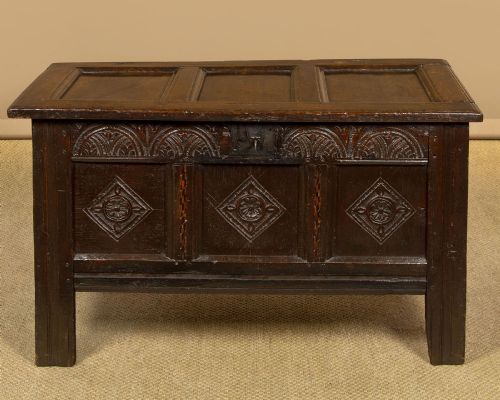
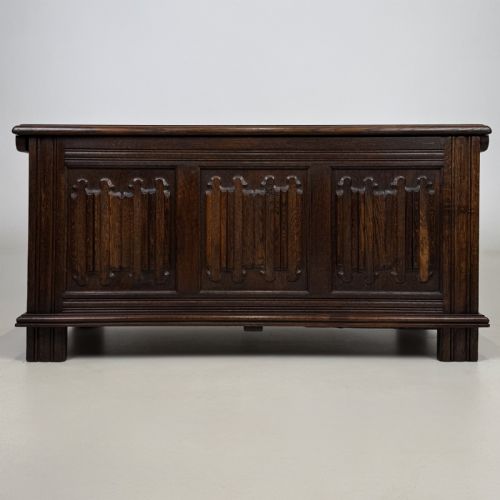
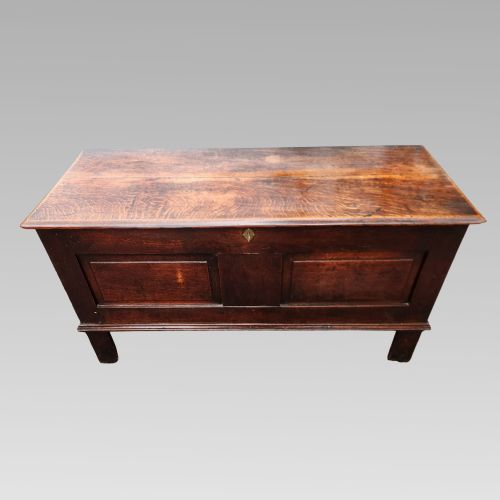
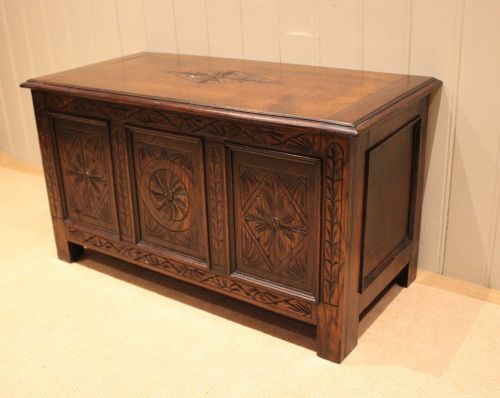
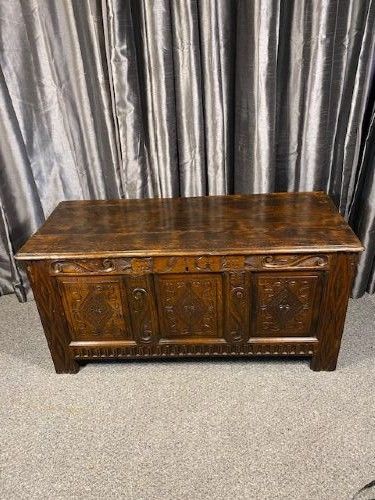
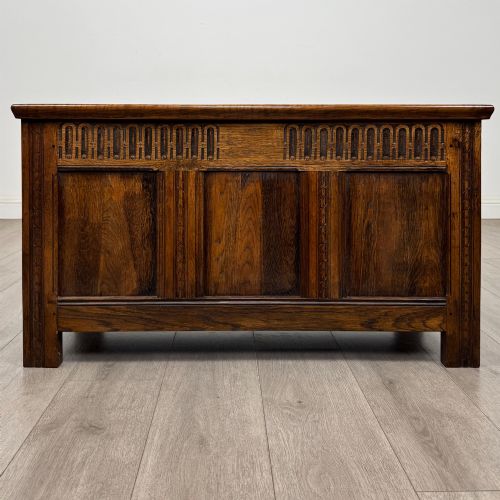
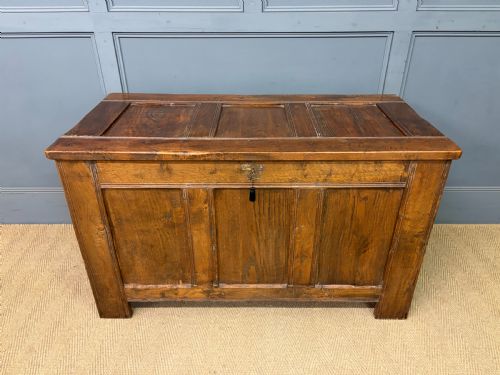
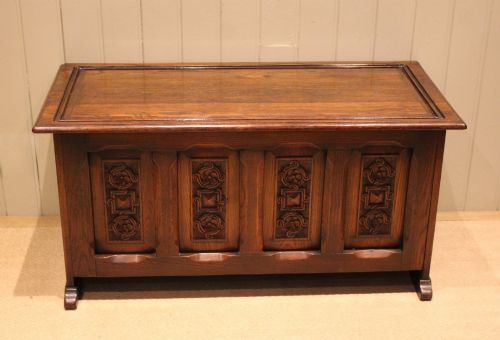
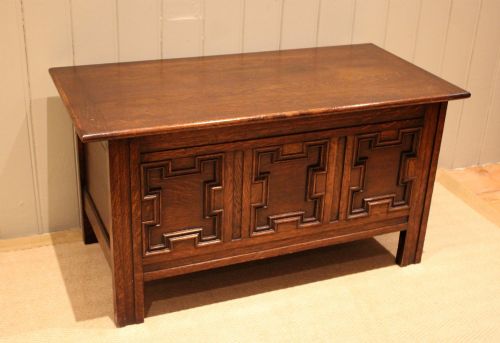
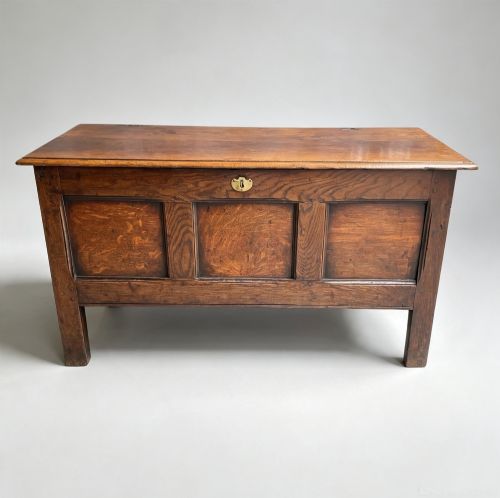
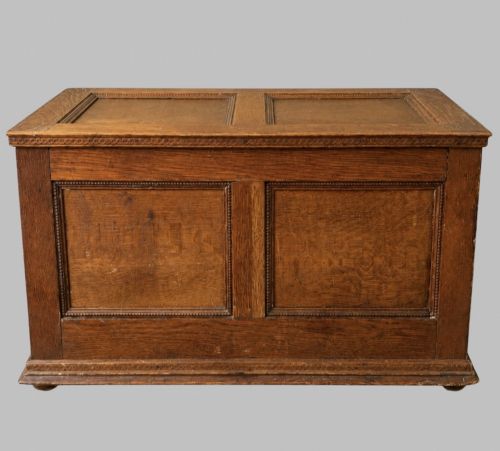
A traditional bedding chest is a deep storage box designed to hold blankets, sheets, and garments away from household dust and dampness. These pieces appear most frequently as oak coffers and blanket chests spanning from the seventeenth century through to the Victorian era.
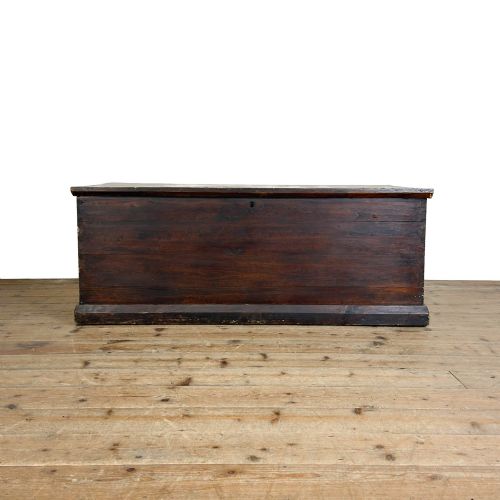
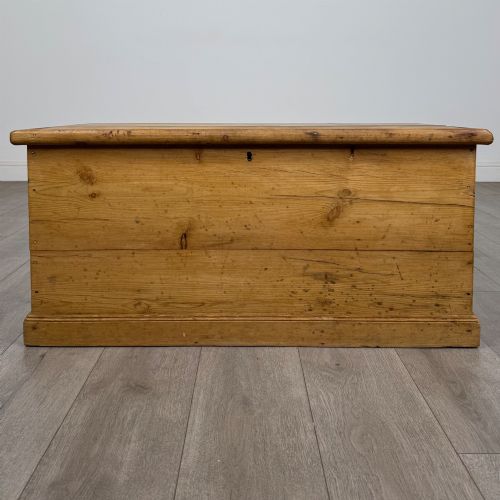
Buyers encounter solid oak examples built with panelled construction, alongside simpler pine blanket boxes and occasional mahogany or elm pieces. Many feature hinged lids and sturdy rectangular bodies that served practical domestic functions in country houses and rural homes.
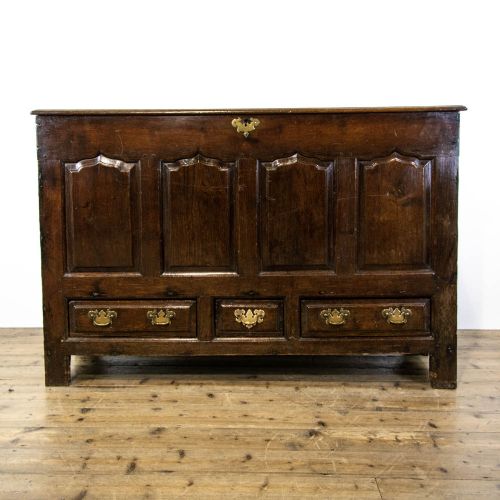
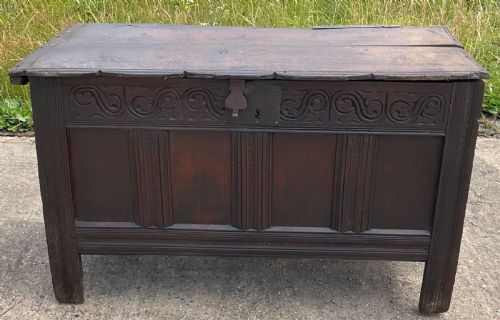
The selection ranges from seventeenth-century carved coffers with deep historical patination to nineteenth-century pine boxes finished in original paint. Welsh mule chests with lower drawers also appear, combining blanket storage with compartment space for smaller linens.
Assessing quality and character
Quality rests in the integrity of the timber, the depth of the carved detail, and the survival of original structural elements like feet, hinges, and boards. Pieces retaining their early surface patination or original paint hold greater historical authenticity than heavily restored examples.
The sophistication of the joinery and carving distinguishes standard utilitarian boxes from finer workshop pieces. Heavier mouldings, well-proportioned panels, and intact interior till boxes separate the exceptional examples from simpler domestic containers.
Traditional Bedding Chest Retail Price Guide 2026
Typical asking prices for traditional bedding chest among the pieces listed under this phrase on Sellingantiques today, from the lower quarter to the upper quarter. They describe what is for sale here now, not the wider market.
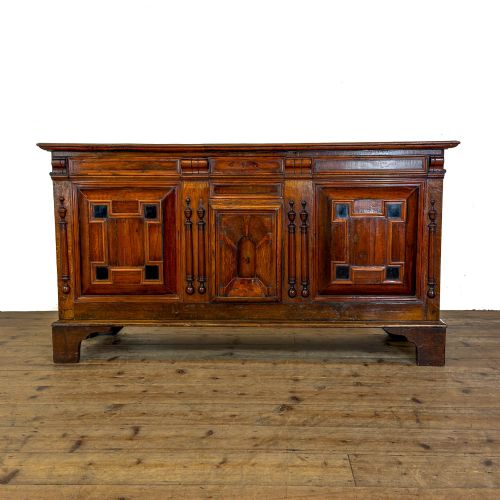
One stubborn nineteenth-century cabinet arrived directly from Brittany after being cleverly constructed from a closed bed front.
The Traditional Bedding Chest Glossary
- Coffer
- A heavy wooden chest traditionally used for storing valuables, documents, or textiles. These sturdy boxes often feature hinged lids and panelled fronts.
- Mule chest
- A storage chest fitted with one or more drawers beneath the main lift-top compartment. This form emerged in the seventeenth and eighteenth centuries to offer combined linen and small-item storage.
- Panelled construction
- A method of joining wooden frames around a thinner central board to prevent warping. This technique defines the sides and lids of many early oak chests.
- Patina
- The deep sheen and surface texture acquired by timber through decades of handling, waxing, and ageing. A rich patina indicates long periods of domestic use.
- Bracket feet
- Small structural feet that project from the corners of a chest to elevate the body off the floor. They appear frequently on eighteenth and nineteenth-century blanket boxes.
Traditional Bedding Chest: Frequently Asked Questions
What is a traditional bedding chest used for today?
These chests serve as practical storage for spare duvets, winter blankets, and heavy quilts at the foot of a bed or in a hallway. Their flat lids also allow them to function as window seats, low tables, or display surfaces.
Placing textiles inside helps keep guest rooms organised while introducing historical timber texture into modern interiors.
What is the difference between a coffer and a mule chest?
A standard coffer opens only from the top lid and provides one single deep compartment for bulk storage. A mule chest includes one or more drawers built into the base beneath the main storage well.
This drawer addition allows users to retrieve smaller items without lifting the heavy top lid and disturbing items stacked above.
Can I place a pine blanket box in a modern bedroom?
Pine blanket boxes bring a relaxed, rustic warmth that pairs easily with contemporary neutral walls and minimalist furnishings. Painted nineteenth-century variants add soft colour accents while providing concealed storage for daily clutter.
Keeping timber chests away from direct heat sources ensures the wood remains stable in centrally heated rooms.