



Traditional Bachelor Chest
A traditional bachelor chest gives you neat drawer storage and a pull-out slide for a writing surface.
Traditional Bachelor Chest
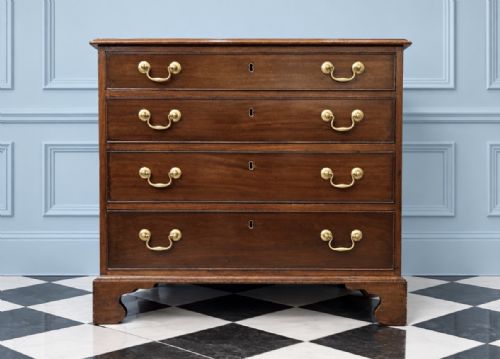
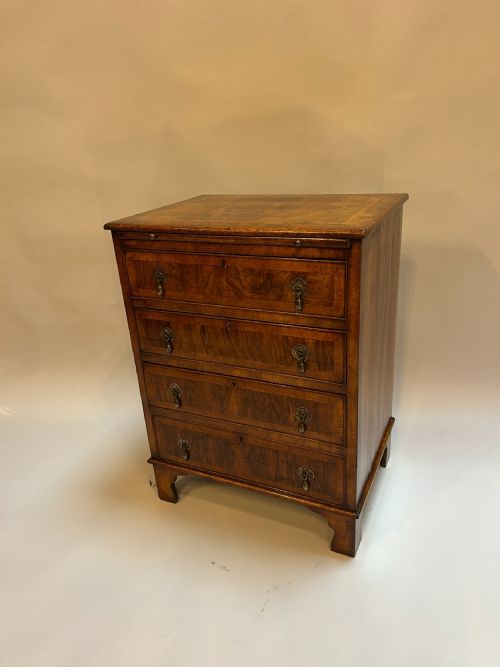
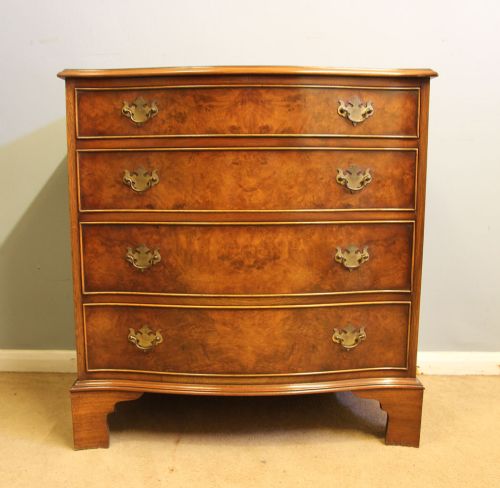
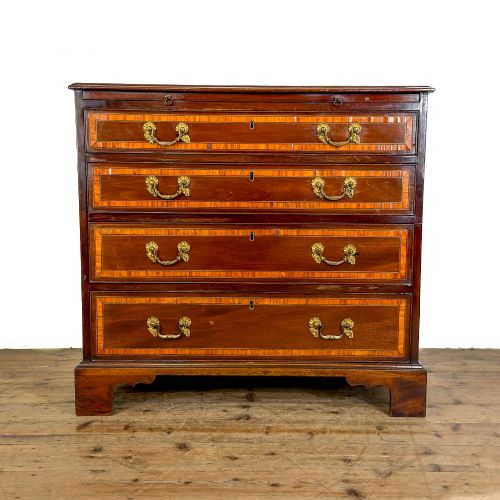
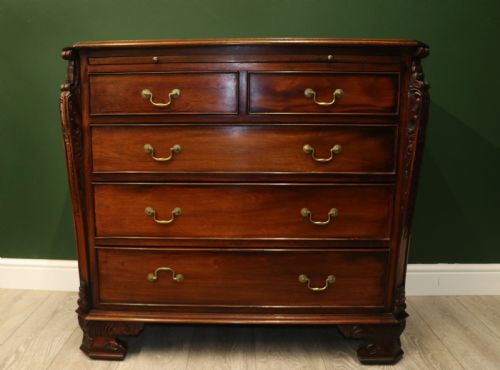
A traditional bachelor chest is a compact chest of drawers fitted with a pull-out writing slide above the top drawer. The pieces seen here span the Georgian period through to the mid-twentieth century, including later Georgian Revival interpretations.
Most examples you will encounter take the form of small or narrow chests intended for bedroom use. They combine practical drawer capacity with a compact footprint that suits smaller spaces.
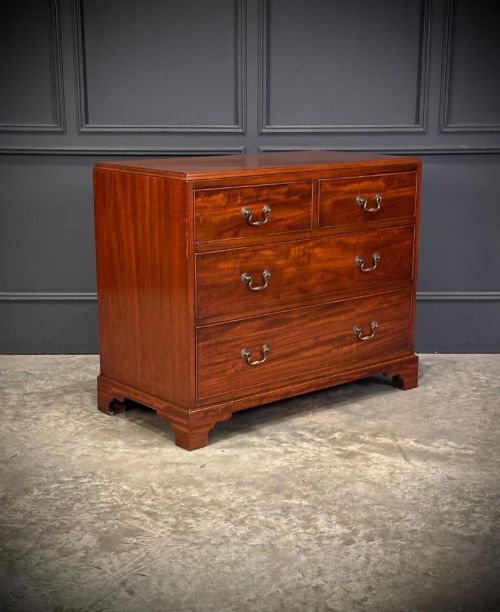
Makers shaped these pieces from various timbers, with mahogany dominating alongside oak, walnut, rosewood, and yew wood. Their styles range from strict eighteenth-century George III designs to later Victorian and Edwardian iterations.
Materials and construction methods
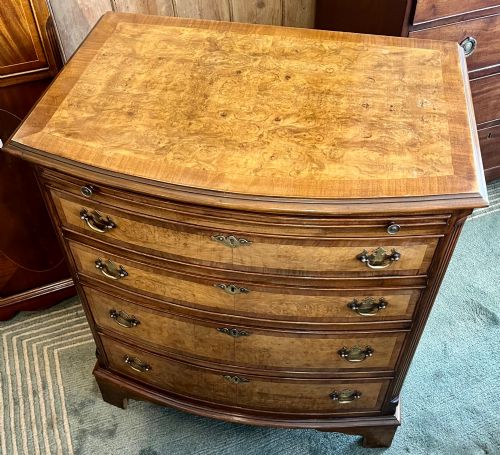
Cabinetmakers built these chests using solid timbers and decorative veneers such as burr walnut and figured mahogany. Selected pieces incorporate cross-banding in contrasting woods to accent the drawer edges and top surfaces.
Drawer construction relies on traditional joinery methods housed within sturdy carcases. Brass hardware, including drop handles and escutcheons, completes the functional elements of the furniture.
Traditional Bachelor Chest Retail Price Guide 2026
Typical asking prices for traditional bachelor chest among the pieces listed under this phrase on Sellingantiques today, from the lower quarter to the upper quarter. They describe what is for sale here now, not the wider market.
Periods represented range from the eighteenth-century Georgian era through Victorian, Edwardian, and into the twentieth century.
Separating the ordinary from the exceptional
The choice of timber grain and veneer figure dictates much of the visual appeal. Figured mahogany and burr walnut display richer surface movement than plain planks.
Proportions also drive distinction, with smaller, narrower chests commanding greater interest for their neat scale. Crisp execution of cross-banding and well-fitted sliding boards elevate the standing of a piece.
The Traditional Bachelor Chest Glossary
- Slide
- A pull-out board positioned above the top drawers, historically used for writing or sorting papers. It retracts flush into the frame when not in use.
- Cross-banding
- A narrow strip of veneer laid around the border of a drawer front or top, with the wood grain running perpendicular to the surrounding surface.
- Serpentine
- A curved front shape that undulates outward at the centre and inward at the sides. This contour requires precise woodworking skill.
- Carcase
- The main structural body or frame of a chest of drawers, excluding the drawers and feet. It provides the foundational strength for the piece.
- Escutcheon
- A decorative metal plate surrounding the keyhole of a drawer or cabinet door. It protects the surrounding wood from wear.
Traditional Bachelor Chest: Frequently Asked Questions
What is a traditional bachelor chest used for?
These pieces serve as functional chests of drawers while offering an additional surface via the pull-out slide. Historically utilised for writing or dressing, today they work well as bedside tables or bedroom storage.
Their compact proportions allow them to fit into tighter spaces than a standard chest of drawers. The sliding board provides temporary workspace without needing a full desk.
How do I identify a Georgian piece?
Georgian pieces date from the eighteenth or early nineteenth century and typically feature timber choices like mahogany or oak. Look at the construction of the drawers and the style of the brass hardware.
Later pieces from the twentieth century often adopt a Georgian Revival style, copying earlier proportions. Examining the timber age and interior joinery helps distinguish eighteenth-century originals from later copies.
Are all these chests made of solid wood?
While many pieces utilise solid timbers like oak and mahogany, others employ decorative veneers over a stable secondary wood base. Burr walnut and figured mahogany are commonly applied as veneers to create striking surface patterns.
Veneering was a standard high-end technique rather than a sign of lower quality. It allowed cabinetmakers to display rich grain patterns that solid boards could not provide.
How do I style a small chest in a modern room?
A small chest works effectively as a bedside table or accent piece in a hallway or living room. The top surface provides space for a lamp or decorative items while keeping everyday clutter hidden in the drawers.
Pairing antique wood tones with contemporary decor creates a balanced interior. The compact footprint ensures the furniture does not overwhelm the room.