



Tortoiseshell Brass Inlay Table
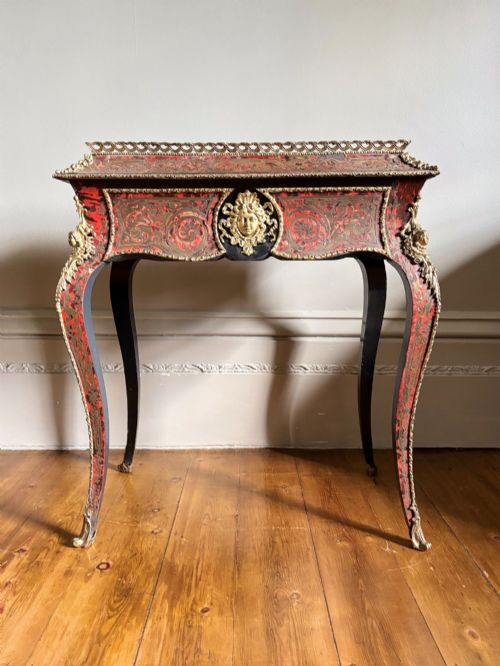
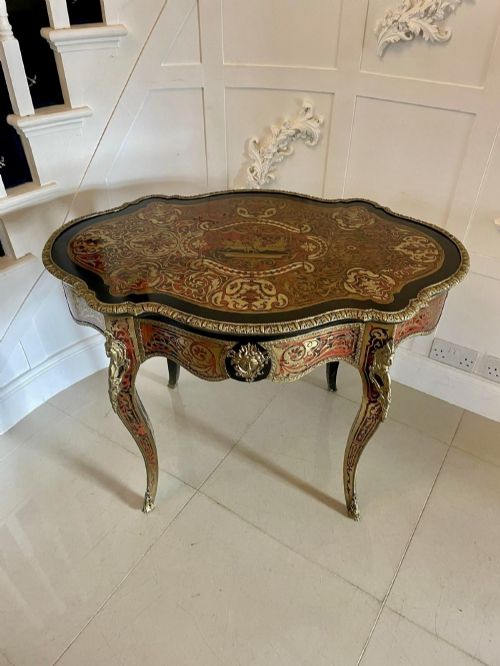
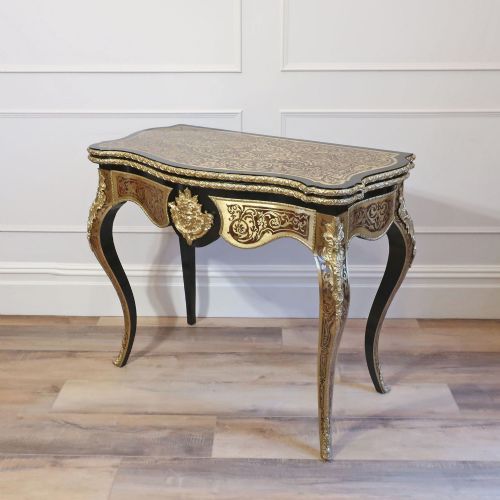
A tortoiseshell brass inlay table brings magnificent French revival grandeur into a room through contrasting metallic lustre and rich organic shell.
Tortoiseshell Brass Inlay Table
A tortoiseshell brass inlay table is typically a French centre table, card table, or games table originating from the nineteenth century. These pieces reflect revival aesthetics including Napoleon III and Louis XV styles, combining functional furniture with ornate decorative impact. You are most likely to encounter centre tables and card tables resting on cabriole legs, displaying intricate marquetry across their surfaces.
The form encompasses smaller writing desks, jardiniere stands, and bureau plat surfaces alongside the prominent tables. Makers utilised traditional marquetry techniques to produce deeply decorative surfaces suited to formal reception rooms. The visual weight of ebonised wood frames balanced against bright metallic inlays defines the character of these nineteenth century survivals.
How they were made
Craftsmen built these pieces using ebonised wood carcasses as a dark foundation for intricate decorative schemes. Brass and sometimes ormolu or gilt bronze components were shaped and fitted alongside tortoiseshell panels. Red tortoiseshell and green tinted variations appeared alongside traditional dark amber tones, secured firmly into the timber ground.
The inlay technique, known as Boulle-work, involved cutting sheets of brass and tortoiseshell simultaneously when clamped together to create interlocking positive and negative patterns. This method allowed workshops to produce matching counter-relief panels for complex table tops and cabinet doors. Fine chased ormolu mounts were then applied to corners, edges, and legs to frame the delicate marquetry.
Tortoiseshell Brass Inlay Table Retail Price Guide 2026
Typical asking prices for tortoiseshell brass inlay table among the pieces listed under this phrase on Sellingantiques today, from the lower quarter to the upper quarter. They describe what is for sale here now, not the wider market.
Tortoiseshell reacts to humidity by gently reminding its owner that it was once part of a sea creature's protective coat.
What varies in quality
Quality rests heavily on the precision of the brass cutting and the depth of the engraving within the metal elements. Finer examples display hair-thin joints between the brass and shell, while lesser pieces reveal wider filler lines where materials have shrunk or separated. The crispness of the chased ormolu mounts and the richness of the underlying tortoiseshell grain distinguish superior studio output from standard production.
The structural integrity of the timber carcass and the fidelity of the revival style also dictate the standing of a piece. Robust ebonising that retains its deep lustre without excessive modern refinishing preserves the integrity of the object. Tables signed by recorded makers or bearing workshop stamps generally demonstrate superior attention to internal joinery and secondary timbers.
Maison Millet·Edwards and Roberts·Samuel Marti·Payne London
The Tortoiseshell Brass Inlay Table Glossary
- Boulle-work
- A method of marquetry using brass and tortoiseshell inlaid into wood, developed in France during the seventeenth century and widely revived in the nineteenth century. This technique creates contrasting metallic and organic patterns across furniture and clock cases.
- Ormolu
- Gilded bronze mounts applied to furniture, clocks, and decorative objects for reinforcement and ornamentation. The term derives from the French for milled gold.
- Ebonised
- Wood treated with stain or pigment to imitate heavy, dense ebony. This dark finish provides a high-contrast background for bright brass and tortoiseshell inlay.
- Bureau plat
- A flat-topped freestanding writing desk typically fitted with drawers and standing on cabriole legs. These desks often feature elaborate marquetry across the top surface.
- Marquetry
- Decorative patterns formed by the insertion of pieces of wood, shell, or metal into a veneered surface. Craftsmen cut these elements precisely to fit flush within the designated ground.
Tortoiseshell Brass Inlay Table: Frequently Asked Questions
What is a tortoiseshell brass inlay table?
A tortoiseshell brass inlay table is a nineteenth century French revival piece, often styled after Louis XV or Napoleon III designs. These tables feature intricate metal and shell marquetry set into ebonised wood.
They served primarily as centre tables or games tables in formal drawing rooms, showcasing elaborate craftsmanship intended to impress guests. Their distinctive appearance combines dark organic shell with gleaming brass scrollwork.
How do I clean a tortoiseshell brass inlay table?
Clean these surfaces using a soft, dry microfibre cloth to remove dust without disturbing the delicate brass or shell inlays. Avoid chemical polishes, excessive moisture, or alcohol-based cleaners that can damage the antique polish and lift the veneer.
Wax can be applied very sparingly to the wooden framework using a neutral paste wax, but care must be taken around engraved brass lines. Professional conservation is recommended if individual pieces of inlay begin to loosen.
How do I date a Boulle table?
Dating relies on examining the secondary timbers used inside the carcass, the style of the cast ormolu mounts, and the framing construction. Nineteenth century Victorian and Napoleon III revival pieces often display machine-sawn elements or standard nineteenth century joining techniques.
Comparing the decorative motifs to known nineteenth century revival patterns helps narrow the decade of production. Signed pieces by recorded makers also provide a reliable anchor for the timeline.
Can I use a games table for daily dining?
These tables are generally unsuited for heavy daily dining due to the delicate nature of the shell and brass surface veneer. Heat, moisture, and heavy impacts can crack the tortoiseshell or dislodge the fine metal inlay.
Instead, use them as display surfaces in low-traffic areas or as occasional writing and card tables. Protective glass tops are sometimes employed if regular functional use is desired without risking the antique marquetry.