





Tortoiseshell Boulle Credenza
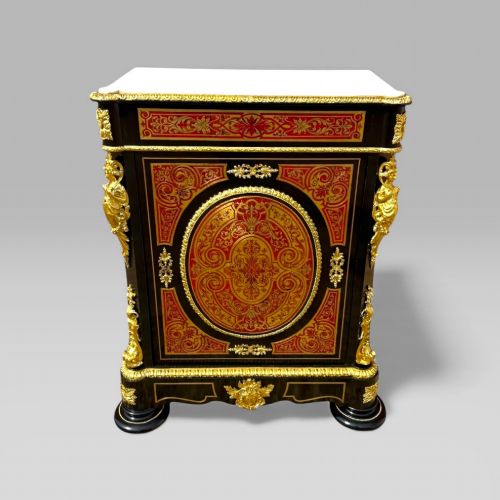
A tortoiseshell boulle credenza is a nineteenth-century French revival display piece that brings striking marquetry and heavy ormolu mounts to any formal room.
Tortoiseshell Boulle Credenza
A tortoiseshell boulle credenza represents nineteenth-century French revival cabinet-making, predominantly appearing in Napoleon III and Victorian styles. These low furniture pieces function as side cabinets, pier cabinets, and display cabinets within formal interiors.
Most examples found on this page date between eighteen-fifty and eighteen-eighty, showcasing distinctive ebonised wood structures. Buyers frequently encounter sideboards and breakfront side cabinets sharing these exact decorative characteristics.
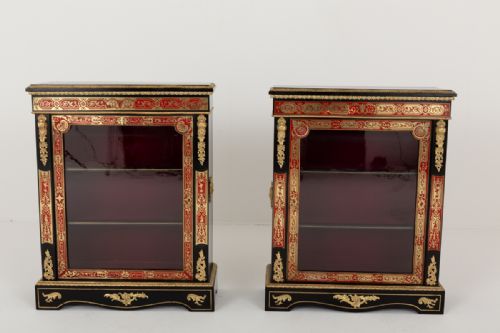
The form serves both decorative and display purposes, frequently incorporating glass doors to showcase contents while exhibiting elaborate brass and tortoiseshell marquetry across the entire exterior surface.
How they were made
Craftsmen built the core structure from ebonised wood or occasionally rosewood, providing a dark foundation for intricate brass and tortoiseshell marquetry. Ormolu mounts and gilt bronze details were then applied to corners, borders, and feet to accentuate the curved serpentine shapes.
Makers integrated marble tops and glass panels into the cabinets, combining polished stone surfaces with delicate metallic inlay. Velvet linings often appeared inside the display sections, complementing the exterior metalwork and polished wooden frames.
Tortoiseshell Boulle Credenza Retail Price Guide 2026
Typical asking prices for tortoiseshell boulle credenza among the pieces listed under this phrase on Sellingantiques today, from the lower quarter to the upper quarter. They describe what is for sale here now, not the wider market.
Materials appearing across these cabinets include brass, tortoiseshell, ebonised wood, ormolu, glass, gilt bronze, marble, and velvet.
What varies in quality
The precision of the brass and tortoiseshell marquetry work distinguishes standard production from finer workshops. Sharpness in the cast ormolu mounts and the smoothness of the serpentine wooden curves dictate the overall refinement of the piece.
Structural integrity of the ebonised wood and the quality of the gilt bronze detailing separate simpler side cabinets from elaborate display credenzas.
The Tortoiseshell Boulle Credenza Glossary
- Boulle
- A form of marquetry using brass and tortoiseshell inlaid in contrasting patterns. This technique defines the primary decorative surface of these nineteenth-century cabinets.
- Ormolu
- Gilded bronze used for decorative mounts and trimmings on furniture. It provides bright metallic contrast against the dark ebonised wood.
- Credenza
- A low cabinet used for storage and display, often featuring glass doors. In nineteenth-century contexts, it serves as a central focal point in a reception room.
- Pier cabinet
- A tall, narrow cabinet designed to fit against the wall space between windows. These pieces often match the decorative scheme of larger credenzas.
- Ebonised
- Wood finished to resemble ebony through staining or painting. This treatment creates a dense black surface that highlights the inlaid brass elements.
Tortoiseshell Boulle Credenza: Frequently Asked Questions
Where should I place a tortoiseshell boulle credenza?
These cabinets suit reception rooms, formal hallways, or drawing rooms where their reflective brass inlay and ormolu mounts catch natural light.
Keep them away from direct sunlight and excessive heat sources to protect the delicate tortoiseshell and wooden structure.
How do I clean the brass and tortoiseshell marquetry?
Dust the surfaces regularly with a soft, dry lint-free cloth to prevent particle buildup within the intricate brass and tortoiseshell joints.
Avoid commercial chemical polishes or excessive moisture, which can damage the organic tortoiseshell and loosen the historical marquetry.
What is the difference between a credenza and a pier cabinet?
A credenza is typically a wider, low-profile cabinet designed for a main wall, often featuring multiple doors for display and storage.
A pier cabinet is narrower and taller, specifically manufactured to occupy the wall space situated directly between two windows.
How can I tell a Napoleon III credenza from a Victorian one?
Napoleon III pieces generally reflect direct mid-nineteenth-century French design influences, often displaying pronounced serpentine fronts and rich ormolu mounts.
Victorian examples produced in Britain frequently adapt these same French revival techniques but may show subtle variations in timber choice and proportion.