

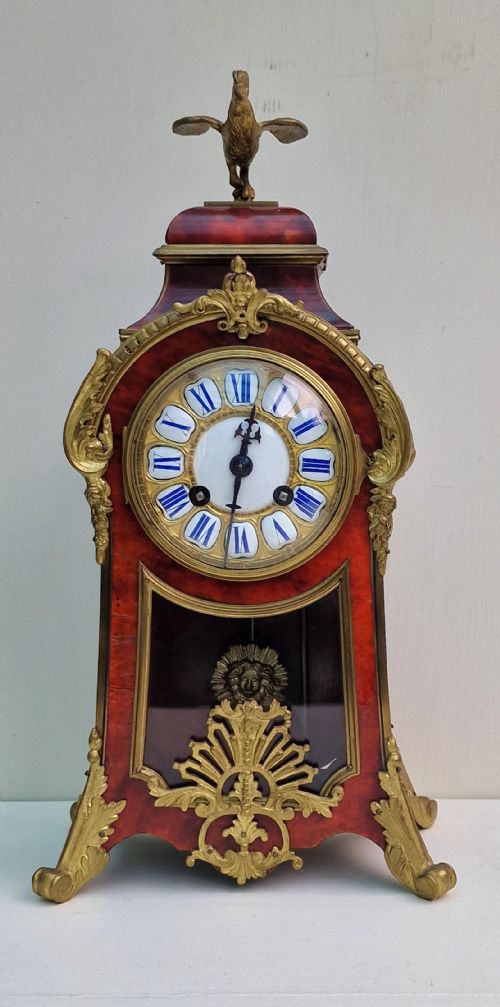
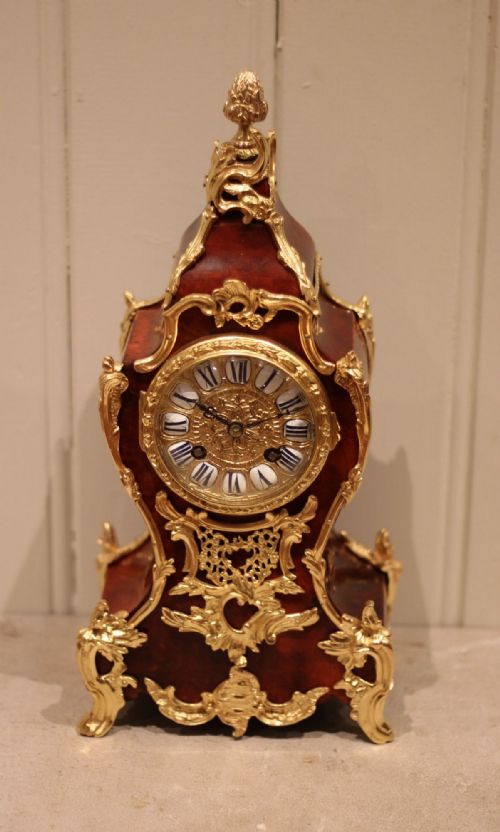


Tortoiseshell Boulle Clock
A tortoiseshell boulle clock combines rich tortoiseshell veneer with intricate brass inlay to create a striking centrepiece for any room.
Tortoiseshell Boulle Clock
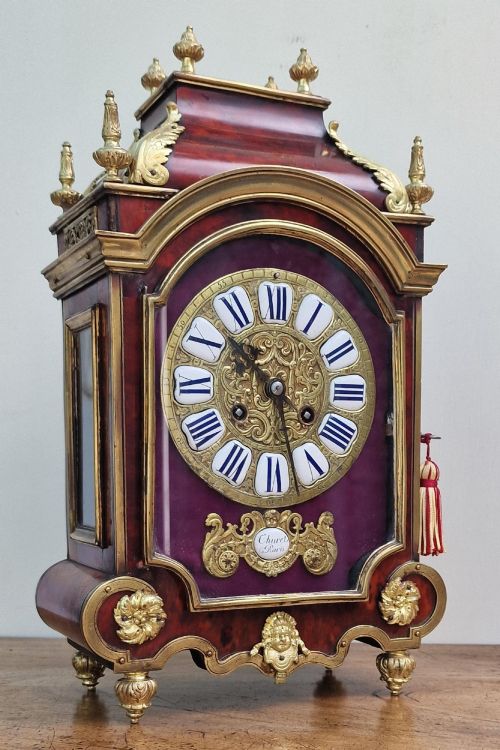
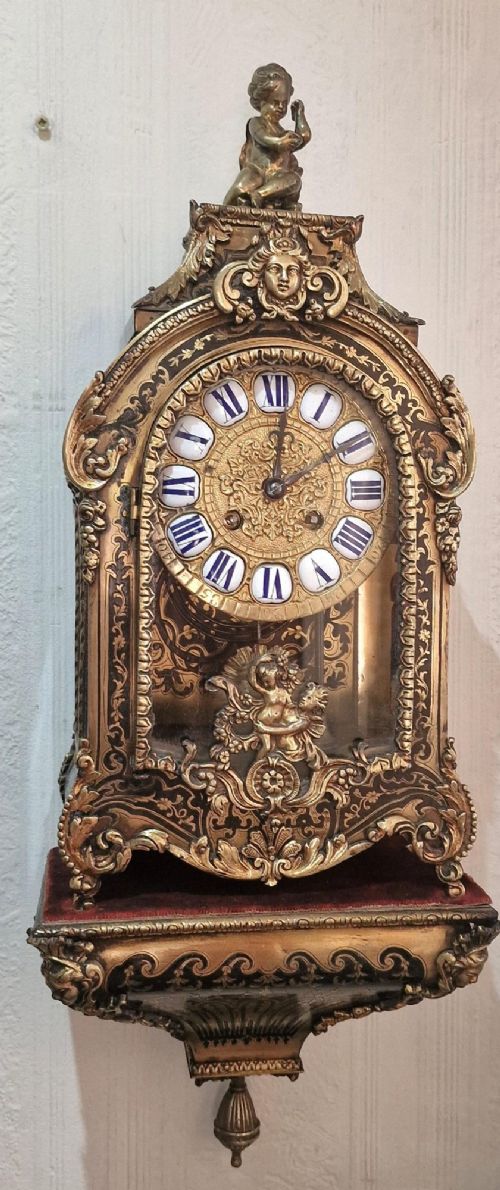
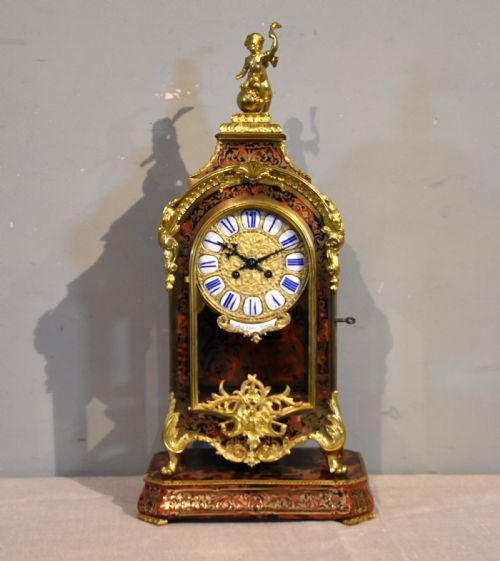
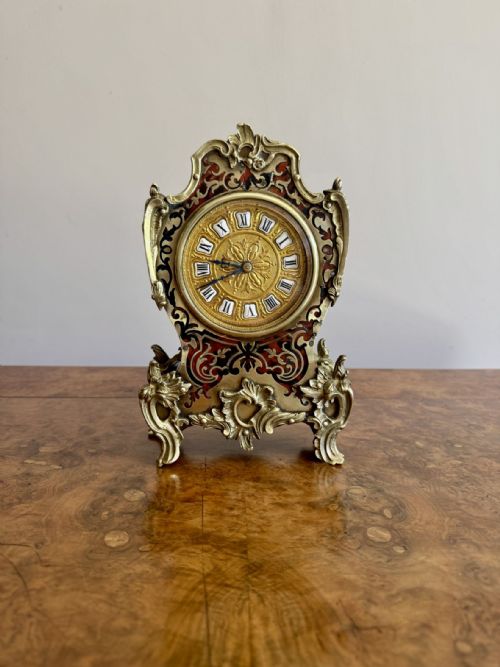
When you search for a tortoiseshell boulle clock, you encounter ornate timepieces developed in France during the seventeenth century and revived throughout the nineteenth century. These items manifest primarily as mantel clocks, alongside bracket clocks with matching wall brackets and occasional longcase formats.
The objects combine wooden carcass structures with distinctive surface decoration known as boullework. The listings on this page show Victorian examples alongside pieces dated from the eighteen-fifties to nineteen-hundred, predominantly executed in styles such as Louis XIV, Louis XV, and French Rococo Revival.
Buyers look for these pieces to anchor a mantelpiece or desk with historic gravitas and intricate visual texture. Most options you meet combine tortoiseshell veneer with polished brass inlay and cast ormolu mounts.
How they were made
Craftsmen built the core structure from ebonised or stained wood, applying thin layers of tortoiseshell veneer across the surface. Into this shell, artisans inlaid precisely cut brass and sometimes pewter using a marquetry technique where contrasting sheets were layered and cut simultaneously.
Makers enriched the assembled cases with cast ormolu, gilt bronze, and brass mounts shaped into scrolls, foliage, and figural details. Dials typically feature individual enamel cartouches for numerals, set behind glass doors within the decorated housings.
Some mantel clocks feature built-in thermometers alongside the dial, ensuring you know just how cold the drawing room is.
What varies in quality
The standard of a boulle clock depends heavily on the precision of the brass and tortoiseshell marquetry. Finer examples display tight, seamless joints between the metal inlay and the shell, whereas simpler pieces show wider adhesive lines or filler.
Quality also resides in the casting and chiselling of the ormolu mounts that frame the case. Crisp, sharply defined bronze mounts with deep relief distinguish the upper tier of production from softer, shallower castings.
Thuret Paris·Henri Marc Of Paris·Samuel Marti·A D Mougin·Payne London
The Tortoiseshell Boulle Clock Glossary
- Boullework
- A marquetry technique of inlaying brass and tortoiseshell developed by André-Charles Boulle. This method creates contrasting patterns where metal sits within shell or vice versa.
- Ormolu
- Gilded bronze used for decorative mounts and feet on furniture and clocks. The process involves applying a gold-mercury amalgam to shaped bronze.
- Mantel clock
- A portable clock designed to stand on a fireplace mantel or shelf. These pieces usually feature eight-day movements driven by springs.
- Bracket clock
- A clock historically designed to sit upon a wooden wall bracket. Many surviving examples retain their matching original wall supports.
- Fusee
- A conical pulley used in clock movements to equalise the declining power of a mainspring as it unwinds. This mechanism helps maintain accurate timekeeping.
Tortoiseshell Boulle Clock: Frequently Asked Questions
What is a boulle clock?
A boulle clock is a timepiece decorated with tortoiseshell veneer and intricate brass inlay, named after the famous French cabinetmaker André-Charles Boulle.
These pieces emerged in the Baroque period and saw major revivals during the nineteenth century, particularly in France.
How do I wind my clock?
Winding requires a matching key inserted into the dial holes to tension the mainspring gently. Most nineteenth-century examples utilise an eight-day movement that needs attention weekly.
Care must be taken not to overwind the mechanism, stopping as soon as resistance is felt.
Where should I place it?
These clocks suit stable surfaces away from direct sunlight, radiators, and damp walls to protect the delicate tortoiseshell and wood. Mantelpieces, sturdy sideboards, and dedicated wall brackets provide ideal homes.
Because many feature glass panels and protruding ormolu mounts, low-traffic areas prevent accidental knocks.
How can I tell the period?
Dating relies on examining the movement signatures, the style of the cast brass mounts, and the materials used in the carcass construction. Nineteenth-century revival pieces often employ machine-sawn brass work and standard stamped movement plates.
Comparing the aesthetic details against documented nineteenth-century revival trends helps narrow down the decade of manufacture.