


Toleware Ceiling Light
These toleware ceiling light pieces bring painted charm and gilded character to a room, offering an authentic period look.
Toleware Ceiling Light
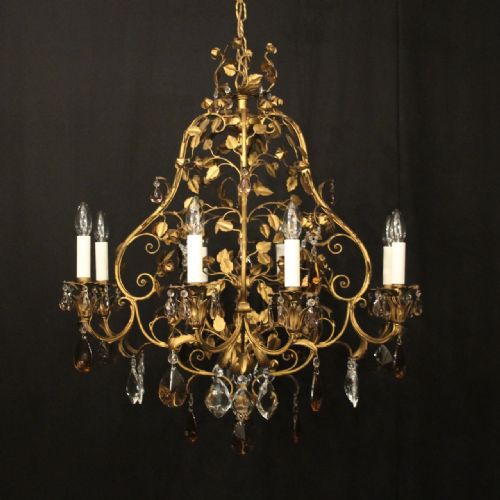
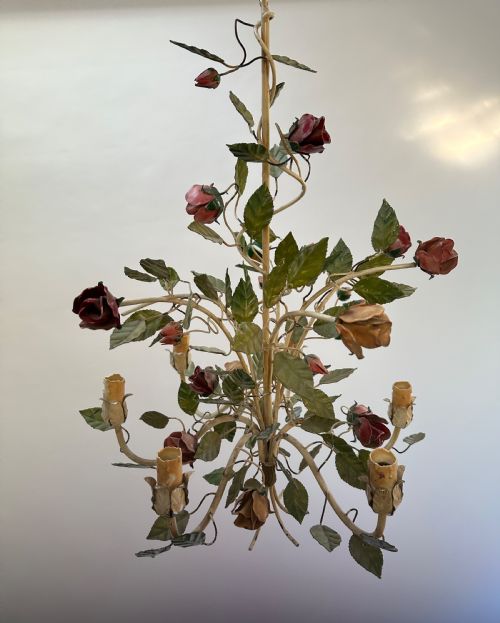
A toleware ceiling light brings painted metal and gilded form into a space, drawing on French and Italian traditions. These fixtures span the nineteenth century through the nineteen-thirties, taking the shape of multi-branch chandeliers, open basket fittings, and glazed ceiling lanterns.
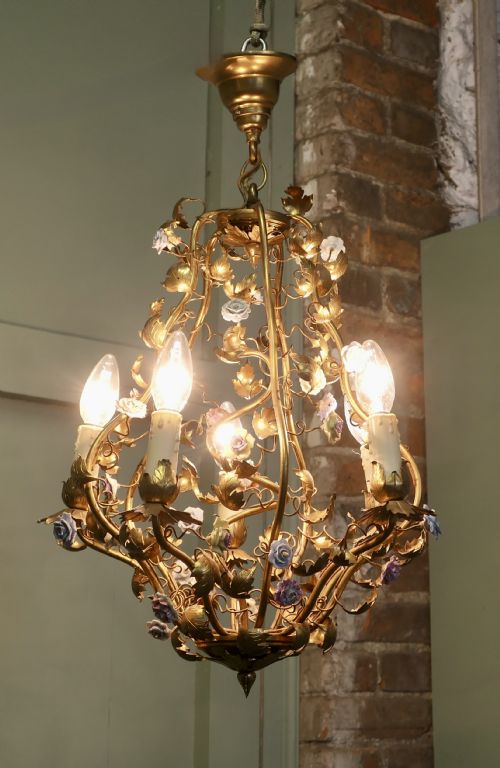
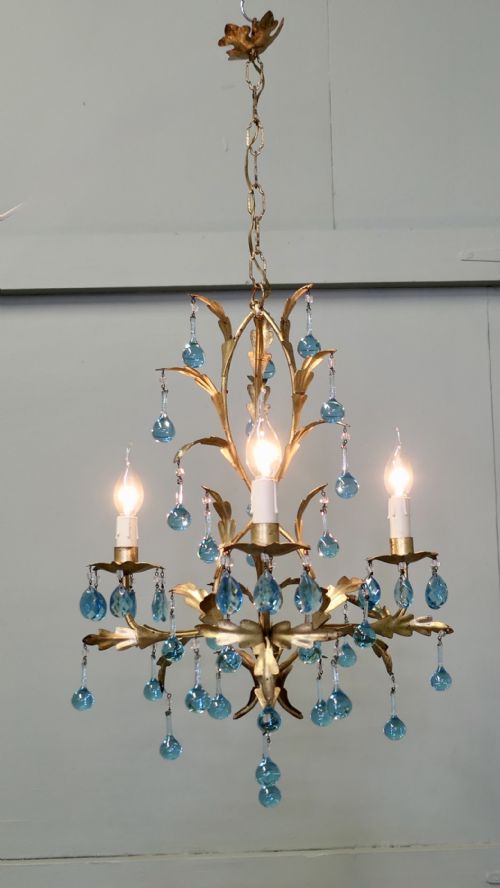
Buyers seeking a toleware ceiling light most commonly encounter French designs from the early decades of the twentieth century. These frequent examples often incorporate ceramic flowers, polychrome finishes, or hanging crystal teardrops alongside metal branches.
How they were made
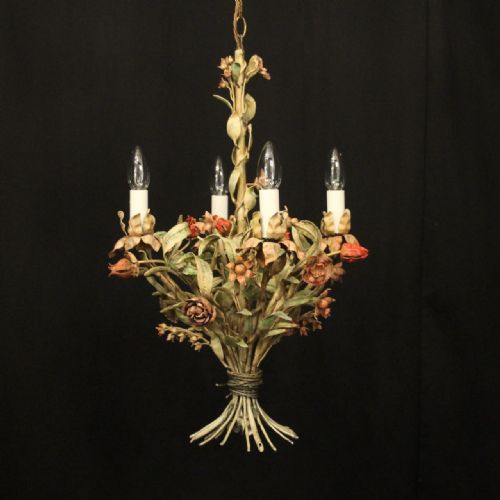
These lighting fixtures employ painted and gilded sheet metal as the primary medium, shaped into floral motifs, leaves, and structural cage frames. Workshops combined this painted iron or steel with cast gilt metal, wrought iron, and occasional brass components.
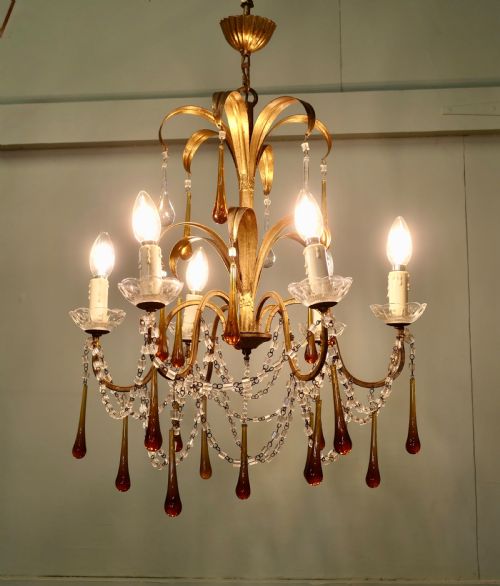
Many examples integrate glass elements, ranging from simple ceiling shades to amber and turquoise crystal teardrops suspended from the metal branches. Ceramic floral details and hand-painted polychrome decoration complete the surface finish of these painted metal fittings.
This site's listings show toleware ceiling lights spanning from the nineteenth century through the nineteen-thirties, executed in French Chateau, French Country, and Italian Rococo styles.
What varies in quality
Quality in these hanging fixtures rests upon the subtlety of the hand-painted polychrome work and the richness of the gilding on the metal surfaces. Finer examples display meticulous attention to floral details, integrated ceramic components, and harmonious colour palettes.
The complexity of the metal armature also defines the tier of a piece, distinguishing simple three-branch lights from large eight-branch cage chandeliers and ornate lanterns enriched with crystals.
The Toleware Ceiling Light Glossary
- Toleware
- Painted or lacquered metalware, typically tinplate or iron, decorated with applied pigments and often finished with a clear varnish. This technique allowed makers to simulate more expensive materials through decorative surface painting.
- Polychrome
- Decorated in multiple colours, particularly applied by hand to metal leaves, flowers, and structural branches. This multi-coloured finish characterises many of the painted metal lights from this selection.
- Gilt Metal
- Metal surfaces covered with a thin layer of gold leaf or gilt paint to create a lustrous, reflective appearance. It frequently appears alongside painted tinplate in these hanging fixtures.
- Cage Chandelier
- A structural lighting frame constructed with curved metal straps forming an open framework, often hung with glass crystals. This form holds multiple light bulbs within an architectural metal silhouette.
- Ceiling Lantern
- An enclosed or partially glazed hanging light fixture suspended by a short chain or bracket. These brass and toleware lanterns provide directional illumination.
Toleware Ceiling Light: Frequently Asked Questions
What is a toleware ceiling light?
A toleware ceiling light is an antique hanging fixture made from painted or gilded sheet metal, often featuring floral motifs, glass crystals, and multiple candle branches. These pieces originate mainly from French and Italian workshops dating from the nineteenth century to the nineteen-thirties.
They combine structural metalwork with decorative painted finishes, serving as both functional illumination and decorative ceiling centerpieces.
How were these lights used?
These fixtures were suspended from ceilings in reception rooms, bedrooms, and hallways to provide ambient illumination. Their multi-branch designs distributed light across the space while adding colour and texture to the interior.
Over time, many of these electrical conversions allowed them to continue functioning safely in modern homes while retaining their antique character.
How do I live with a toleware light?
Living with a painted metal light involves pairing its decorative colours with complementary interior schemes. Their floral details and gilded surfaces suit traditional rooms as well as eclectic modern spaces.
Careful positioning ensures the fixture's scale matches the ceiling height and proportions of the room.
How do I date a toleware chandelier?
Dating relies on stylistic clues, wiring methods, material construction, and documented design periods. Pieces from the nineteenth century often show heavier wrought iron or giltwood combinations, while early twentieth-century examples frequently feature polychrome floral tole and glass crystals.
Comparing the complexity of the metalwork and the specific painted palette helps establish whether a piece belongs to the nineteen-tens, twenties, or thirties.