
Toilet Mirror Table
A toilet mirror table brings portable reflection and storage to a room, offering the classic craftsmanship of mahogany, walnut, and brass.
Toilet Mirror Table
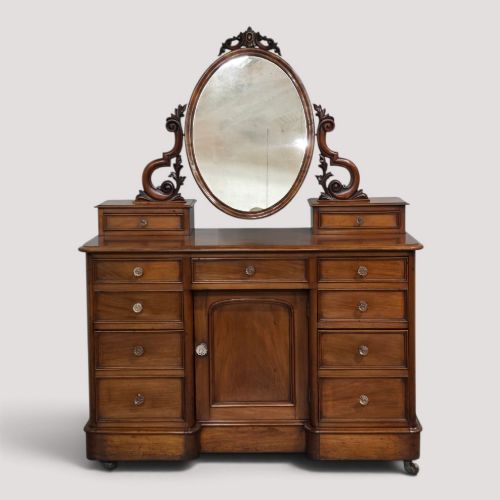
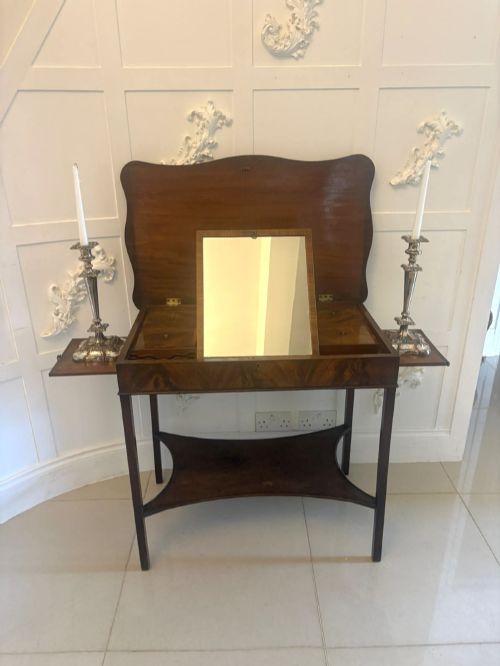
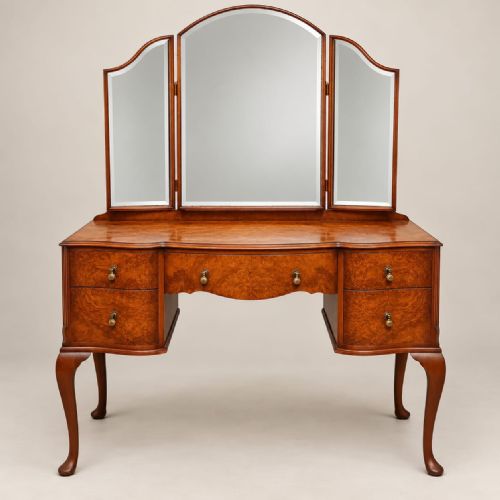
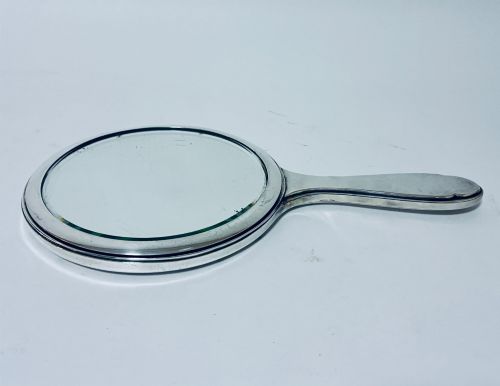
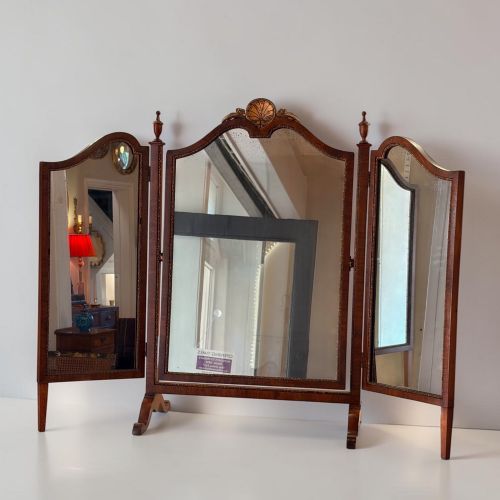
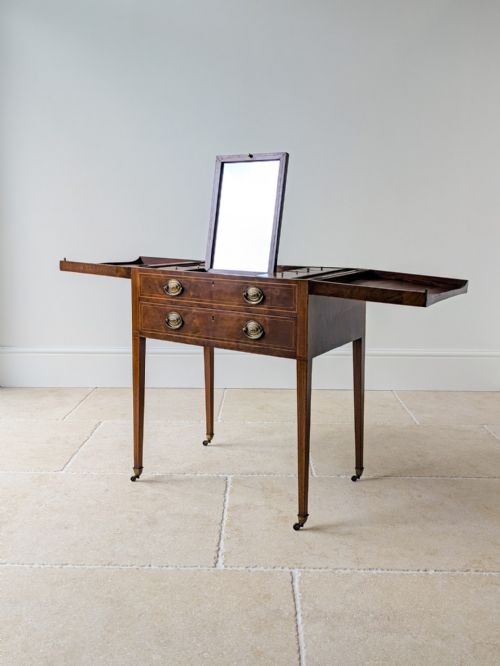
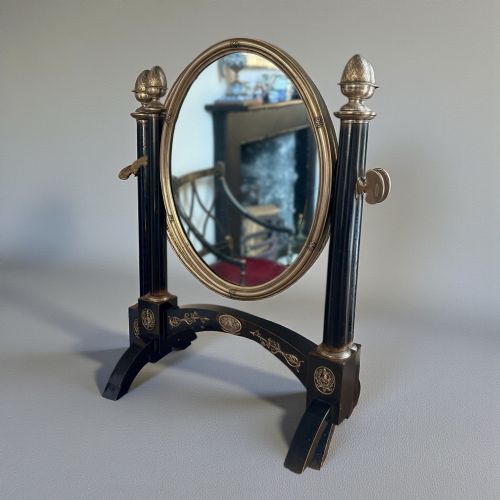
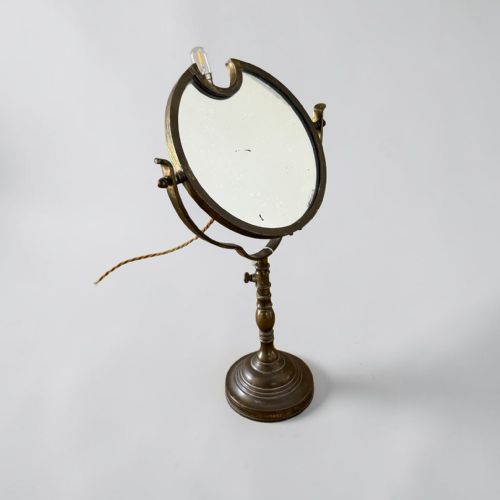
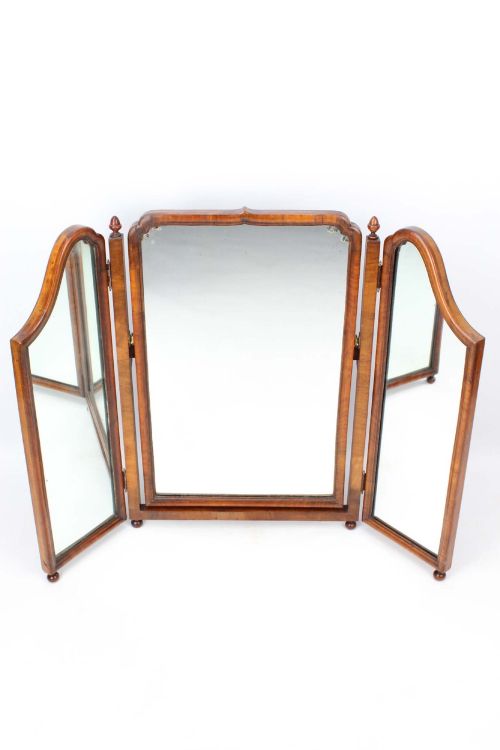
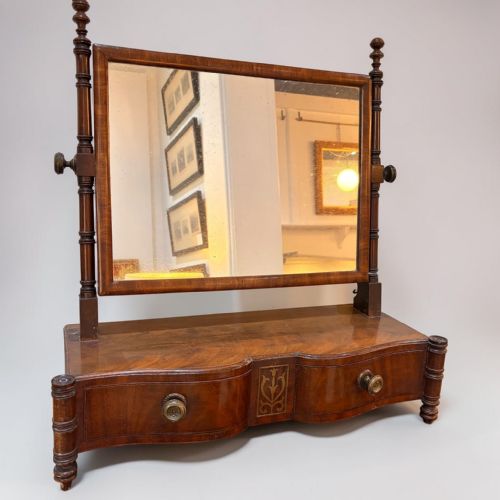
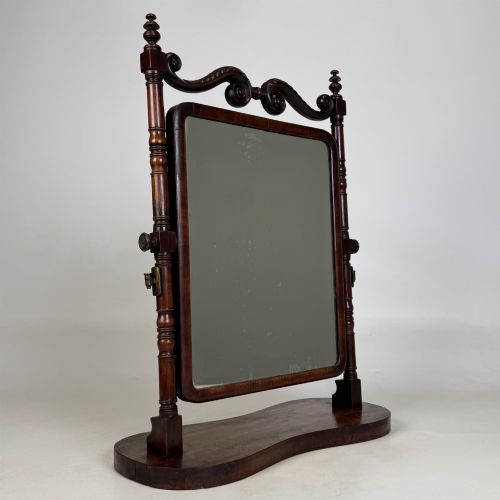
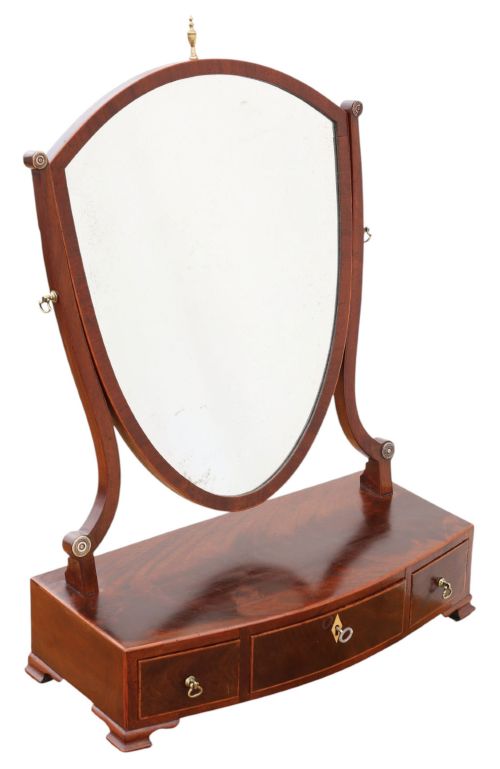
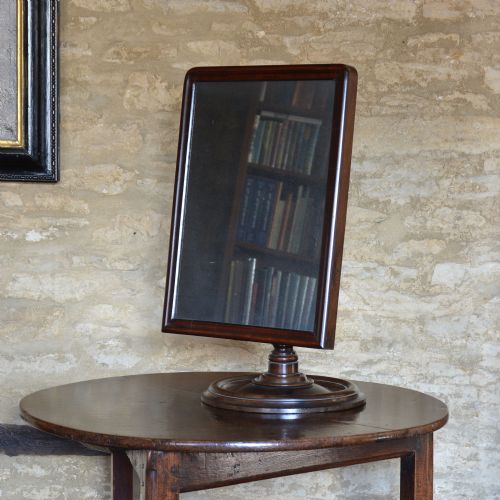
A toilet mirror table sits on a larger chest or serves as an independent tabletop piece designed for grooming and dressing. These objects combine a pivoting glass plate with a small wooden platform base or miniature drawers.
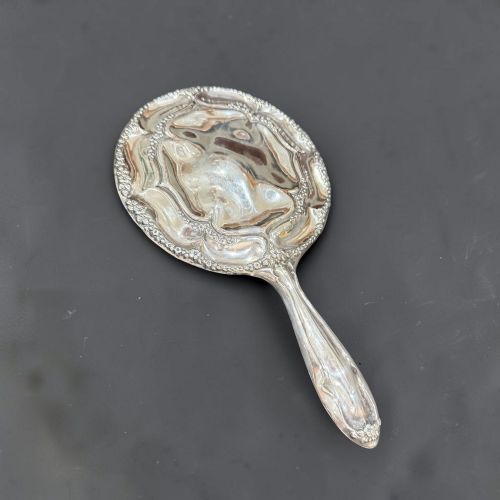
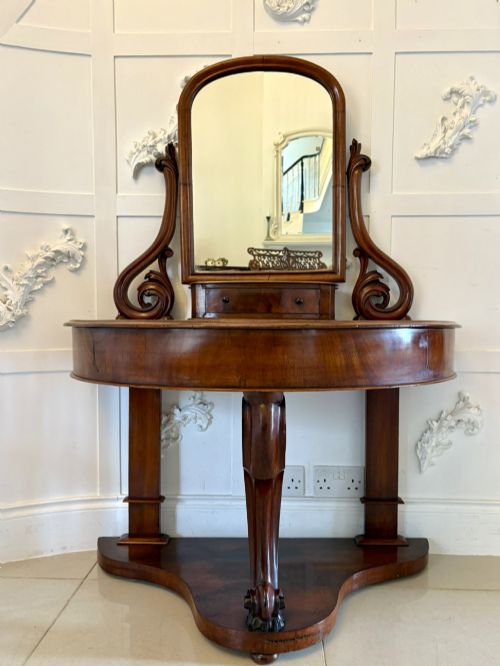
The selections available range widely across periods, with Georgian and Victorian examples appearing most frequently. Buyers encounter compact swing mirrors alongside more elaborate combinations featuring built-in bureau compartments or jewellery cabinets.
The form developed to assist with personal toilette before fitted wardrobes and plumbed bathrooms became standard. Today, these pieces function as decorative dressing accessories on modern chests and dressing desks.
Materials and construction methods
Cabinet makers relied heavily on timber selections such as mahogany, walnut, and satinwood, frequently highlighting figured grain patterns on the upright supports and drawer fronts. Secondary woods such as pine appear on internal drawer linings and back panels.
Brass pivoting screws, swing arms, and decorative handles allow the mirror plate to tilt at various angles. Fine details include boxwood inlay, bone accents, and carved giltwood or ormolu mounts depending on the stylistic period.
Current listings feature pieces spanning the 17th century through the Edwardian period, utilising mahogany, walnut, brass, and giltwood.
Distinguishing quality across examples
The refinement of the timber and the depth of the grain figure set superior examples apart from plainer utilitarian versions. Solid mahogany and figured walnut frames display tighter joinery and more careful selection of veneers.
Heal And Sons·P And Ma Nicholson
The Toilet Mirror Table Glossary
- Swing mirror
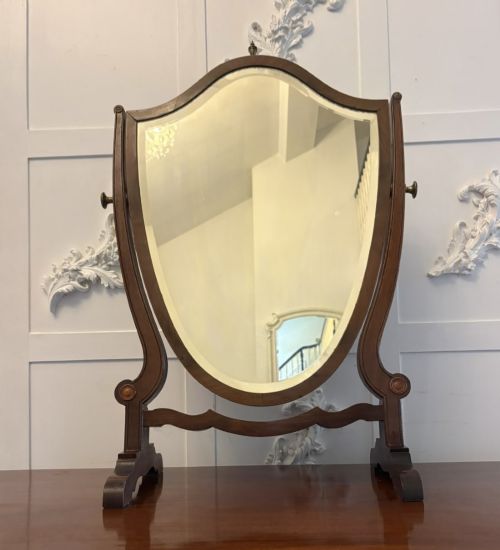
- A glass plate mounted on vertical pivots within a frame, allowing the user to adjust the viewing angle. This mechanism sits atop a base or box.
- Box mirror
- A toilet mirror incorporating a small storage box or miniature chest of drawers beneath the frame. These compartments held small personal items and cosmetics.
- Cheval mirror
- A full-length dressing glass supported by a freestanding frame with four legs or a substantial platform base. They allow the viewer to see their entire outfit.
- Ormolu
- Gilt bronze mounted onto furniture or decorative objects as an ornamental feature. It adds metallic contrast to wood surfaces in French and revival pieces.
- Boxwood inlay
- Contrasting light wood inserted into recesses on a darker timber surface to create geometric or floral patterns. This decorative technique appears frequently on Georgian and Edwardian pieces.
Toilet Mirror Table: Frequently Asked Questions
Where should I place a toilet mirror table?
These mirrors suit placement on top of low chests of drawers, sideboards, or dedicated dressing tables where the height matches your eye level. They require a stable surface with sufficient depth to support the weight of the base and the pivoting frame.
Ensure the location receives adequate natural or artificial light to make the glass functional for daily grooming. Avoid damp areas to protect the antique wood and the silver backing of the mirror glass.
How do I distinguish a Georgian mirror from a Victorian one?
Georgian mirrors typically feature understated mahogany frames, simple bracket feet, and delicate proportions with hand-cut dovetails inside the small drawer compartments. The timber grain tends to be straight or moderately figured.
Victorian and later examples often introduce heavier flame mahogany veneers, turned columns, or more ornate carved details. The use of pine as a secondary wood and machine-assisted elements becomes more common in the later nineteenth century.
Did these pieces always include drawers?
Many toilet mirrors sit upon a simple U-shaped frame without any storage, relying entirely on upright supports attached to a flat platform base. These minimal versions focus purely on the adjustable glass.
Other formats incorporate a box base containing one, two, or three small drawers intended for jewellery and grooming accessories. The presence of drawers depends largely on the specific workshop design and the intended use.
Can I adjust the tension on the swing mirror?
Most antique swing mirrors utilise threaded brass pivot screws or nuts inserted through the side supports into the frame. Tightening or loosening these fixtures allows you to set the desired resistance for tilting the glass.
Care should be taken when adjusting old brass hardware to avoid stripping the threads or cracking the surrounding timber. If the mechanism feels stiff, do not force it without checking for accumulated debris or old polish.