
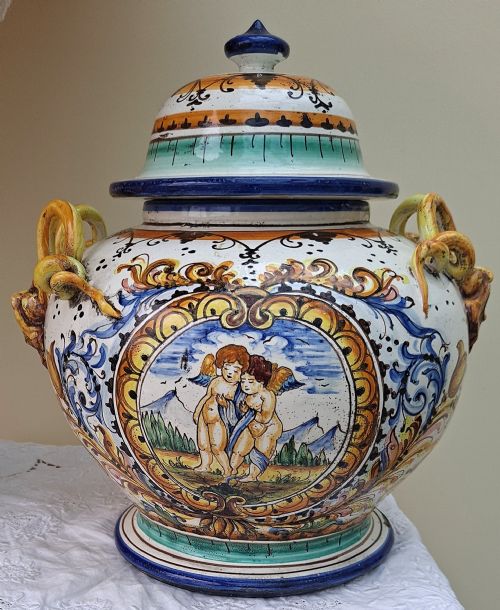


Tin Glazed Faience Jar
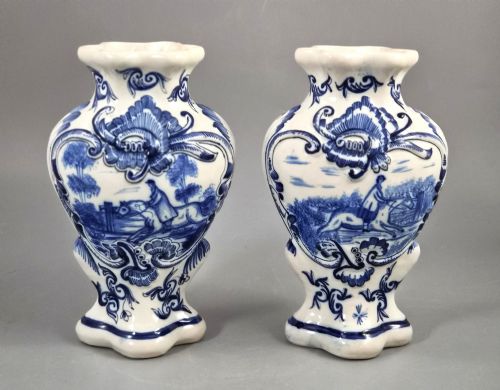
These tin glazed faience jar examples bring historic apothecary utility and decorative Delftware presence into a room.
Tin Glazed Faience Jar
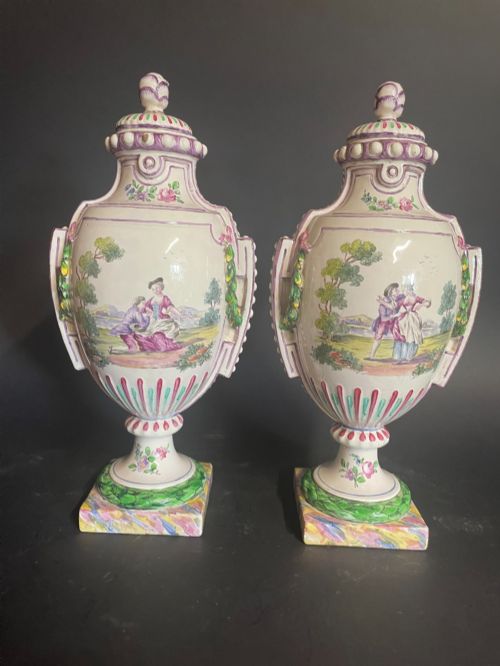
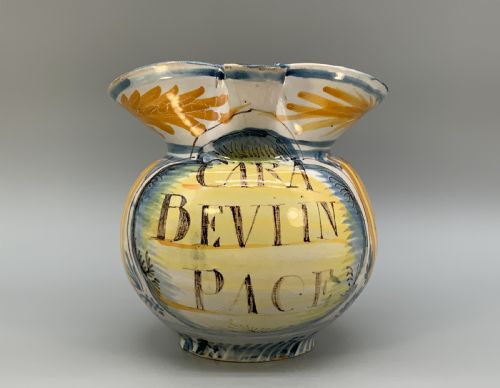
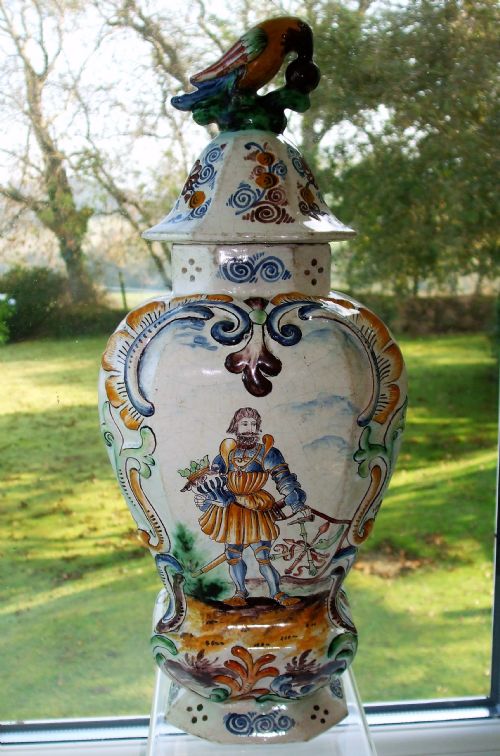
A tin glazed faience jar spans forms from pharmacy albarellos and wet drug jugs to decorative vases and urns. These pieces emerge across the seventeenth, eighteenth, and nineteenth centuries.
The version most frequently met on this page is the eighteenth-century Dutch or Italian pharmacy vessel, often painted in blue and white or polychrome pigments.
Makers and workshops across France, Italy, and the Netherlands shaped these ceramics for utilitarian storage and display.
Materials and Technique
Potters shaped earthenware and terracotta bodies before coating them in an opaque tin glaze that provided a smooth white ground for painting.
Decorators applied cobalt pigment and other mineral colours directly onto the absorbent unfired or raw glaze layer, absorbing the oxides permanently during kiln firing.
A solitary nineteenth-century French tobacco jar shaped as a poodle proves that historic pharmacists and tobacconists appreciated a touch of canine humour.
Assessing Quality
The distinction between ordinary and exceptional examples rests in the crispness of the painted brushwork and the depth of the glaze opacity.
Early seventeenth and eighteenth-century pieces often display superior pigment saturation and more confident hand-painted botanicals or figures compared to later revival items.
Fourmaintraux-Courquin·Sceaux
The Tin Glazed Faience Jar Glossary
- Albarello
- A cylindrical pharmacy jar designed for holding dry drugs, ointments, or spices. This distinctive shape allowed pharmacists to line containers closely on apothecary shelves.
- Faience
- European tin-glazed earthenware decorated with metal oxide pigments. The technique originated in the Middle East and spread through Italy, France, and the Netherlands.
- Maiolica
- Italian tin-glazed pottery noted for colourful polychrome decoration. Renaissance and later Italian workshops perfected this vibrant glazing method.
- Delftware
- Tin-glazed earthenware produced in the Netherlands, particularly associated with blue and white Chinoiserie and floral motifs. Dutch potters exported these wares widely across Europe.
- Polychrome
- Decoration utilising multiple colours rather than a single pigment like cobalt blue. These multi-coloured palettes often feature manganese, yellow, and green tones.
Tin Glazed Faience Jar: Frequently Asked Questions
What were tin glazed faience jars used for?
These vessels served primarily as functional storage containers in historic apothecaries and pharmacies. Pharmacists used them to hold dry herbs, medicinal syrups, and pharmaceutical compounds.
Over time, many of these utilitarian containers transitioned into purely decorative objects displayed in domestic interiors for their visual appeal.
How do I identify a seventeenth-century piece?
Seventeenth-century examples often display specific stylistic traits such as early blue and white Chinoiserie motifs or distinctively shaped Italian albarellos. Examining the tin glaze thickness and pigment absorption provides further clues to their age.
Comparing the potting weight and baseline characteristics with documented museum examples helps confirm the period of manufacture.
How should I clean a antique jar?
Dust these ceramic surfaces gently with a soft, dry cloth to remove everyday accumulation without disturbing the glaze. Avoid using harsh chemical cleaners, abrasives, or soaking the vessel in water.
Because historic tin glaze can be porous or develop hairline crazing over centuries, keeping them in a stable indoor environment prevents moisture damage.
What is the difference between faience and delftware?
Faience is the broader European term for tin-glazed earthenware produced across France, Italy, and other regions. Delftware specifically refers to the tin-glazed pottery made in the Netherlands.
Both share the fundamental technique of an opaque white tin glaze over an earthenware body, though regional painting styles and clay bodies vary.