


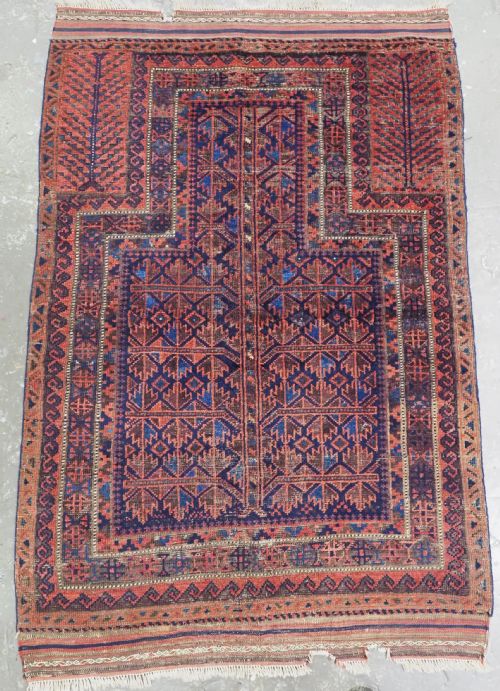


Timuri Rug 1880
When you want a timuri rug 1880, you seek a nineteenth-century tribal floor covering woven in western Afghanistan.
Timuri Rug 1880
A timuri rug 1880 is a nineteenth-century tribal weaving originating from western Afghanistan. These pieces include prayer rugs, main carpets, and smaller format floor coverings produced by nomadic and village weavers.
The designs span classic repeating motifs, shrub patterns, willow leaf designs, and tree of life compositions on blue, camel, or aubergine grounds. Many examples connect closely to Baluch tribal traditions of the same era.
How they were made
Weavers utilised hand-spun wool for the pile, often supported by cotton foundations and occasional goat hair elements. Natural dyes created the deep rich colours seen across these nineteenth-century tribal pieces.
Certain examples incorporate silk highlights alongside the wool pile. The construction follows traditional tribal knotting methods practised in western Afghanistan during the period.
Timuri Rug 1880 Retail Price Guide 2026
Typical asking prices for timuri rug 1880 among the pieces listed under this phrase on Sellingantiques today, from the lower quarter to the upper quarter. They describe what is for sale here now, not the wider market.
Listings feature wool, hand-spun wool, cotton, natural dyes, and goat hair across nineteenth-century tribal formats.
What varies in quality
The standard of a timuri rug 1880 rests upon the clarity of the natural dyes and the depth of the colour palette. Rich blue, camel, and aubergine grounds demonstrate superior dye work.
Design complexity also defines the tier of a piece, with uncommon formats like the dokhtar-e-qazi prayer rug or intricate box and star designs marking out the more accomplished tribal weaving.
The Timuri Rug 1880 Glossary
- Prayer rug
- A small carpet featuring a mihrab or arch design used for daily Islamic prayer. These pieces often display tree of life or shrub motifs.
- Main carpet
- A larger floor covering intended for principal domestic use within a tent or dwelling. They display repeating field patterns rather than single prayer arches.
- Dokhtar-e-qazi
- A specific design classification associated with Timuri and Baluch tribal weaving. The term translates traditionally to daughter of the judge.
- Tree of life
- A symbolic motif representing spiritual growth and eternity. It frequently appears rising from a base within the field of nineteenth-century prayer rugs.
- Natural dyes
- Colourants derived from plants, insects, and minerals before the widespread adoption of synthetic alternatives. They produce the varied, saturated tones found in period tribal pieces.
Timuri Rug 1880: Frequently Asked Questions
Where were timuri rugs made?
These weavings originate from western Afghanistan, produced by nomadic and semi-nomadic tribes inhabiting the region during the nineteenth century. The tribal groups moved across borderlands, sharing design repertoires with neighbouring weavers.
Their location influenced the materials chosen, relying heavily on locally sourced sheep wool and natural dyestuffs for the distinctive deep palette.
What is a dokhtar-e-qazi rug?
It is a recognised sub-category of tribal weaving linked to Timuri and Baluch groups. These pieces typically feature specific shrub or small-scale repeating design arrangements.
Collectors prize them for their distinct structural characteristics and connection to nineteenth-century village production in western Afghanistan.
How do I identify a prayer rug?
Prayer rugs are distinguished by an architectural arch or mihrab shape at one end of the field. This design directed the user toward Mecca during daily devotions.
They are generally smaller in format than main carpets and frequently incorporate tree of life or repeating leaf motifs within the central niche.
How do I care for an 1880 rug?
These wool and natural dye textiles require gentle maintenance, including regular light vacuuming without a rotating brush. Keeping them out of direct sunlight preserves the saturated blue, camel, and aubergine grounds.
Professional cleaning suited to antique pile floor coverings should be utilised when necessary to protect the hand-spun wool and cotton foundations.