





Timuri Prayer Carpet
A timuri prayer carpet is a nomadic textile from the borderlands of Persia and Afghanistan, prized for rich tribal patterns and soft wool.
Timuri Prayer Carpet
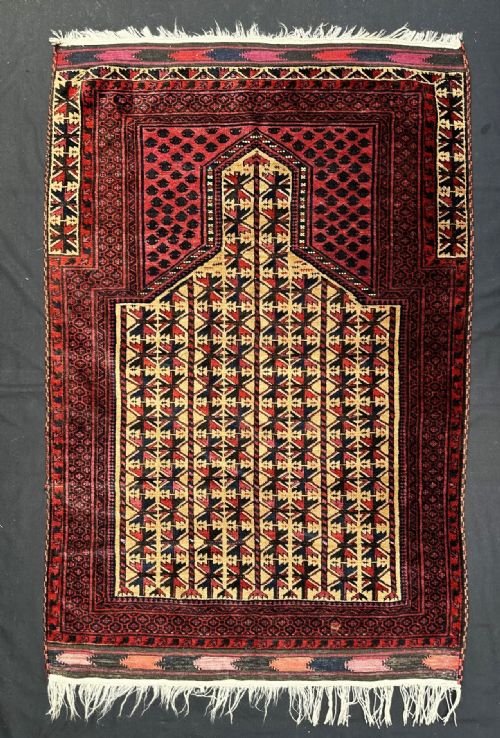
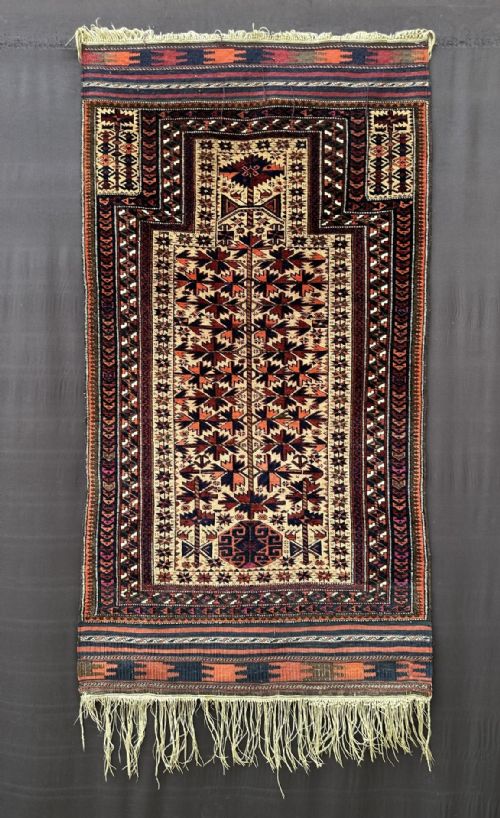
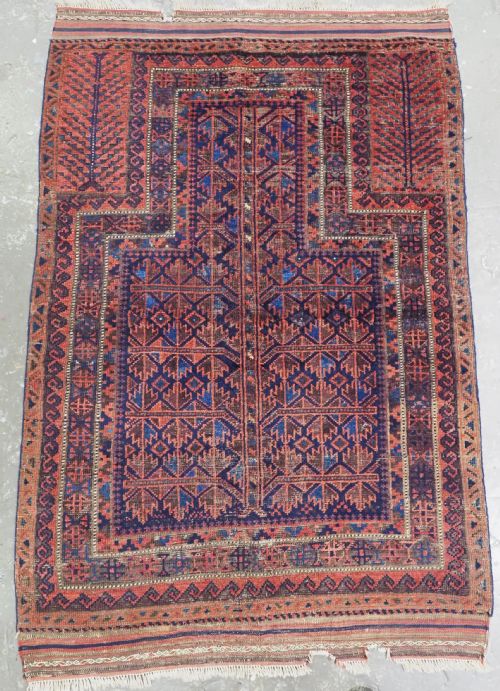
When you search for a timuri prayer carpet, you encounter tribal and nomadic floor coverings woven by groups such as the Dokhtar-e-Qazi and Yaqoub Khani tribes. These pieces originate primarily from the Khaf region and the broader borderlands of north-east Persia and north-west Afghanistan. The version you are most likely to meet on this page is an antique prayer rug displaying traditional motifs.
The material palette of these rugs relies heavily on wool, hand-spun wool, camel hair, and goat hair. The designs incorporate blue grounds, repeat leaf patterns, and tree of life motifs. Such characteristics link the weaving directly to the nomadic traditions of Afghan and Persian tribal groups.
How they were made
Weavers constructed these carpets using hand-spun wool for the pile, often supported by foundations containing goat hair and camel hair. These natural animal fibres provided the durability required for nomadic daily life. The use of natural dyes yielded deep rich colours that mellow distinctively over time.
The production took place within tribal and nomadic communities inhabiting the border regions between Persia and Afghanistan. Artisans utilised traditional looms to execute complex formats like the Dokhtar-e-Qazi design and repeat leaf patterns. Each rug reflects the specific regional techniques passed down through generations of tribal weavers.
Timuri Prayer Carpet Retail Price Guide 2026
Typical asking prices for timuri prayer carpet among the pieces listed under this phrase on Sellingantiques today, from the lower quarter to the upper quarter. They describe what is for sale here now, not the wider market.
Camel hair occasionally sneaks into the pile, proving that some livestock contributed more than just wool to the nomad's morning routine.
What varies in quality
The fineness of the hand-spun wool and the handling of natural dyes determine the visual depth of the pile. Early examples from the nineteenth century demonstrate superior handling of colour and material selection. Subtle variations in the saturation of blue grounds and camel grounds distinguish standard tribal work from exceptional pieces.
The precision of the weave and the complexity of tribal motifs such as the tree of life indicate the weaver's skill. Scarce formats and distinct regional attributions, including specific tribal groups from the Khaf region, elevate the standing of a textile. The integrity of the goat hair and camel hair foundations further influences the overall character of the rug.
The Timuri Prayer Carpet Glossary
- Timuri prayer rug
- A portable nomadic textile featuring a mihrab or arch design used for daily prayers by tribes in the borderlands of Persia and Afghanistan. These rugs often display blue or camel grounds.
- Natural dyes
- Colourants derived from plants, insects, and minerals rather than synthetic compounds. They produce the deep rich colours seen in nineteenth-century nomadic weavings.
- Camel hair
- Fibre gathered from camels, utilised in tribal rugs for its natural warm hue and durability. It frequently appears in the pile or structural foundations.
- Tree of life
- A symbolic motif depicting a stylized botanical form representing spiritual growth. It appears regularly in prayer formats across tribal carpets.
Timuri Prayer Carpet: Frequently Asked Questions
What is a timuri prayer carpet?
A timuri prayer carpet is a nomadic textile woven by tribes in the borderlands of north-east Persia and north-west Afghanistan. These pieces typically feature concentrated wool piles and traditional designs intended for devotional use.
The formatting often includes specific tribal motifs such as the tree of life or repeat leaf patterns. They represent the distinctive material culture of nineteenth-century nomadic communities.
Where were these rugs made?
The production of these textiles occurred across the borderlands of north-east Persia and north-west Afghanistan. Specific attributions point to the Khaf region and distinct tribal groups like the Dokhtar-e-Qazi and Yaqoub Khani.
Nomadic weavers carried their traditions across these geographical boundaries. This movement resulted in shared design elements between Afghan and Persian tribal rugs.
How do I identify the age?
Dating relies on material analysis, particularly the presence of hand-spun wool, camel hair, and natural dyes. Nineteenth-century examples often exhibit deeper colour patination and specific structural characteristics.
Early pieces frequently display scarcer formats and traditional nomadic construction methods. Comparing the handling of the wool and dye helps establish a timeline from the 1870s onward.
How should I care for a tribal rug?
Maintain these textiles by limiting direct exposure to strong sunlight to protect the natural dyes. Regular gentle vacuuming without a beater bar prevents dust accumulation in the wool pile.
Allowing the carpet to breathe and utilising a proper underlay helps preserve the goat hair and wool foundation. Professional cleaning should occur only when strictly necessary.