
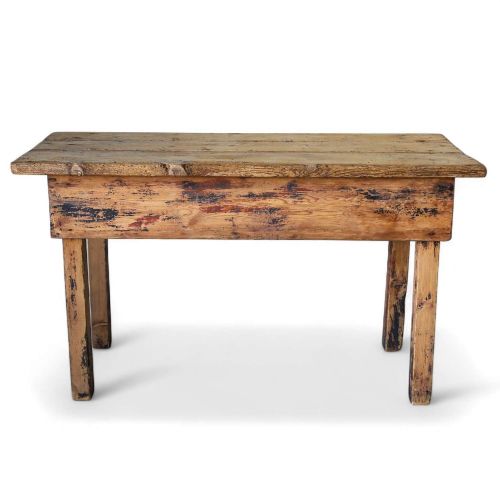
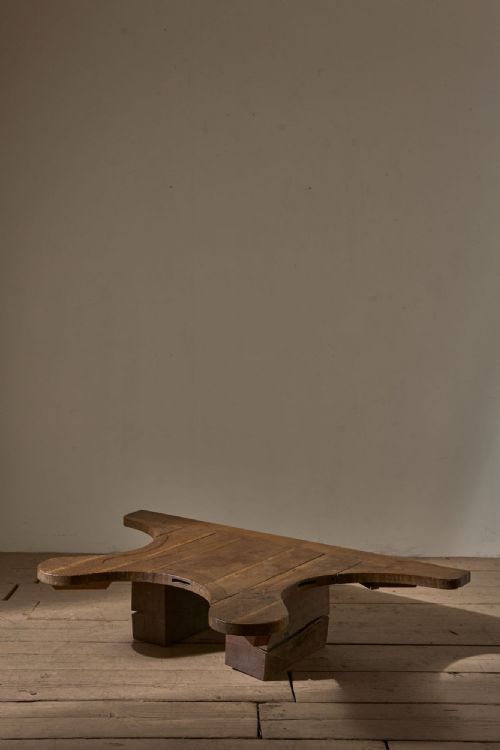
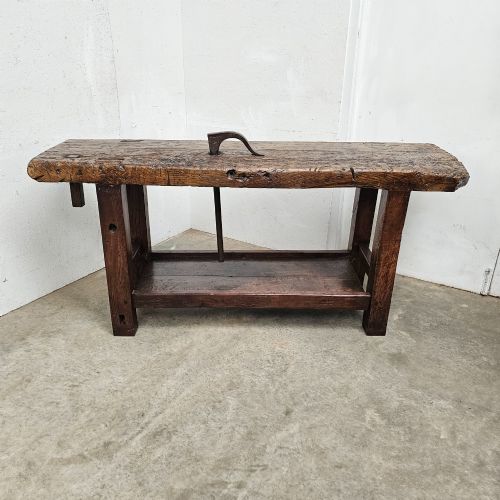
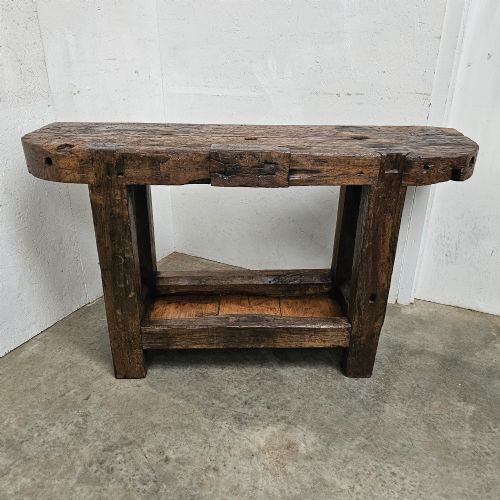
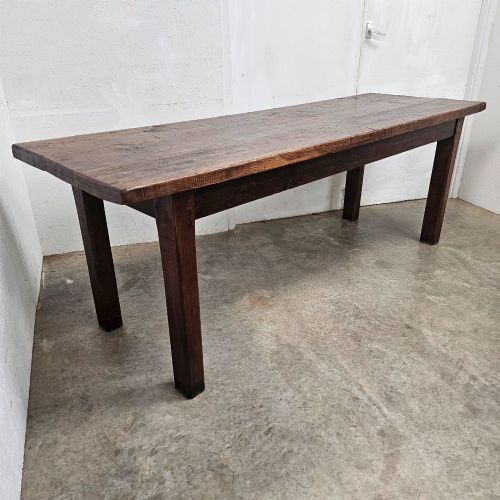
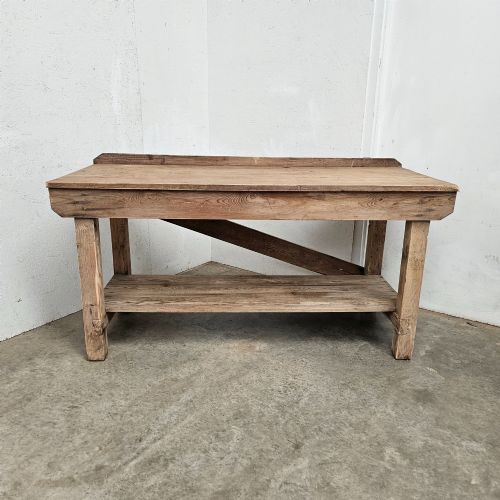


Timber Workbench Table
These heavy timber workbench table pieces combine robust utilitarian design with everyday utility, offering exceptional character for modern living spaces.
Timber Workbench Table
A timber workbench table brings centuries of practical craft into domestic interiors, originating from workshops, dairies, and industrial spaces rather than formal dining rooms. You will frequently encounter heavy pine and oak examples dating from the nineteenth century alongside early twentieth-century pieces.
The form encompasses various utilitarian types, including French artisans' benches fitted with original vices and clamping bars, English tavern tables, and scrubbed sycamore or elm trestle tables. These surfaces served trades ranging from watchmaking and jewellery to carpentry and butchery before finding new life as kitchen or dining tables.
Most pieces show clear evidence of their working past through surface marks, notches, and integrated vices. They bridge the gap between industrial salvage and rustic farmhouse styles, suiting spaces that value history and honest materials.
Assessing quality and character
Quality rests upon the integrity of the original structure and the honesty of the timber's surface. Tables retaining their working mechanisms, such as functional wooden vices and original iron screws, hold greater interest for collectors.
The depth of patina accumulated through active workshop use distinguishes superior examples from newer replicas. Untouched surfaces bearing the honest scars of trade command greater appreciation than heavily restored timber.
The Timber Workbench Table Glossary
- Clamping bar
- A heavy wooden or metal beam fitted across a bench top to secure workpieces in place. It often projects beyond the edge of the table.
- Trestle table
- A table comprising two or more supports connected by a horizontal beam that holds a loose or fixed top. This form allows for maximum legroom and stability.
- Scrubbed finish
- A timber surface repeatedly washed with water and stiff brushes to remove grime, leaving a pale, clean grain. It results from historical hygiene practices in dairies and kitchens.
- Patina
- The surface sheen and colour acquired by wood and metal through age, handling, and wear. It serves as a visual record of a piece's history.
- Primitive
- A descriptive term for furniture made without professional cabinet-making flourishes, relying instead on straightforward regional construction.
Timber Workbench Table: Frequently Asked Questions
How do I clean a timber workbench table?
Maintain the surface by wiping it down with a damp cloth and mild soap, avoiding harsh chemical cleaners that strip the historic finish.
Periodically nourish dry timber with natural beeswax or oils to preserve the grain without creating an artificial gloss.
Can I use a workbench as a dining table?
These tables adapt well to daily dining, provided you check the knee clearance beneath the aprons and vices. Many historical benches offer generous proportions suited to modern seating arrangements.
Protect the historic timber surface with placemats or glass if you anticipate heavy moisture or heat exposure during meals.
What is the difference between a work table and a workbench?
Workbenches typically feature integrated vices, bench stops, and exceptionally thick tops designed to absorb physical labour and heavy tool use. Work tables generally offer lighter construction without specialised mechanical clamping devices.
Both types share a utilitarian heritage, but workbenches carry more distinct traces of their industrial or craft origins.
How do I date an antique workbench?
Examine the timber species, tool marks, and construction methods, noting whether makers used hand saws, pit-sawn boards, or early machine-cut lumber. Iron hardware like hand-forged screws or cast iron components also help narrow down the period.
Compare the wear patterns and patina against documented examples from the nineteenth and early twentieth centuries.