
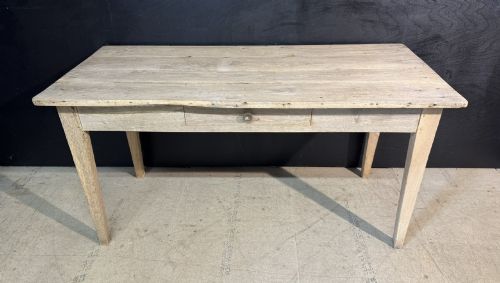
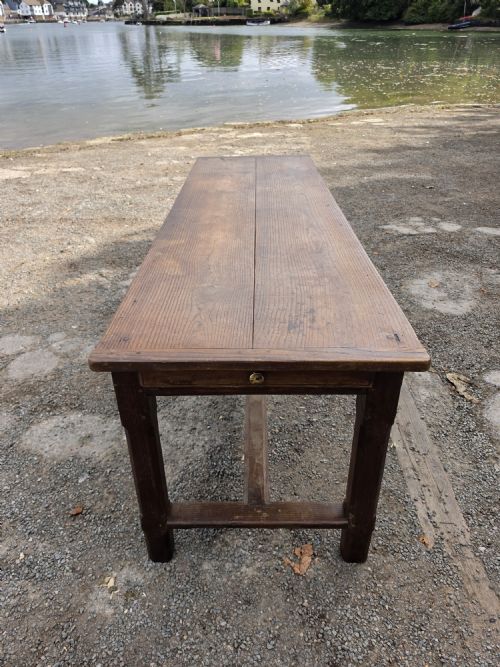
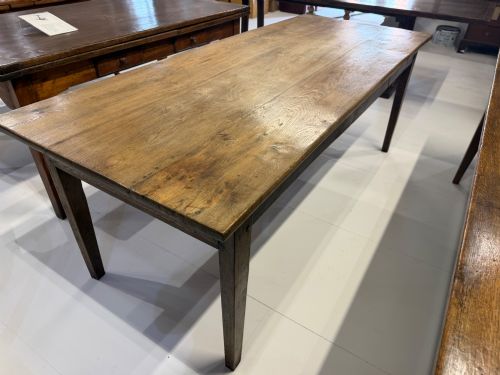
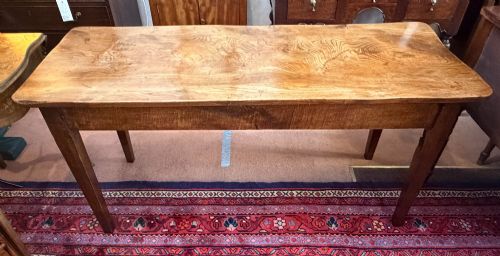
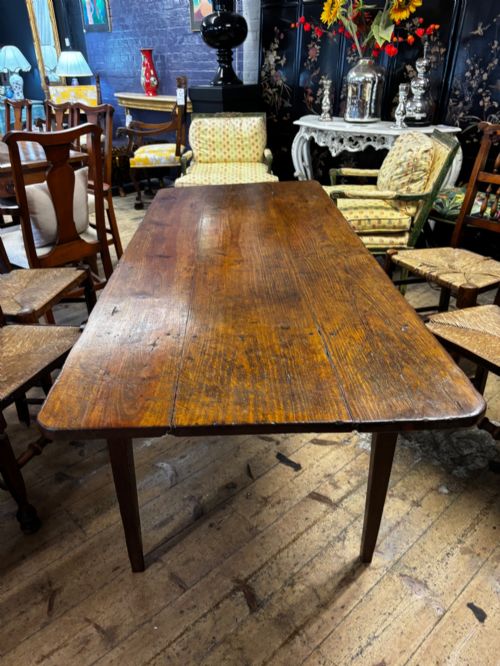
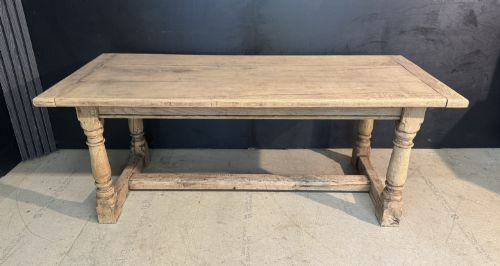
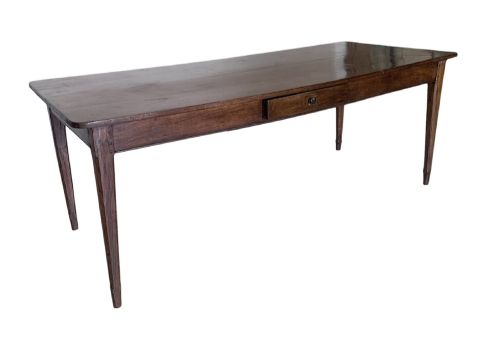
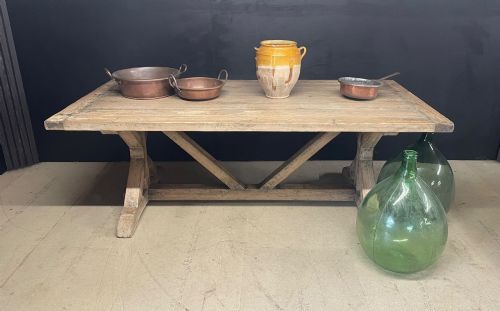
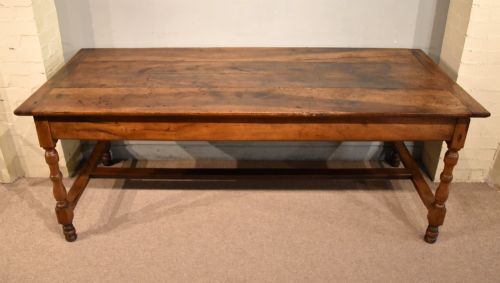
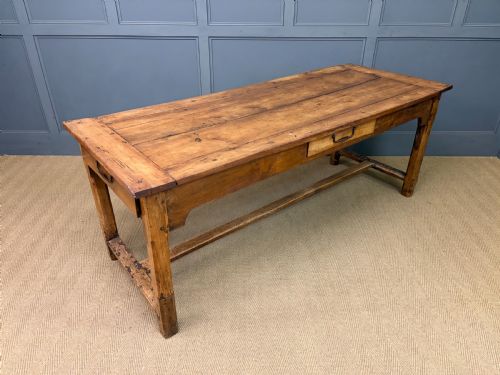
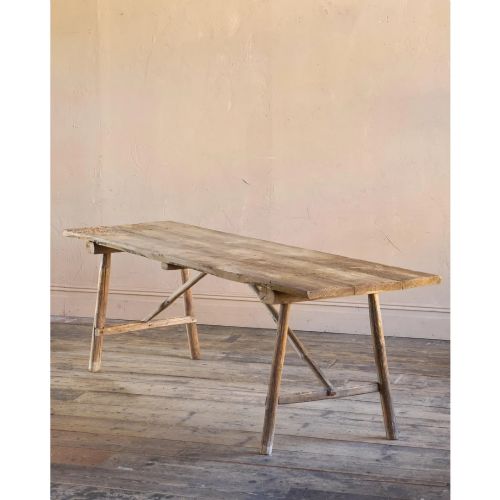
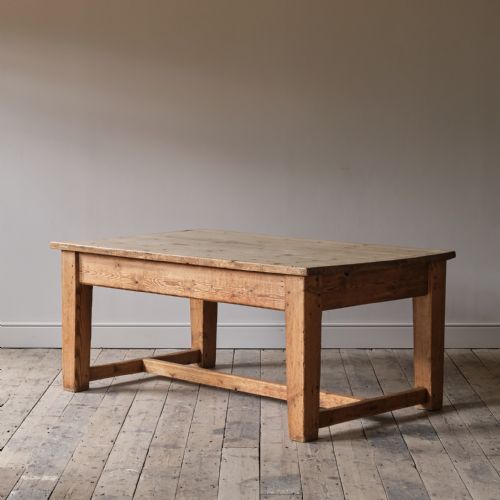
Timber Farmhouse Kitchen Table
A timber farmhouse kitchen table brings enduring utility and warmth to the heart of the home through honest construction and time-worn character.
Timber Farmhouse Kitchen Table
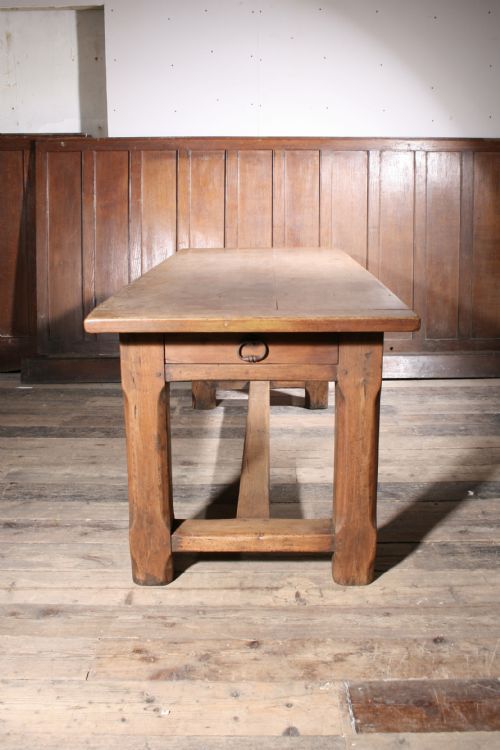
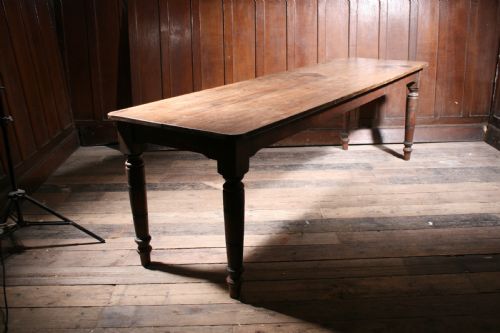
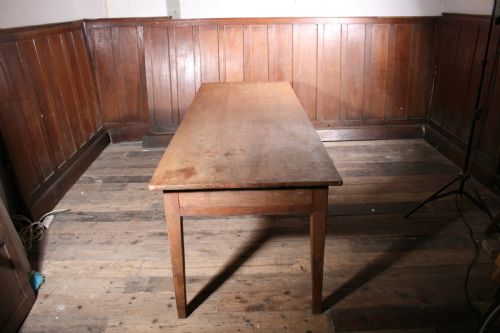
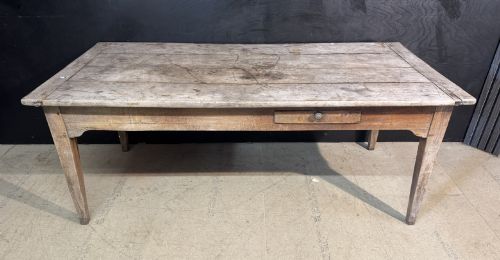
A timber farmhouse kitchen table serves as the central hub for domestic life, designed originally for daily food preparation and communal dining. These pieces emerge from periods spanning the eighteenth century through to the early twentieth century, carrying the marks of hard utility.
Makers built these tables to withstand rigorous daily work rather than delicate parlor display. Consequently, surviving examples demonstrate practical shapes, sturdy square-section supports, and thick timber tops shaped by decades of use.
Materials and construction methods
Makers relied on solid regional timbers like oak, pine, fruitwood, elm, and walnut, selecting woods based on local availability and structural strength. Plank tops were jointed tightly to handle heavy kneading and chopping, while sturdy underframes utilised strong stretchers and solid legs.
Surface treatments range from natural scrubbed finishes and waxed patinas to traditional coatings like Falu paint and later applied colours. Iron brackets and corner braces occasionally reinforce joints, while integrated single or double drawers provide practical storage for kitchen implements.
Listings feature oak, pine, fruitwood, elm, and walnut across the eighteenth and nineteenth centuries.
Evaluating quality and proportion
Quality in these tables rests on the integrity of the timber and the balance of proportion. Superior examples feature thick, stable plank tops with minimal warping and frames that retain their original joinery without excessive replacement parts.
The depth of the patina and the honesty of the wear separate ordinary pieces from exceptional ones. Tables that retain their original base finish or show harmonious ageing across the wood command greater appreciation among collectors.
The Timber Farmhouse Kitchen Table Glossary
- Refectory table
- A long, narrow dining table traditionally used in monastic refectories and later adopted for large domestic kitchens. These pieces often feature substantial length and supportive side stretchers.
- Scrubbed pine
- A finish achieved through repeated vigorous cleaning with water and sand or soap, leaving the soft grain raised and pale. This treatment was standard for working kitchen tables.
- Plank top
- A table surface constructed from several wide boards joined edge to edge. This method allows large trees to be utilised effectively for heavy-duty work surfaces.
- Stretcher
- A horizontal wooden bar connecting the legs of a table to provide lateral stability. These supports are crucial for maintaining rigidity in large dining and work tables.
- Falu paint
- A traditional deep red or earthy paint containing copper mining residue, used widely on Scandinavian country furniture to protect wood from the elements.
Timber Farmhouse Kitchen Table: Frequently Asked Questions
How do I clean a scrubbed pine top?
Clean the surface using warm water and mild soap with a stiff brush, following the direction of the grain. Avoid harsh chemical strippers that strip away the historical patina.
Allow the timber to dry naturally after washing to prevent warping. Periodically nourish unfinished wood with a neutral beeswax to maintain protection against spills.
Are these tables suitable for daily family use?
These tables are built for daily domestic life, having originally survived generations of heavy kitchen work and dining. Their robust construction handles everyday knocks and family gatherings with ease.
Existing marks and stains form part of the history rather than defects to hide. Using felt pads under hot dishes helps protect the aged finish from heat damage.
How can I tell the age of the wood?
Inspect the underside and joints for hand-cut marks, pegged joinery, and the way the planks were sawn. Older boards often show irregular widths and deep surface oxidation built up over centuries.
Examine the wear patterns around the edges where hands and chairs rested over decades. Consistent, natural indentation points towards genuine antique provenance.
Do painted finishes indicate original work?
Painted surfaces can range from original historic coats to later decorative layers applied during the nineteenth or twentieth century. Look for craquelure, underlying paint remnants, and wear around the handles and legs.
A later coat of paint still holds decorative value and historical context if applied within the working life of the furniture.