




Timber Coat Stand
A timber coat stand is a sturdy hall furniture piece designed to hold outerwear, and these examples combine functional utility with period craftsmanship.
Timber Coat Stand
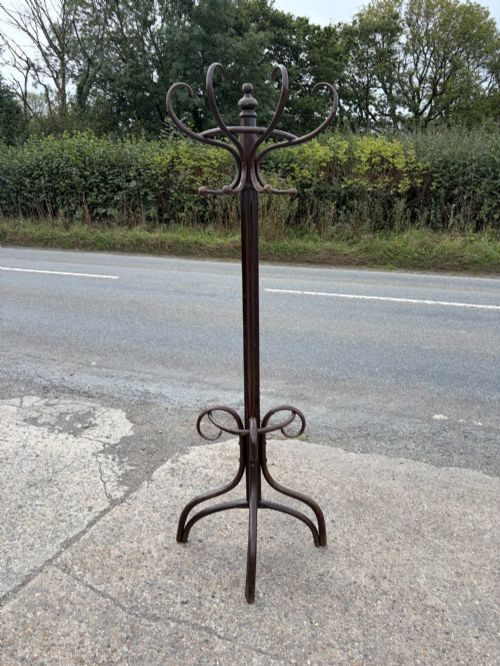
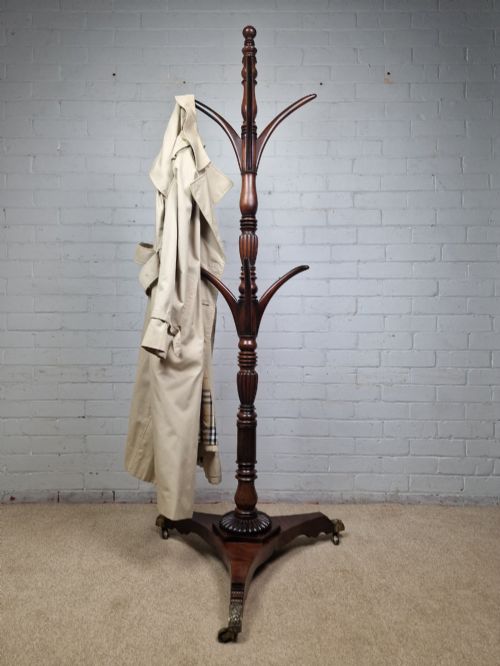
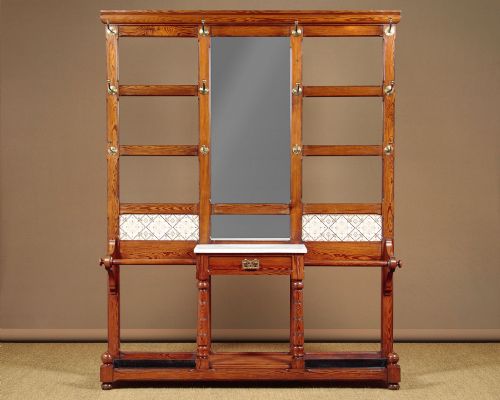
A timber coat stand is a practical piece of hallway furniture designed to organise hats, coats, and walking sticks. When searching for a timber coat stand, buyers encounter various forms including traditional hatstands, revolving bentwood designs, and elaborate hall stands fitted with umbrella holders and mirrors.
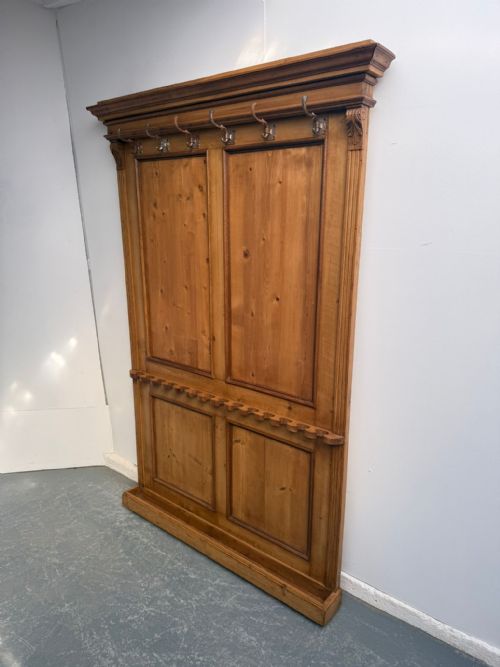
The pieces available span several distinct periods from the nineteenth century into the twentieth century, with Victorian, Edwardian, and Art Deco styles frequently appearing. Materials range from solid mahogany and pine to carved hardwoods and bentwood, reflecting both domestic utility and decorative ambition.
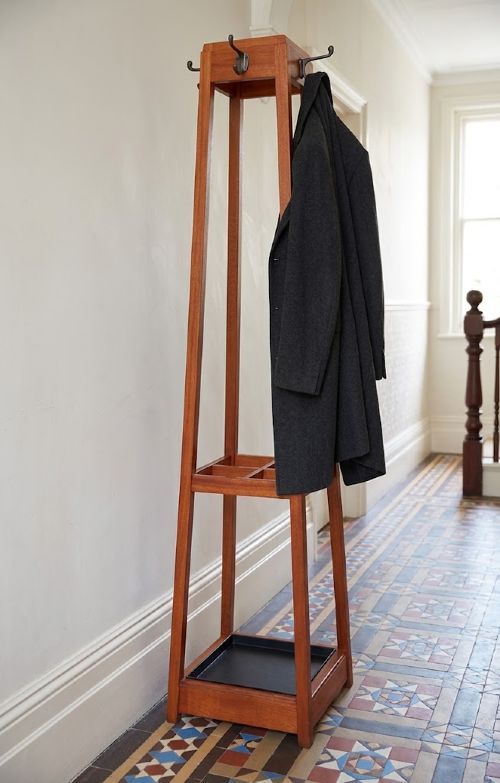
Makers and workshops from history produced these items in diverse regional aesthetics, from English industrial oak to Black Forest carved animal motifs. Buyers are most likely to meet upright column designs in mahogany or pine, alongside lighter bentwood models suited to period hallways.
How they were made
Makers utilised solid timbers such as mahogany, walnut, beech, and pine, often selecting hardwoods for structural strength in load-bearing uprights and hooks. Woodworking techniques combined traditional joinery with steam-bending methods, particularly visible in the curved frames of bentwood hatstands.
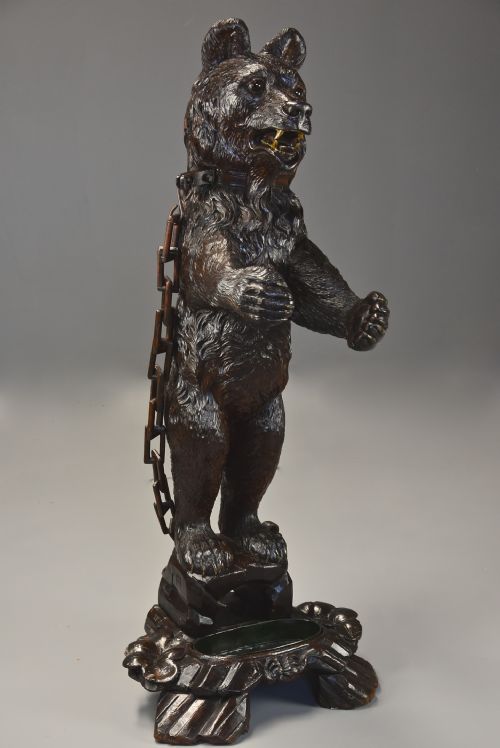
Carving was executed by hand on decorative models, especially seen in Black Forest animal figures and floral reliefs on walnut and pine structures. Brass hooks, metal drip pans, and marble inserts were frequently integrated to handle wet umbrellas and heavy garments.
Timber Coat Stand Retail Price Guide 2026
Typical asking prices for timber coat stand among the pieces listed under this phrase on Sellingantiques today, from the lower quarter to the upper quarter. They describe what is for sale here now, not the wider market.
Listings feature items spanning the nineteenth century through the 1930s, incorporating Victorian, Edwardian, Arts and Crafts, and Art Deco design movements.
What varies in quality
Quality rests in the selection of timber and the integrity of the joinery, where solid hardwoods outlast softer woods under daily weight. The depth and precision of hand-carving distinguish utilitarian hall furniture from sculptural works of art, particularly in Black Forest or Arts and Crafts pieces.
Original hardware such as brass hooks, mirror plates, and metal umbrella trays significantly elevate a piece, especially when matched with intact structural components like revolving mechanisms in bentwood designs.
J Parker of Woodstock·Astrola·Jas Shoolbred
The Timber Coat Stand Glossary
- Bentwood
- Wood that has been heated and bent into curved shapes, most commonly associated with lightweight coat and hat stands.
- Hall stand
- A larger hallway furnishing that typically incorporates coat hooks, a mirror, umbrella stands, and sometimes a small seat or glove drawer.
- Black Forest
- A style of wood carving originating from the German region, renowned for realistic animal sculptures such as bears, chamois, and foxes.
- Antler
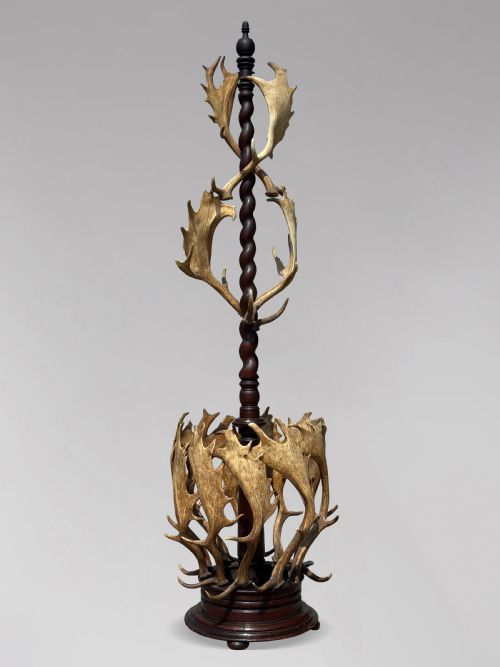
- Animal horns utilised by makers to form distinctive, organic coat hooks on nineteenth-century sporting pieces.
Timber Coat Stand: Frequently Asked Questions
What fits in a small hallway?
Revolving bentwood stands take up minimal floor space while offering multiple tiers for hats and coats.
Slim upright column designs also suit narrow corridors without blocking doorways.
How do I care for antique wood?
Keep timber furniture away from direct heat sources and sudden temperature shifts to prevent wood from splitting.
Apply a traditional beeswax polish occasionally to nourish the grain and maintain the surface sheen.
Were these used in homes?
Victorian and Edwardian households placed hall stands in entranceways to receive outdoor garments before entering main rooms.
Umbrella trays and stick racks caught dripping rainwater to protect indoor floor coverings.
How do I identify a Black Forest stand?
These pieces feature elaborate, deep hand-carvings of animals like bears, foxes, or goats integrated into the structure.
The naturalistic foliage and carved wood details set them apart from standard domestic hall furniture.