

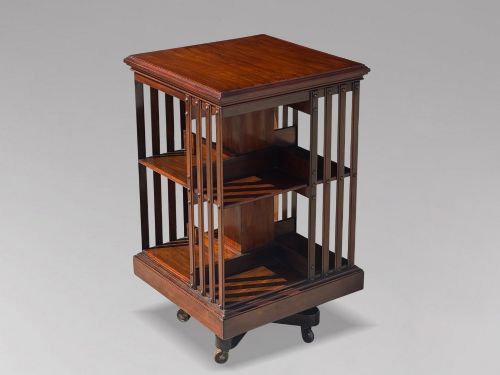
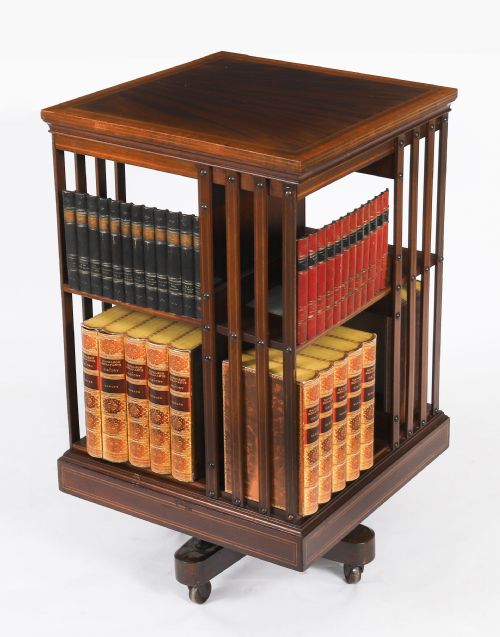
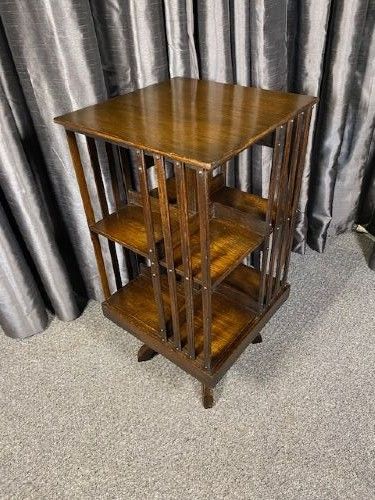
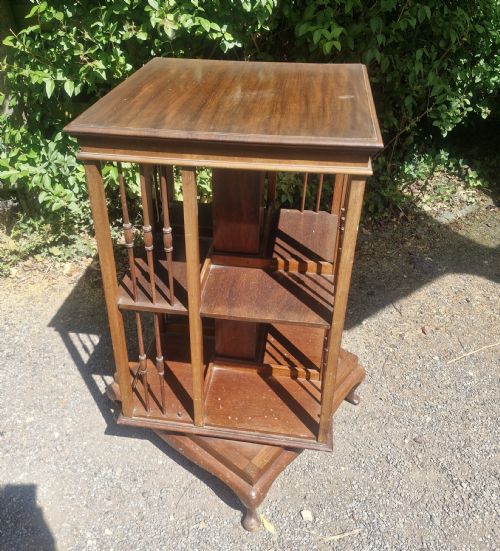




Tiered Rotating Bookshelf
A tiered rotating bookshelf is a clever mechanical desk or floor companion designed to keep volumes within arm's reach through smooth rotation.
Tiered Rotating Bookshelf
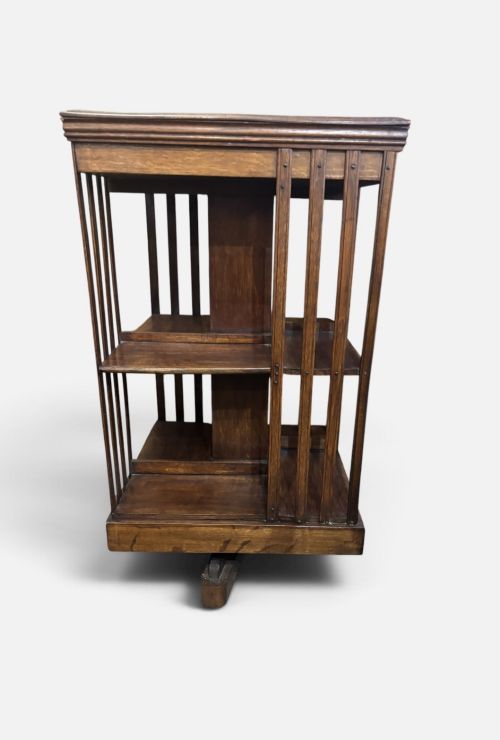
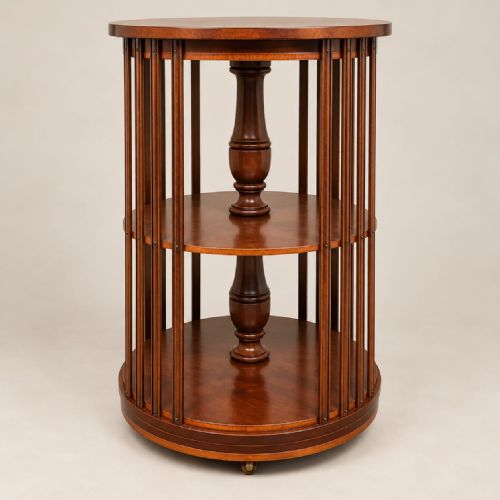
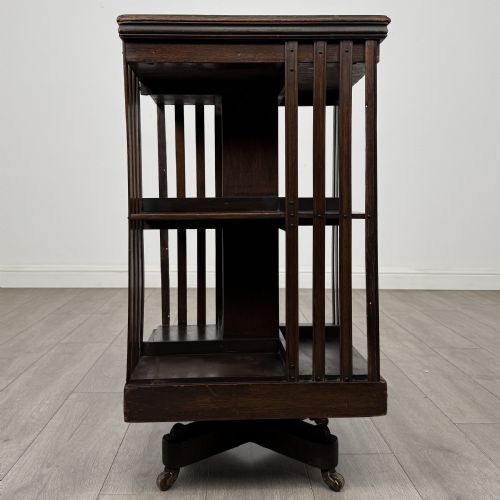
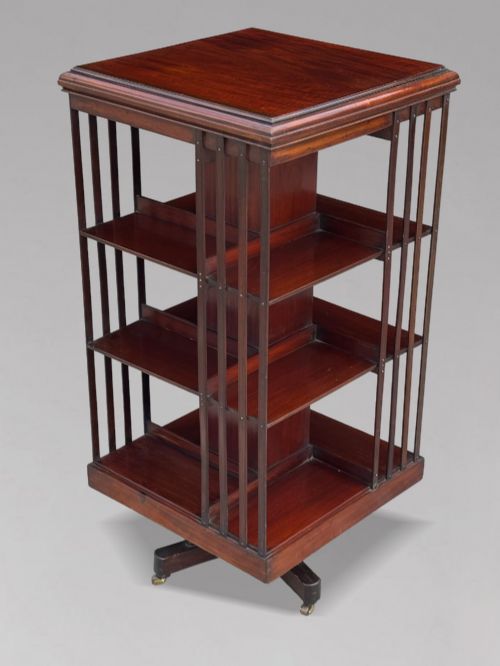
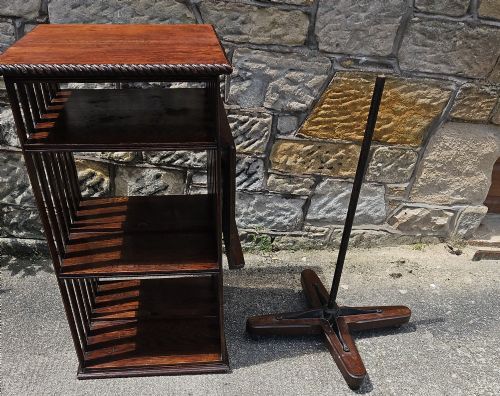
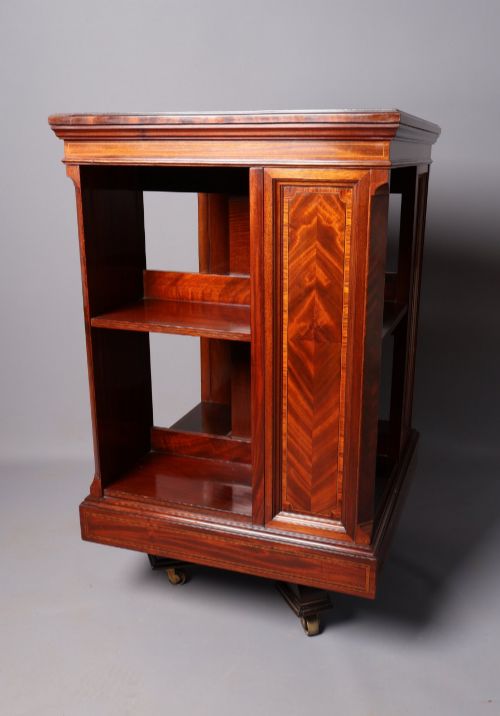
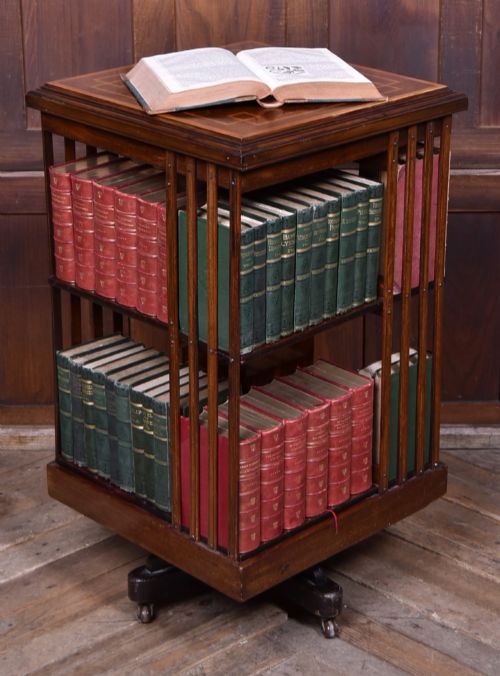
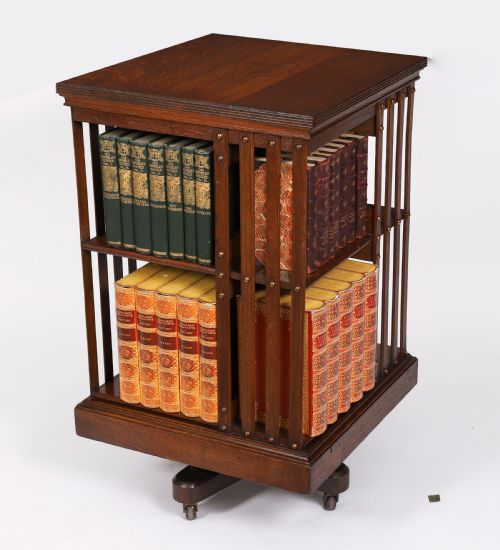
A tiered rotating bookshelf turns easily on a central pivot, allowing multiple rows of books to spin within a compact footprint. These intelligent pieces of library and study furniture appear most often in Edwardian and late Victorian forms.
The prevailing examples seen here are constructed from timber, primarily mahogany, oak, and occasionally satinwood, configured in square or circular tiers. They serve both as utilitarian storage and as decorative centrepieces in studies and drawing rooms.
How they were made
Makers built these revolving bookcases using solid timber and veneers, often incorporating decorative wood inlay and contrasting satinwood banding into the top surfaces. The internal mechanism relies on cast iron or brass fittings to bear the weight of heavy volumes while ensuring a silent, fluid spin.
Joinery techniques matched the period, with sturdy shelving frameworks secured to revolving platforms that conceal the functional hardware beneath. Timber surfaces received polished finishes that accentuated the grain, particularly in flame mahogany and oak.
Tiered Rotating Bookshelf Retail Price Guide 2026
Typical asking prices for tiered rotating bookshelf among the pieces listed under this phrase on Sellingantiques today, from the lower quarter to the upper quarter. They describe what is for sale here now, not the wider market.
Listings span from late Victorian and 1890 examples through the Edwardian period up to 1910.
What varies in quality
The distinction in quality rests upon the choice of timber and the sophistication of the joinery rather than mere size. Superior examples exhibit carefully matched flame mahogany veneers and crisp, precise wood inlay rather than plain surfaces.
Underneath the structure, the responsiveness and stability of the revolving mechanism dictate the standard of manufacture. Well-engineered iron and brass internal pivots provide a balanced rotation that cheaper assemblies simply lack.
The Tiered Rotating Bookshelf Glossary
- Revolving bookcase
- A freestanding set of shelves mounted on a concealed rotating base. This allows the user to access different directions of books without moving the furniture.
- Flame mahogany
- A decorative veneer cut from timber where the branches join the trunk, producing a characteristic rippled pattern. It creates a striking flame-like visual effect on table tops and bookcase sides.
- Wood inlay
- The technique of inserting pieces of contrasting timber into a recess to form decorative patterns. Edwardian examples frequently utilise satinwood lines for borders.
- Satinwood
- A pale, lustrous hardwood sourced from tropical trees, prized for its golden sheen. It appears in fine stringing and banding on late nineteenth and early twentieth-century furniture.
Tiered Rotating Bookshelf: Frequently Asked Questions
How do I care for a revolving bookcase?
Keep the timber nourished with a traditional beeswax polish applied sparingly with a soft cloth. Avoid placing the piece in direct sunlight or near heat sources to prevent the veneers from drying out.
Periodically check the central mechanism underneath to ensure the rotation remains smooth. A light application of appropriate lubricant on the iron or brass parts helps maintain effortless movement.
Can these hold heavy books?
These revolving bookcases were originally built to house standard library volumes, reference books, and novels of the period. The sturdy timber shelves and internal framework easily support substantial reading material.
Distributing heavier books on the lower tiers maintains stability during rotation. Overloading top shelves can affect the balance of the central pivot.
How do I date a revolving bookcase?
Look closely at the timber choice, decorative vocabulary, and construction methods to determine the period. Edwardian pieces often display delicate satinwood inlay, while Victorian examples tend to feature heavier carved details or plain solid mahogany.
The hardware concealed beneath the base also offers clues. Cast iron and brass components evolved between the late nineteenth century and the Edwardian era.
Where should I place a rotating bookshelf?
These pieces excel beside an armchair, desk, or sofa where their rotational function is most useful. Because they are finished on all sides, they sit comfortably away from walls in the middle of a room or library.
Allow sufficient clearance around the circumference for the shelves to turn freely. This ensures you can reach every volume without obstructing the movement.