

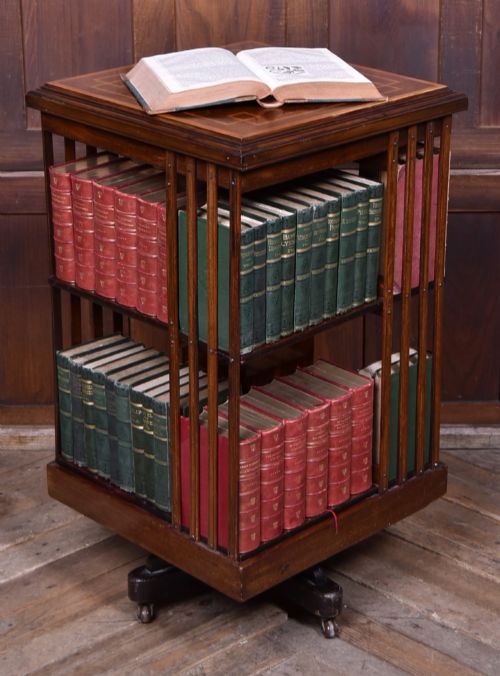


Tiered Revolving Bookshelf
A tiered revolving bookshelf brings immediate order to a room, offering 360-degree access to volumes while turning smoothly on a compact footprint.
Tiered Revolving Bookshelf
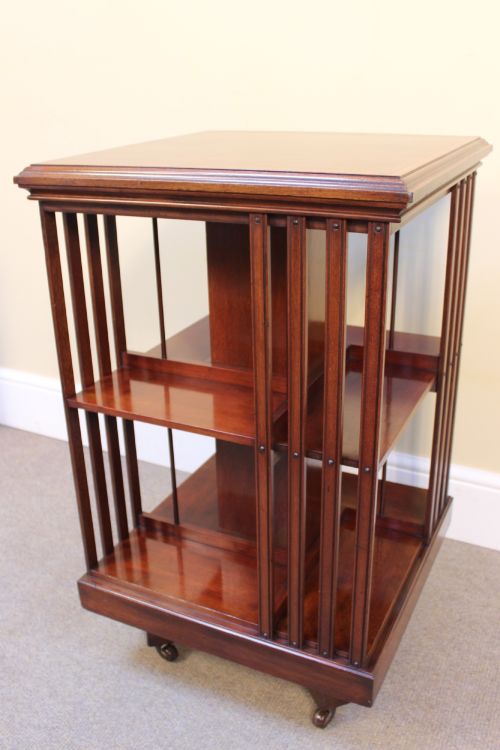
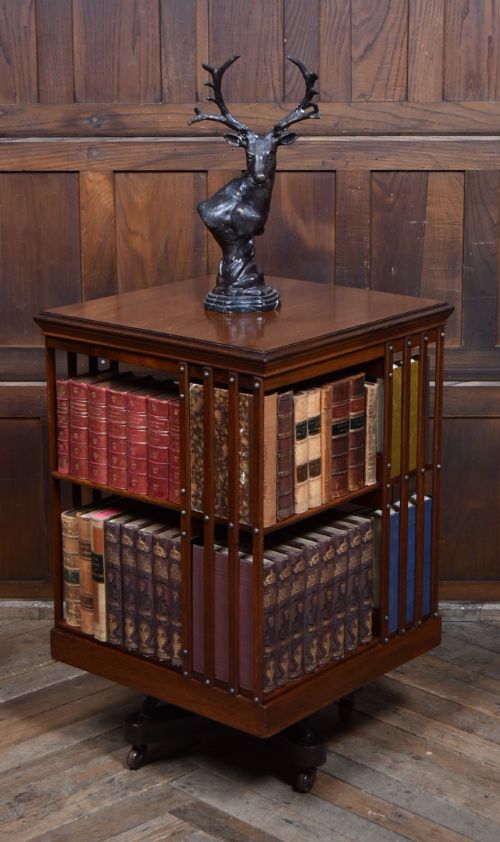
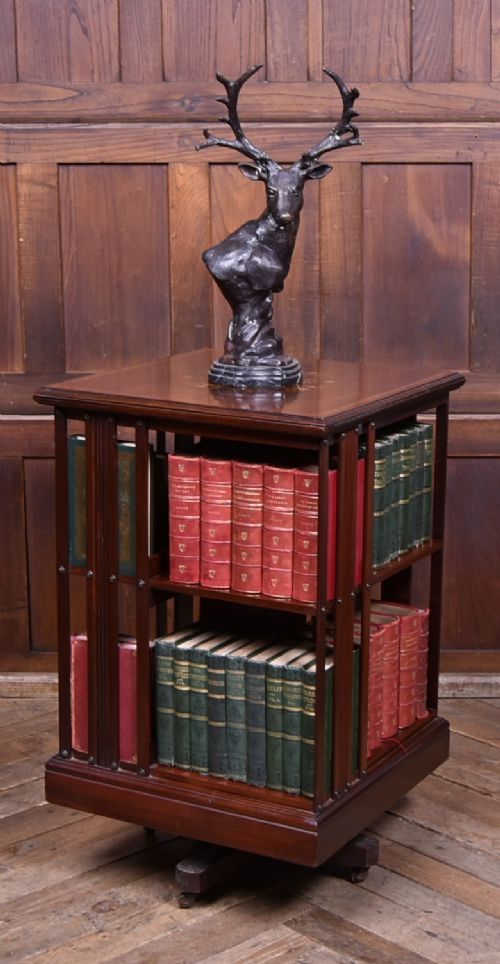
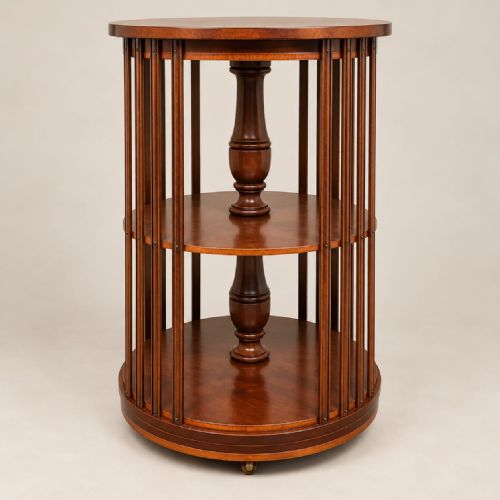
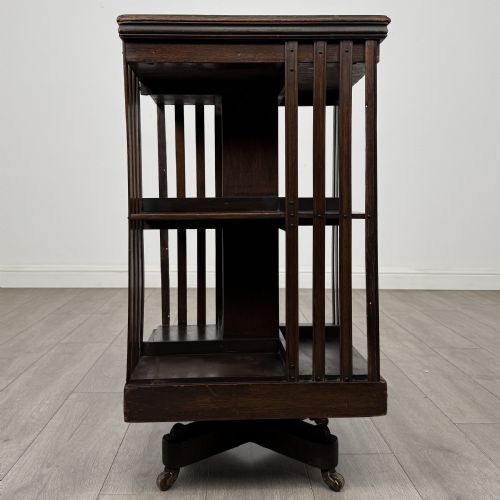
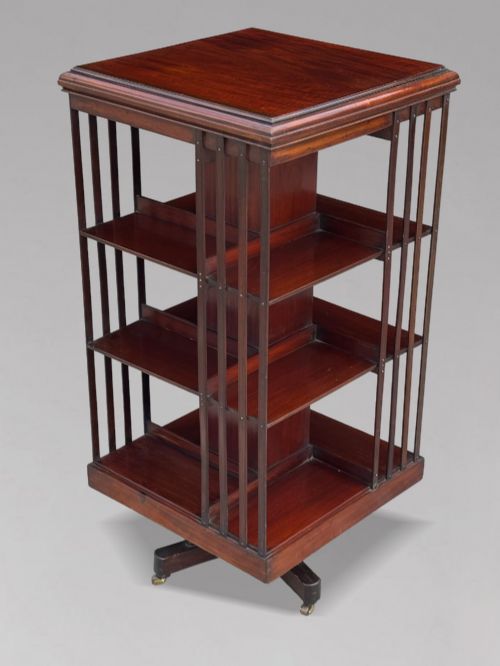
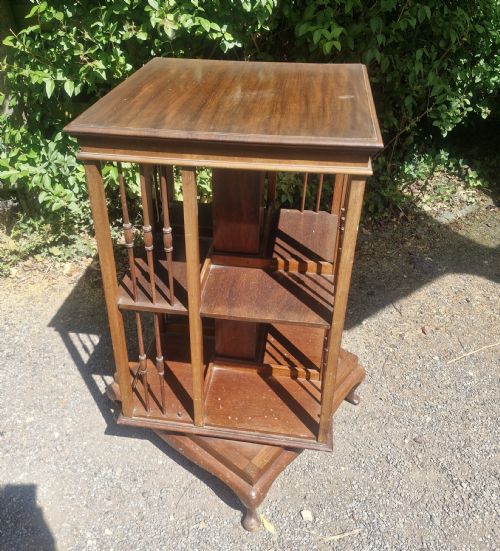
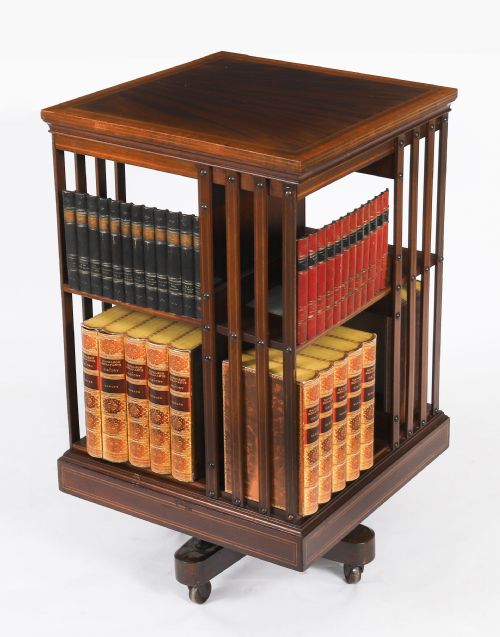
A tiered revolving bookshelf is a functional piece of furniture designed to hold books upright across multiple levels while rotating on a central pivot. The pieces gathered here belong predominantly to the late nineteenth and early twentieth centuries, spanning the Victorian and Edwardian eras.
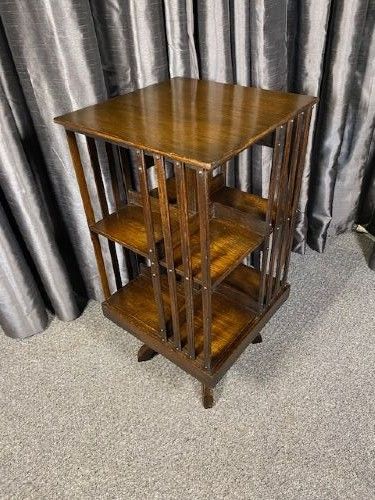
Most examples you will encounter take the form of freestanding square or rectangular bookcases with two or more tiers. They sit low enough to place in the centre of a study or beside an armchair, keeping daily reading material within arm's reach.
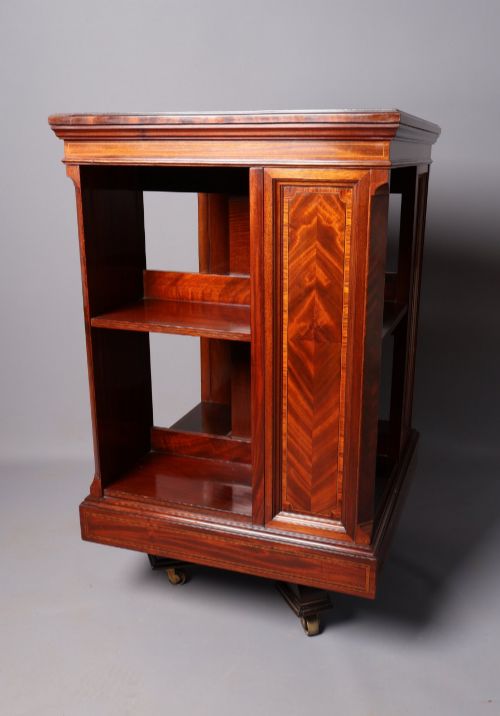
Makers of the period favoured domestic timbers, resulting in a strong showing of mahogany, oak, and occasionally walnut or satinwood. Some incorporate simpler woods with decorative inlays, reflecting the prevailing taste for refined joinery during the Edwardian years.
How they were made
The construction of a tiered revolving bookshelf relies on sturdy timber carcases fitted with interior cross-shaped dividers to keep books upright from both sides. Cabinetmakers typically employed solid mahogany or oak for the primary frame, sometimes selecting flame mahogany veneers for the top surface to create a striking grain pattern.
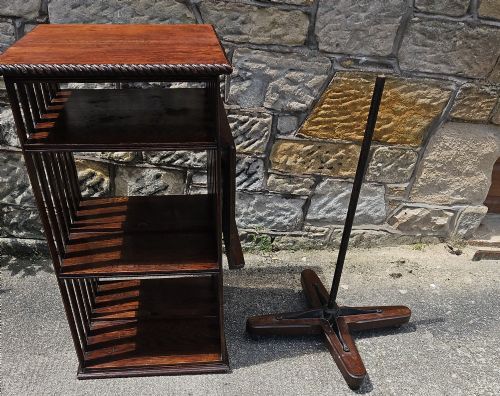
Beneath the wooden tiers lies the crucial mechanical element: a cast iron or brass pivot mechanism that allows the entire upper structure to turn smoothly. This concealed bearing system required precise engineering so the weight of heavy volumes would not cause the tiers to bind or wobble during rotation.
Tiered Revolving Bookshelf Retail Price Guide 2026
Typical asking prices for tiered revolving bookshelf among the pieces listed under this phrase on Sellingantiques today, from the lower quarter to the upper quarter. They describe what is for sale here now, not the wider market.
Listings for tiered revolving bookshelves span the late Victorian and Edwardian periods, with mahogany and oak as the predominant materials.
What varies in quality
Quality in a tiered revolving bookshelf rests largely on the fidelity of the internal turning mechanism and the weight of the timber used. Finer examples turn with effortless balance and minimal friction, while lesser pieces may develop a heavy or listing rotation over time.
The choice of materials also divides the range, moving from plain utilitarian oak and standard mahogany up to richly figured flame mahogany and crisp satinwood inlay. Details such as slatted sides versus solid panels, along with the crispness of edge mouldings, separate standard workshop output from more ambitious cabinet work.
The Tiered Revolving Bookshelf Glossary
- Revolving mechanism
- The internal pivot and ball-bearing system concealed beneath the tiers that permits 360-degree rotation. It usually consists of cast iron or brass components.
- Flame mahogany
- A veneer cut from the branch junction of the mahogany tree, producing a distinctive flickering flame pattern. Cabinetmakers reserved this for visible top surfaces.
- Satinwood
- A pale, hard timber from tropical trees used extensively during the Edwardian period for stringing and decorative inlay work.
- Tier
- An individual horizontal level of shelving within the bookcase structure, allowing books to be stacked vertically in distinct layers.
Tiered Revolving Bookshelf: Frequently Asked Questions
How much weight can a revolving bookcase hold?
These pieces were built to support standard collections of hardcover and paperback books distributed evenly across the tiers.
While the internal pivot mechanism is robustly engineered from metal, loading one side heavily while leaving the other empty can strain the central axis during rotation.
Where should I place a revolving bookcase?
Their compact footprint and 360-degree access make them well suited for placement beside an armchair, near a desk, or freestanding in the middle of a study.
Because they turn freely, they do not need to sit flush against a wall to remain functional.
How do I date an Edwardian revolving bookcase?
Edwardian examples typically date from around 1900 to 1910, often displaying lighter timbers like satinwood inlay or walnut alongside traditional mahogany.
They generally feature simpler, cleaner lines compared to the heavier carved ornamentation seen on late Victorian pieces.
How do I maintain the revolving mechanism?
The concealed iron or brass bearing beneath the tiers requires very little attention beyond occasional cleaning of dust from the underside.
Keeping the weight balanced across the shelves prevents uneven wear on the central pivot over years of use.