
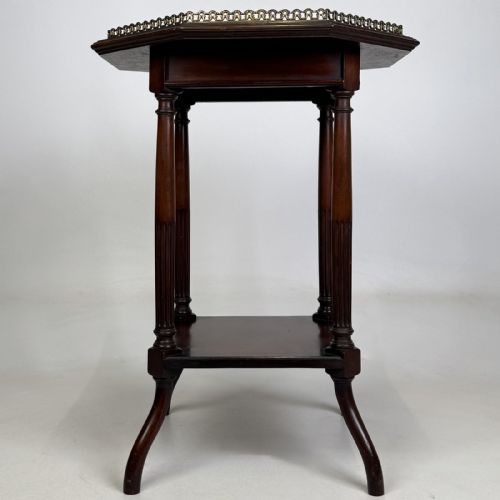
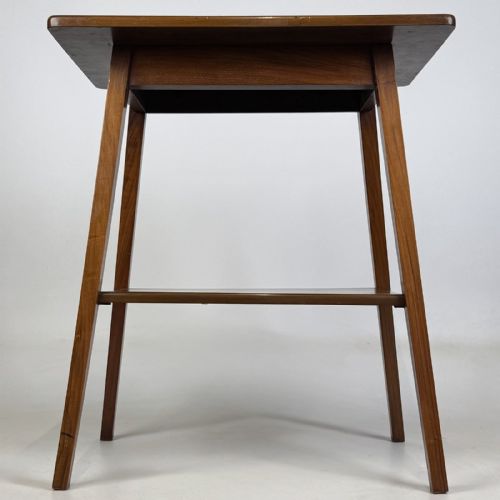
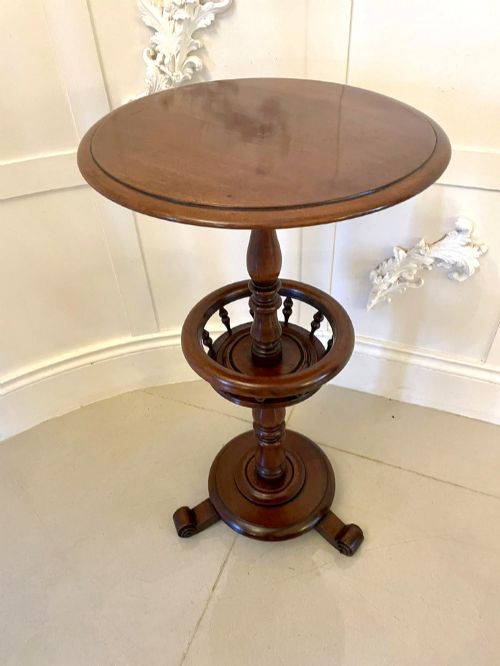
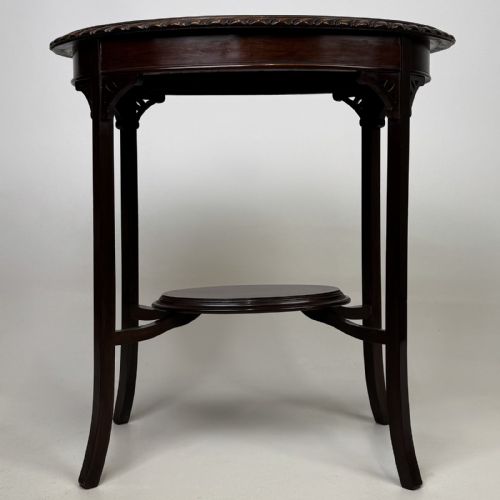
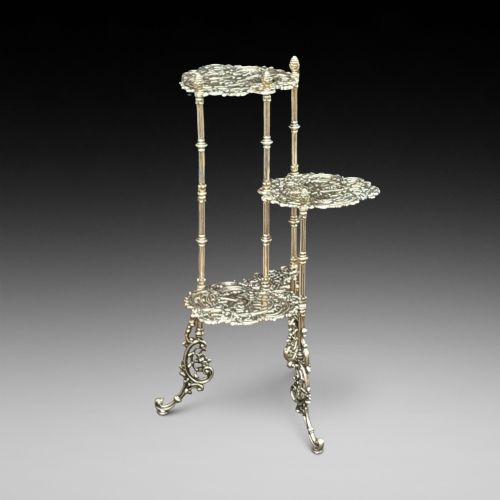
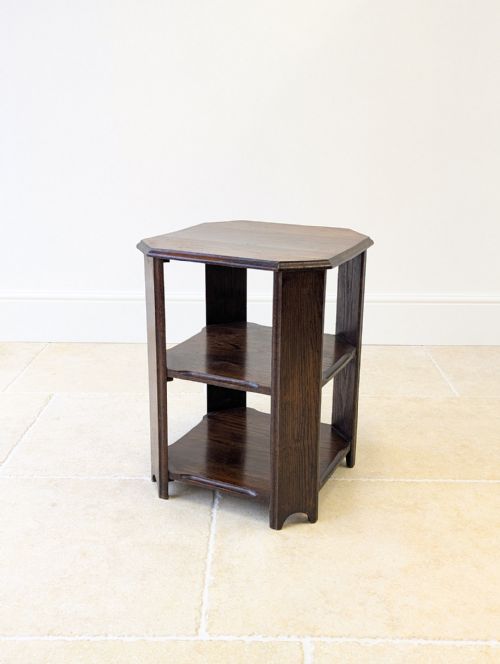
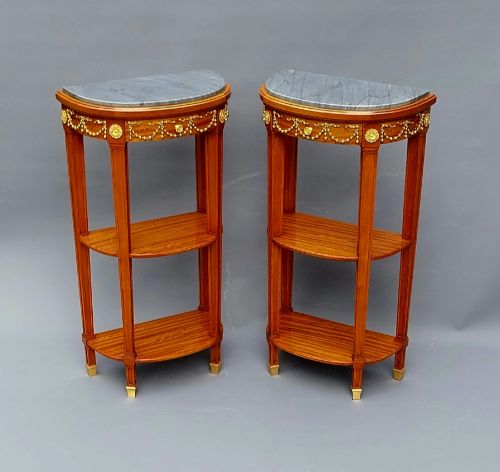
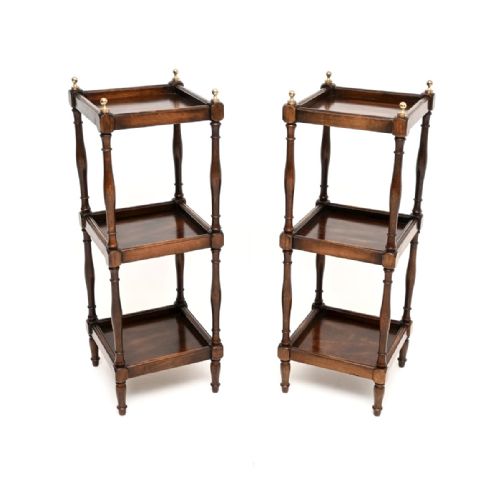
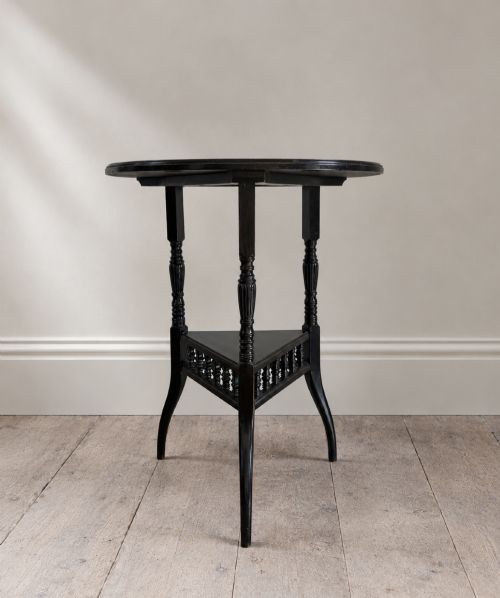
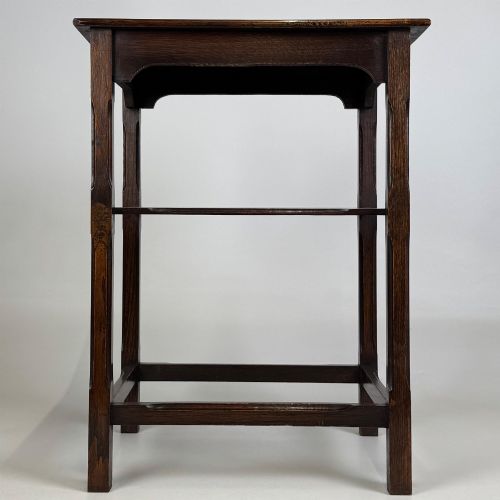

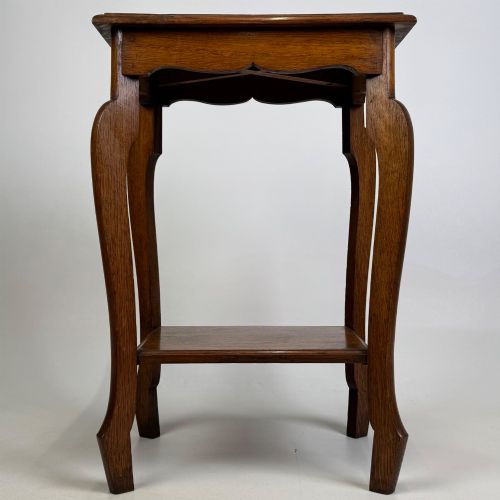
Tiered Plant Table
A tiered plant table gives structured height to greenery, and these multi-level surfaces suit corners or windowsills where pots require elevation.
Tiered Plant Table
A tiered plant table provides stacked horizontal surfaces designed primarily to hold plants, jardinieres and pottery securely at varied elevations. When you search for a tiered plant table, you encounter diverse forms ranging from two-tier occasional tables and etageres to specific plant stands and vase tables.
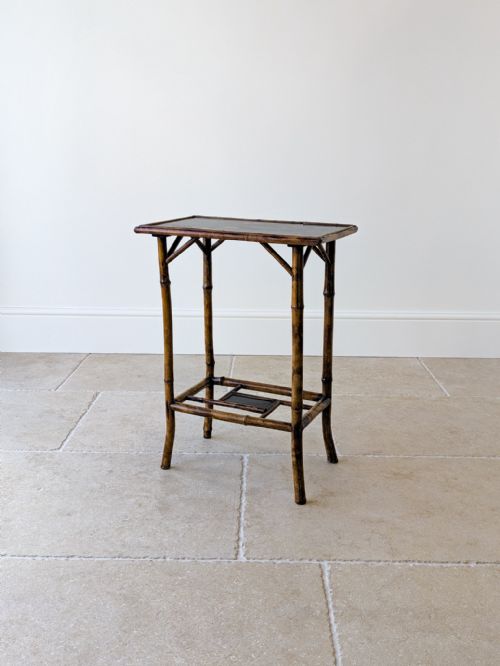
The pieces appearing on this page originate predominantly from the Victorian, Edwardian and early twentieth-century periods. Common material expressions span traditional timbers like oak, mahogany and walnut alongside exotic variations such as bamboo and hardwood.
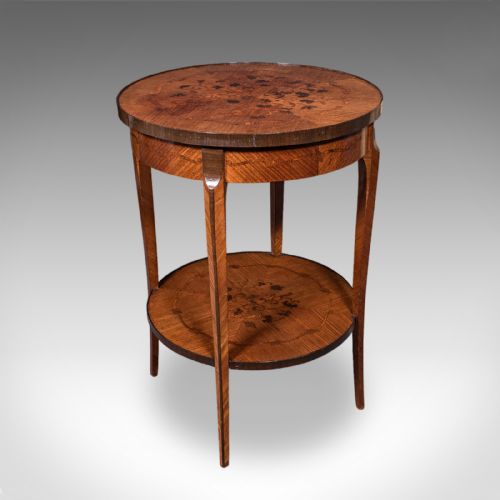
Makers and designers of the late nineteenth and early twentieth centuries applied these tiered formats to domestic interiors, incorporating influences from the Arts and Crafts movement, the Aesthetic Movement and Art Deco. Buyers meet round, oval, octagonal and heart-shaped tops supported by turned legs, shelves or multiple upright tiers.
Materials and construction methods
Cabinet makers utilised solid hardwoods including oak, mahogany and walnut alongside decorative veneers to build stable frames capable of supporting heavy pots and jardinieres. Joinery techniques from the Edwardian and Victorian eras involved sturdy dowels, mortise and tenon joints, and turned wooden supports.
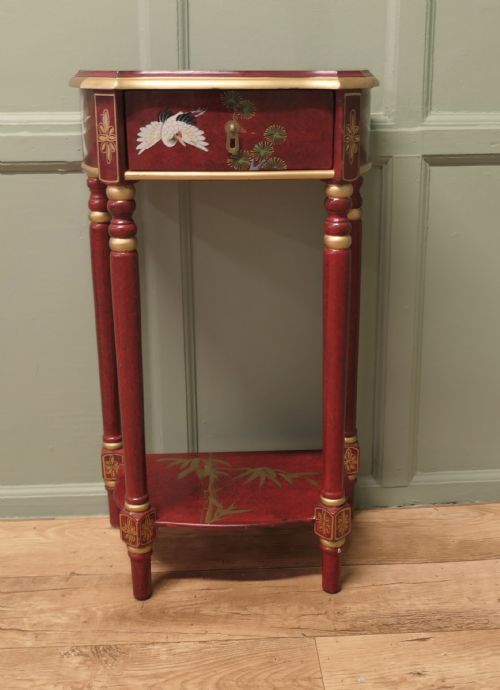
Alternative materials such as bamboo, brass and ebonised wood appeared frequently during the late nineteenth century, reflecting global design influences like the Anglo-Japanese style. Finishes ranged from original paint and limed oak treatments to polished mahogany and hand-carved surfaces.
Evaluating construction and design quality
Superior quality in a tiered plant table rests upon the integrity of the timber selection and the precision of the joinery between shelves and uprights. Finer examples display thoughtful proportions, balanced weight distribution across the tiers and meticulous carving or inlay work.
Conversely, lower quality often reveals itself through generic mass production, poor timber seasoning leading to warping, or weak joints at the shelf attachments that struggle under the weight of damp soil and ceramic pots.
LIBERTY of LONDON·WILLIAM BIRCH·E.W GODWIN
The Tiered Plant Table Glossary
- Tiered plant table
- A multi-level stand or small table designed to elevate potted plants and flowers within a room. These surfaces allow gardeners to display foliage at different heights.
- Etagere
- A piece of furniture consisting of a set of open shelves for displaying small objects or plants. This French form provides vertical storage and display space.
- Jardiniere
- An ornamental pot or stand for holding plants or flowers. They often sit atop plant tables or within specialised recesses.
- Arts and Crafts
- A design movement advocating traditional craftsmanship using simple forms and local materials. Pieces from this style often feature exposed oak grain and honest construction.
- Ebonised
- Wood finished with a dark stain or paint to imitate ebony. This technique was popular in nineteenth-century decorative furniture.
Tiered Plant Table: Frequently Asked Questions
What is a tiered plant table?
A tiered plant table is a piece of furniture featuring multiple stacked surfaces designed to hold potted plants and decorative objects at varying heights. These stands make efficient use of vertical space in living areas and conservatories.
Originating largely in the nineteenth and early twentieth centuries, they combine functional load-bearing construction with decorative woodworking styles such as Arts and Crafts or Edwardian mahogany design.
How were plant tables used historically?
Historically, homeowners placed these multi-level stands near windows or in drawing rooms to display prized ferns, flowering plants and ceramic jardinieres. The stacked shelves allowed multiple pots to catch adequate sunlight without crowding the floor.
Beyond botany, households frequently utilised smaller tiered tables as lamp tables, side tables or display surfaces for ornaments and vases.
How do I care for antique wood plant tables?
Protecting the timber requires using waterproof saucers beneath all plant pots to prevent water rings, moisture damage and rot from affecting the antique wood or veneer surfaces. Regular dusting with a dry cloth keeps the finish clean without stripping natural oils.
Positioning the table away from direct heat sources and severe temperature fluctuations prevents the timber from drying out, cracking or warping over time.
How do I distinguish Edwardian from Victorian tables?
Victorian tiered tables, particularly those from the late nineteenth century, often feature darker woods, bamboo construction, or heavy carving influenced by the Aesthetic Movement and Arts and Crafts ideals. They can feel denser and more ornate in their detailing.
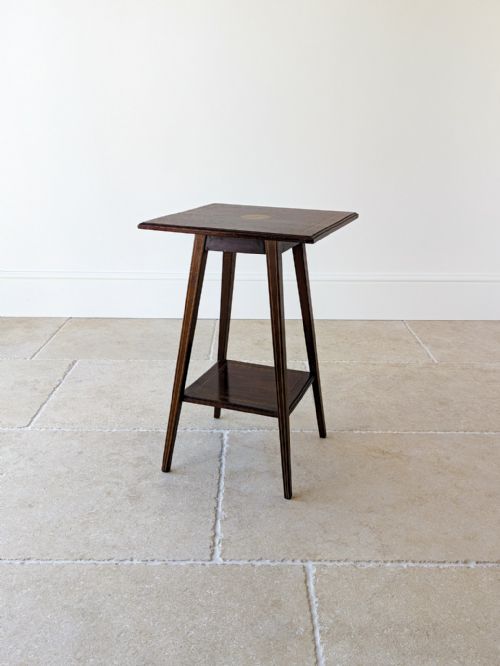
Edwardian examples tend to exhibit lighter mahogany or oak construction, cleaner lines, and sometimes delicate inlay work or simpler turned supports that reflect a shift towards airier domestic interiors.