







Tiered Display Case
A tiered display case offers the ideal stage for prized objects, combining glazed timber framework with multiple levels for visibility.
Tiered Display Case
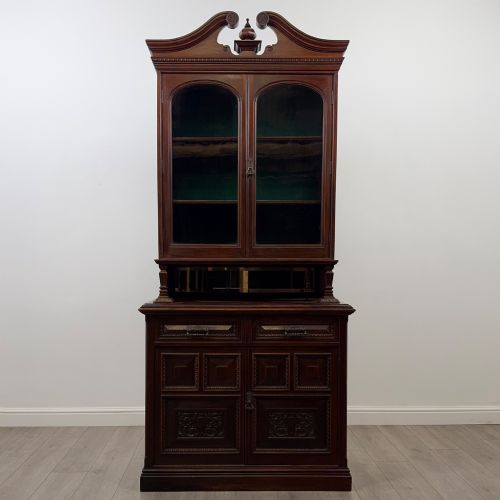
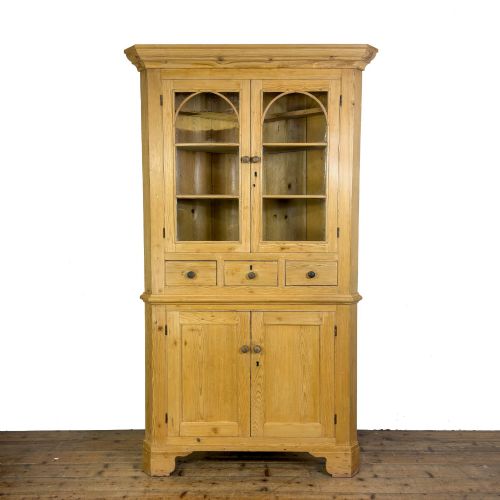
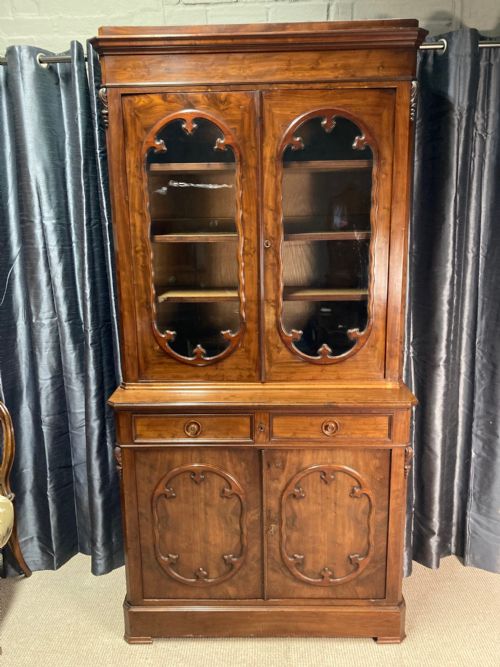
A tiered display case brings together practical book storage and elevated shelving, appearing across Victorian, Edwardian, and Georgian periods in various forms. When exploring a tiered display case, buyers frequently encounter mahogany and pine constructions designed as corner cabinets, vitrines, and stacking bookcases.
Makers adapted these tiered display case pieces for commercial and domestic settings, utilising glazed doors and adjustable shelves to showcase contents safely. Surviving examples reflect distinct regional traits, ranging from Victorian commercial units to French Directoire style vitrines and Sheraton Revival corner cupboards.
Materials and construction methods
Carpenters relied heavily on solid mahogany, pine, and oak to build the primary carcass, often incorporating satinwood inlay for decorative contrast. Glazed panels and brass hardware completed the construction, securing the contents while maintaining clear sightlines across multiple shelves.
Workshops employed specialised techniques such as bird's eye maple veneers and swan neck pediments to elevate standard cabinet forms. Stacking systems like Globe Wernicke designs introduced modular functionality through precision-engineered timber frames.
Tiered Display Case Retail Price Guide 2026
Typical asking prices for tiered display case among the pieces listed under this phrase on Sellingantiques today, from the lower quarter to the upper quarter. They describe what is for sale here now, not the wider market.
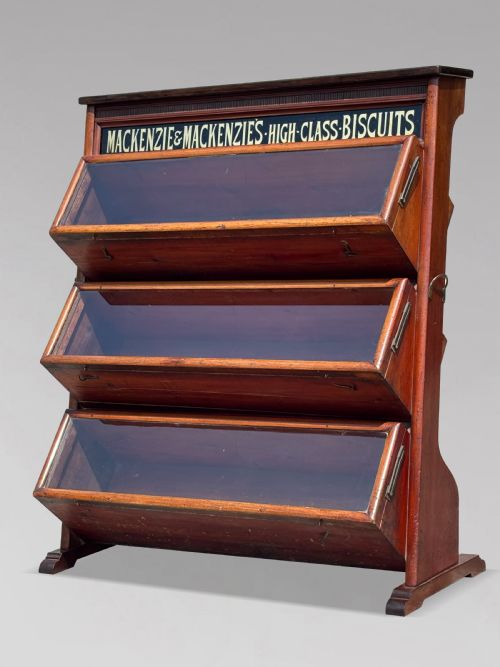
Biscuits once sold from specialised display cases, proving that Victorians took their snack merchandising very seriously indeed.
Assessing build quality and refinement
The standard of timber selection largely dictates the quality of a piece, with figured mahogany and burr walnut sitting above simpler painted pine alternatives. Superior execution shows in the crispness of inlay work, the tight alignment of glazed doors, and the careful fitting of adjustable shelving.
Finer examples often feature architectural flourishes like swan neck pediments or specialised commercial branding, whilst utilitarian versions focus purely on robust everyday storage.
The Tiered Display Case Glossary
- Vitrine
- A glass-fronted cabinet designed specifically for displaying fine objects or porcelain. These French-influenced pieces often feature delicate mahogany frames and mirrored backs.
- Globe Wernicke
- A proprietary modular stacking bookcase system popular in the early twentieth century. Individual glazed sections sit upon one another to form a customized tower.
- Swan Neck Pediment
- A broken scroll pediment top featuring opposing curved moulding meeting at a central point. This classical architectural feature frequently crowns formal Victorian bookcases.
- Satinwood Inlay
- Decorative contrasting wood veneer set flush into a darker primary timber such as mahogany. This technique defines late nineteenth-century Sheraton Revival furniture.
Tiered Display Case: Frequently Asked Questions
Are corner cabinets practical?
Corner units maximise unused room angles while providing secure storage behind glazed or solid timber doors. They fit effectively into dining rooms and studies without dominating the floor space.
Shelving depths inside these cabinets vary, so verify internal measurements before storing larger collections.
What is a stacking bookcase?
A stacking bookcase consists of independent modular tiers that lock together vertically to form a functional cabinet. This design allowed owners to expand their library gradually by adding new sections.
Most stacking units utilise glass-fronted lifting doors that slide back smoothly into the case.
How should I clean mahogany?
Dust timber surfaces regularly with a soft, dry cloth to prevent dirt buildup on the polished finish. Avoid silicone-based sprays that can penetrate old timber and damage the patina over time.
Apply a traditional beeswax polish occasionally to nourish the wood and maintain a gentle, natural sheen.