



Tiered Bronze Light Fitting
A tiered bronze light fitting brings height and architectural weight to a room, catching the light across multiple metal and crystal tiers.
Tiered Bronze Light Fitting
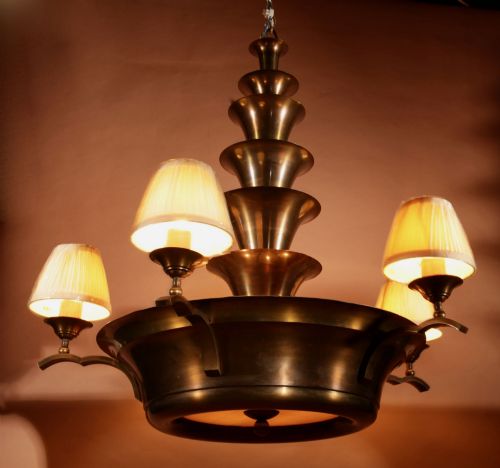
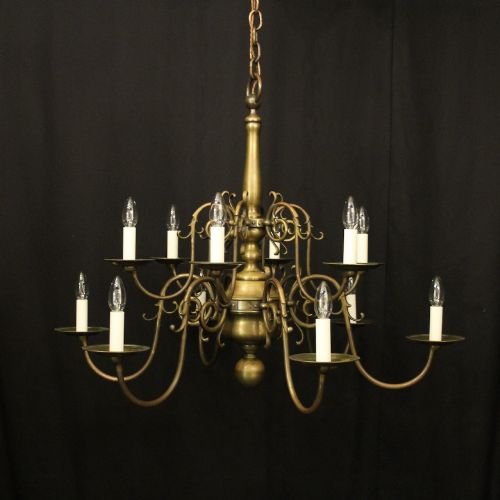
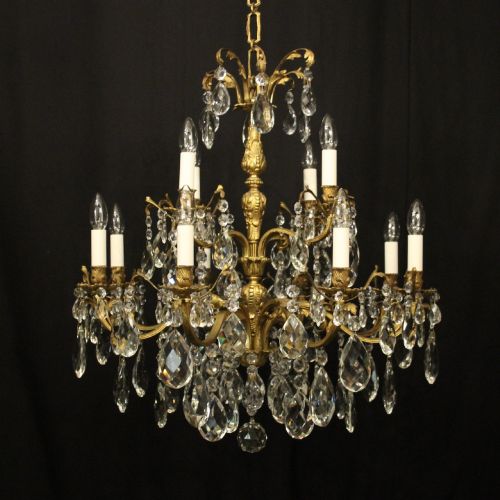
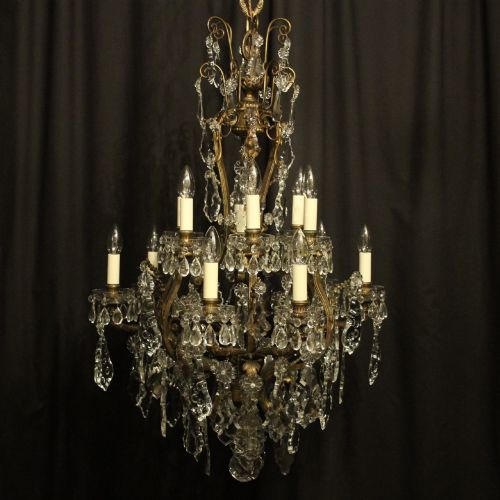
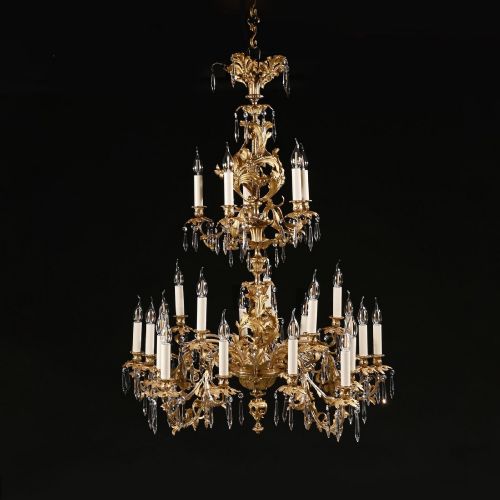
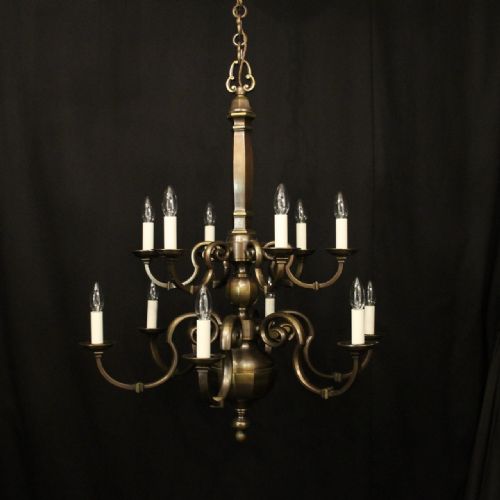
A tiered bronze light fitting spans several structural levels to hold numerous candle or electric bulbs in large rooms. These pieces appear in forms such as chandeliers and ceiling lights, originating from periods including the nineteenth century, nineteen-ten, and nineteen-thirty.
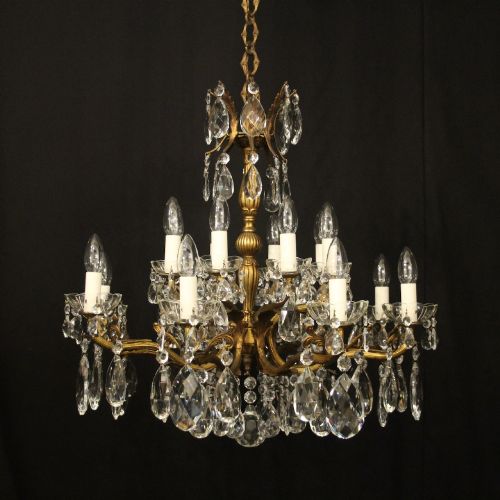
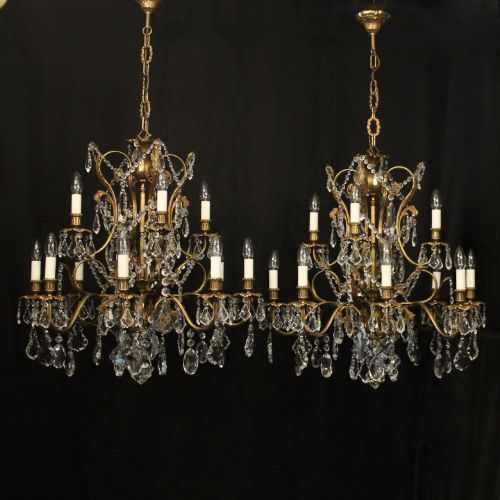
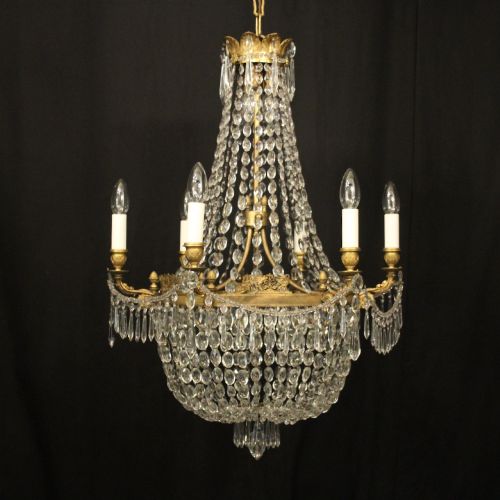
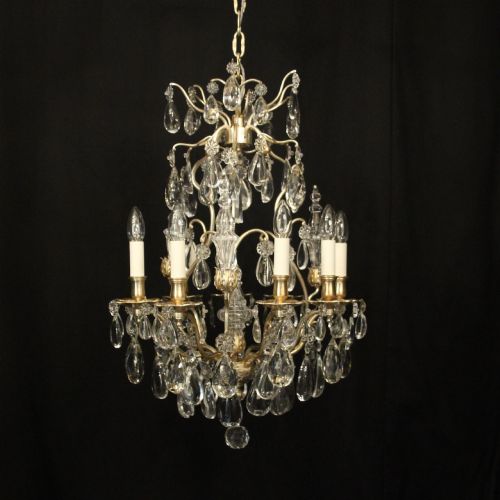
The most common examples on this page are French and English chandeliers incorporating multiple tiers of bronze, gilded bronze, or brass alongside glass and crystal drops. Styles range from French Rococo and Louis XV to Amsterdam School and English Traditional.
Makers and designers worked within distinct regional aesthetics, producing everything from dark framed Italian double tiered fixtures to elaborate tent and waterfall chandeliers. Each piece organises downward illumination across successive levels of metalwork.
What varies in quality
The precision of the metal casting and the depth of the subsequent hand-chasing separate standard production from exceptional work. Finer pieces display crisp botanical or scroll motifs in the bronze without softening of line.
The clarity and cutting of the crystal drops, along with the richness of the gilding or silver plating, determine the overall visual impact. Heavier frames with substantial multi-tiered structures represent more ambitious manufacturing than simpler single-level alternatives.
Tiered Bronze Light Fitting Retail Price Guide 2026
Typical asking prices for tiered bronze light fitting among the pieces listed under this phrase on Sellingantiques today, from the lower quarter to the upper quarter. They describe what is for sale here now, not the wider market.
Listings feature pieces spanning from the early nineteenth century through to the nineteen-thirties, dominated by French and English examples.
The Tiered Bronze Light Fitting Glossary
- Bronze
- An alloy consisting primarily of copper, traditionally used for durability and fine detail in casting. It forms the structural backbone of many antique chandeliers.
- Ormolu
- A method of applying finely ground high-carat gold to a bronze object using mercury. This technique produces a warm, lasting metallic finish seen on many French pieces.
- Tent and waterfall
- A lighting configuration where crystal strands form an upper tent shape above a lower cascading waterfall of glass drops. This arrangement maximises light refraction across the tiers.
- Bobeche
- A small saucer-like drip pan placed beneath a candle socket to catch melted wax. On electrical conversions, it often supports hanging crystal prisms.
- Amsterdam School
- An early twentieth-century architectural and design movement known for expressive brickwork and distinctive metal craftsmanship. Pieces from this tradition favor strong forms over traditional ornamentation.
Tiered Bronze Light Fitting: Frequently Asked Questions
How do I clean a tiered bronze light fitting?
Dust the metal and crystal components regularly using a soft feather duster or dry microfiber cloth. Avoid commercial liquid cleaners on gilded or patinated bronze surfaces to protect the finish.
For thorough cleaning, remove crystal drops individually and wash them in warm soapy water before drying completely. Ensure the power is switched off at the mains before undertaking any maintenance on hanging fixtures.
Can these chandeliers be used with modern electrics?
Most antique fittings have already been adapted for electricity during their lifespan. Rewiring is straightforward for a qualified electrician to ensure safety compliance with current standards.
Lower wattage LED candle bulbs work well to replicate the soft glow of historic lighting without generating excessive heat. Dimmer switches allow you to adjust the illumination level to suit the room.
How do I determine the right size for my room?
Consider both the ceiling height and the floor area of the space when selecting a tiered fixture. Multi-tiered chandeliers with twelve or more lights require substantial vertical clearance to hang properly.
Ensure the bottom of the fitting clears foot traffic by an appropriate margin, typically hanging above a dining table or in an open hallway with high ceilings.
What is the difference between gilt bronze and brass?
Gilt bronze involves a copper alloy base covered in a layer of gold, offering a rich and durable surface that holds fine chased detail. Brass is an alloy of copper and zinc that generally appears brighter and yellower in its untreated state.
Many antique pieces combine multiple metals, using bronze for structural strength and brass for smaller decorative elements or internal components.