


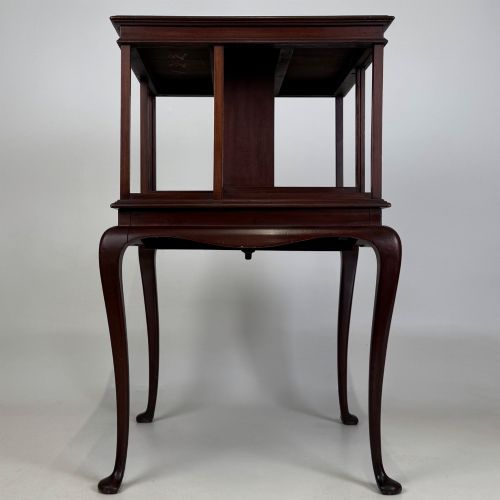
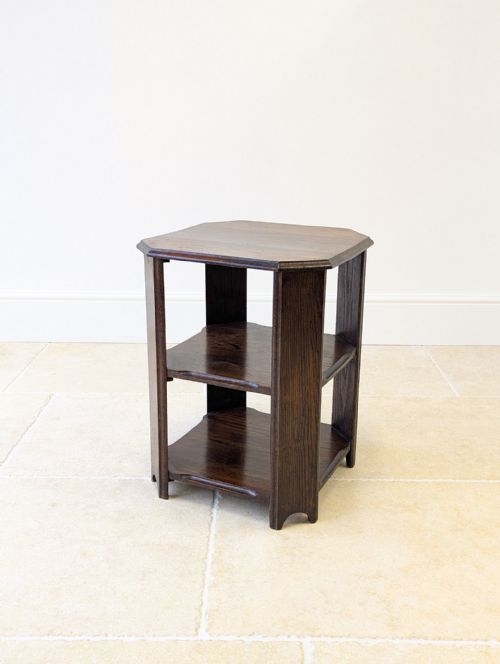

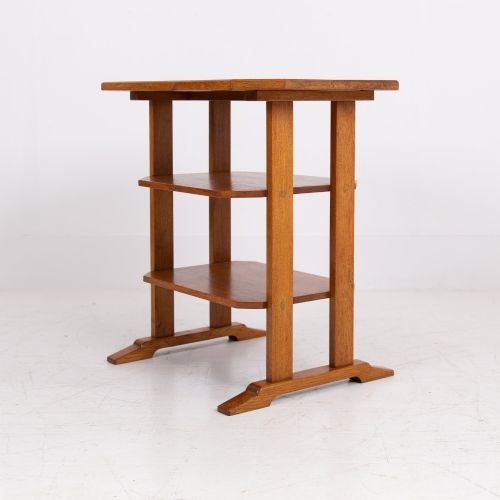
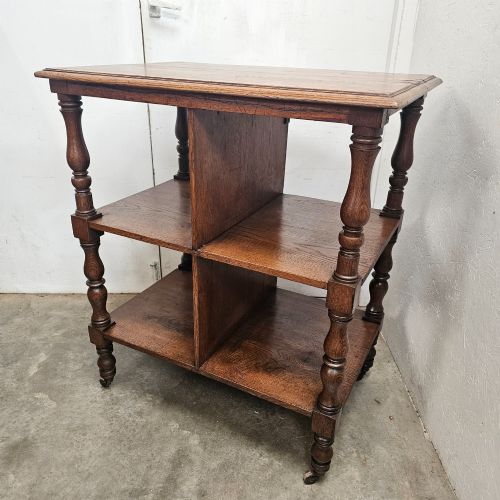
Tiered Book Table
A tiered book table offers multiple levels of surface and storage, and buyers choose one to keep volumes organised within arm's reach.
Tiered Book Table
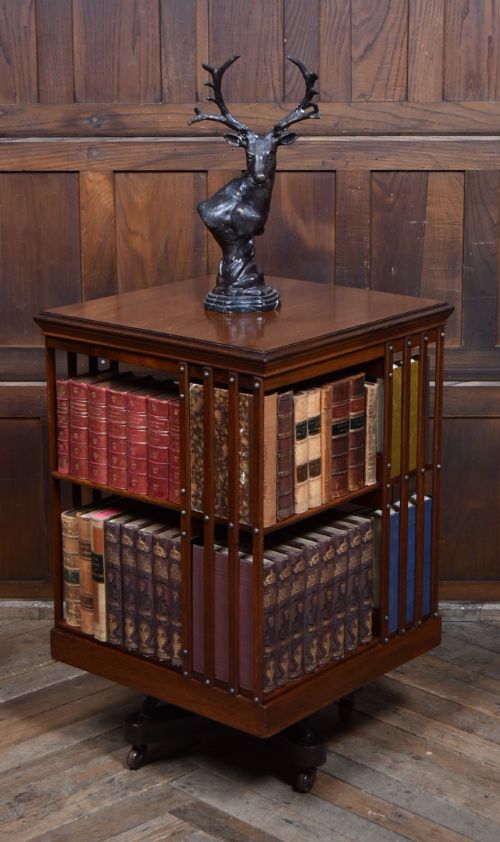
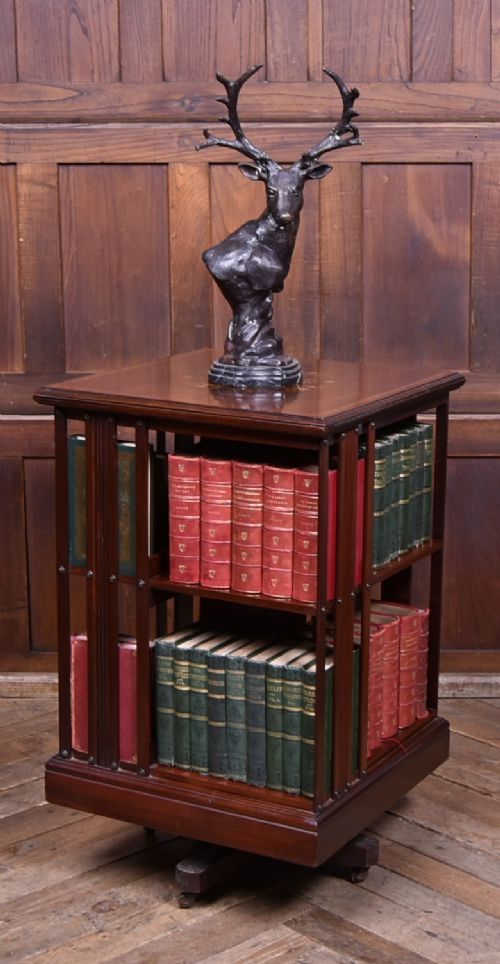
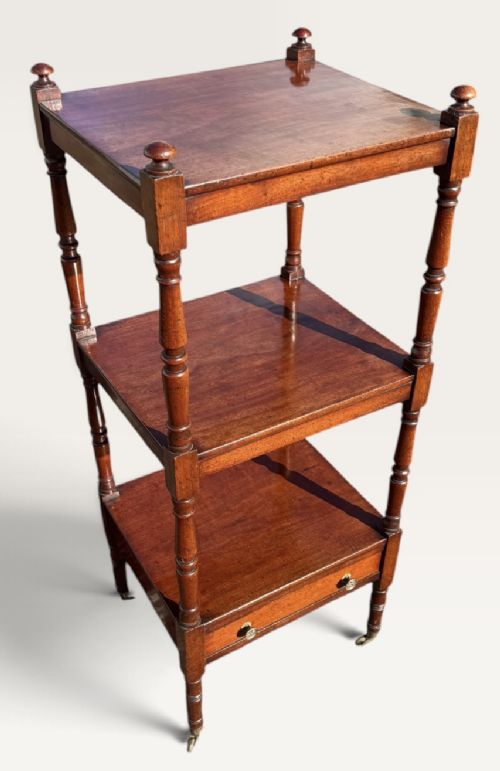
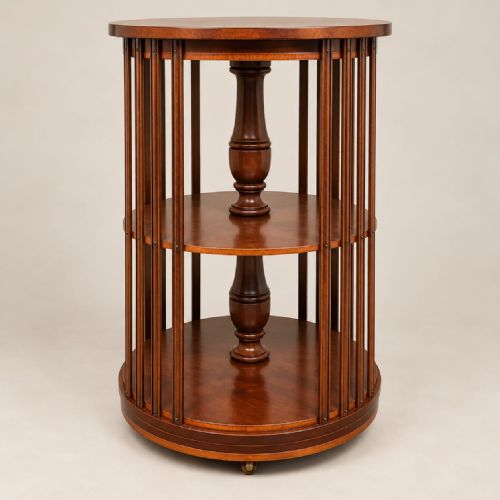
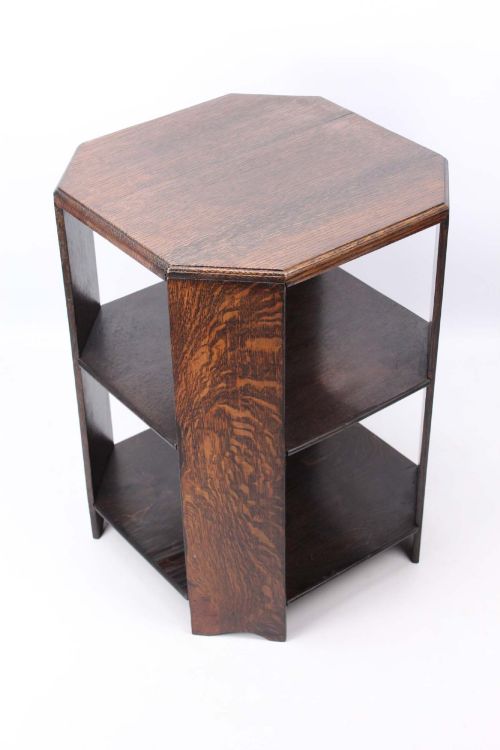
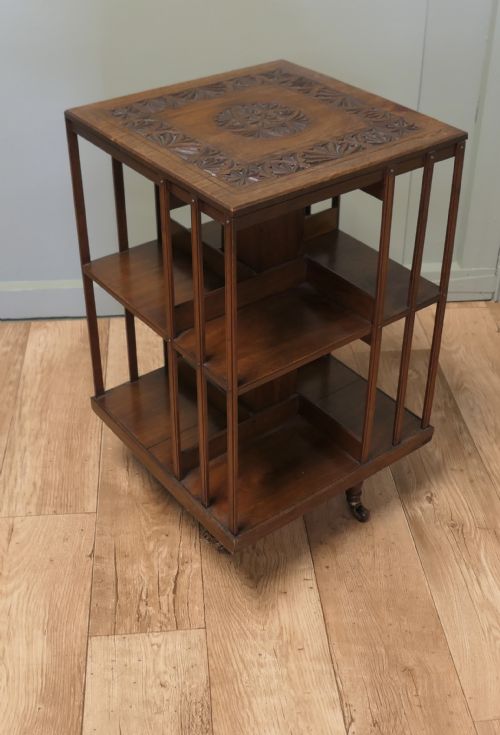
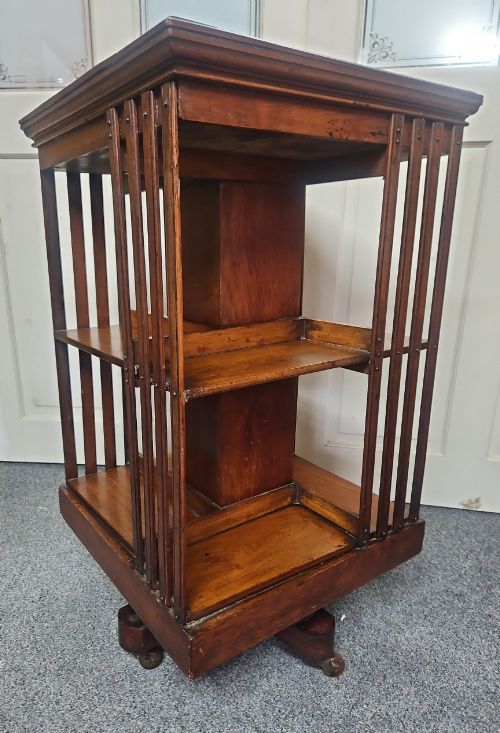
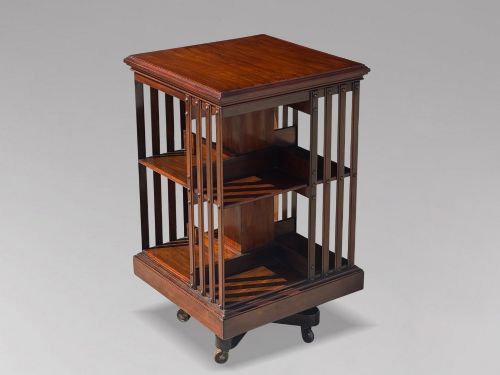
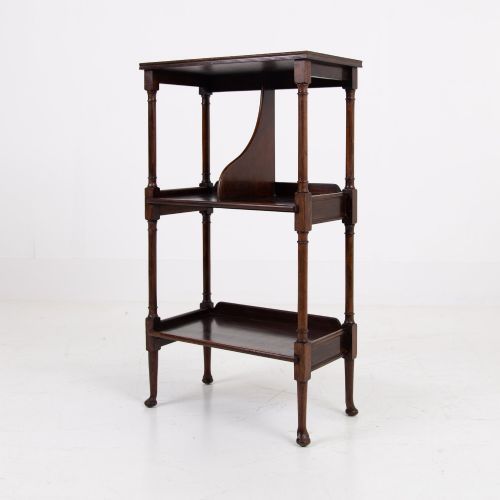
A tiered book table brings together surface space and shelving in forms such as revolving bookcases, étagères, whatnots, and side tables. These pieces appear frequently from the Victorian, Edwardian, and Art Deco periods, spanning the nineteenth and twentieth centuries.
Most examples found on this page date from the Edwardian era and the early twentieth century, constructed primarily in mahogany or oak. They serve as compact library fittings, bedside stands, or occasional furniture positioned beside seating.
Makers and designers from Liberty & Co and Maple & Co contributed to this tradition, producing revolving bookstands and side tables with distinct regional styles like the Cotswold School. Forms range from round and octagonal shapes to tiered library carts and reading tables.
How they were made
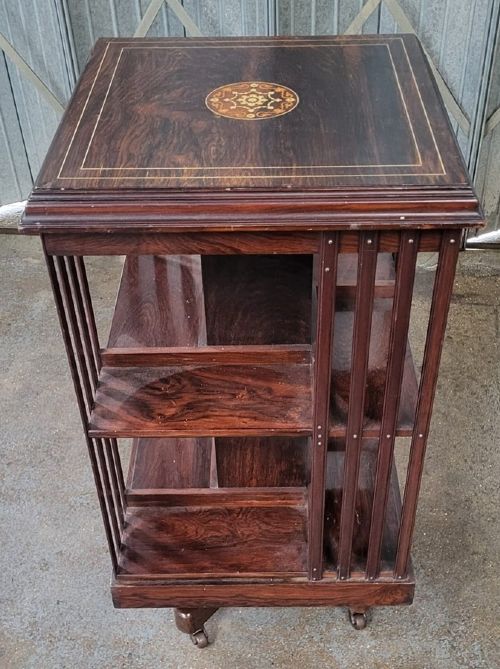
Makers relied on timbers such as mahogany, oak, walnut, rosewood, satinwood, and birdseye maple, often selecting flame mahogany or burr walnut for visible surfaces. Inlays of lighter woods, brass galleries, and parcel gilt detailing added ornamentation to shelves and table tops.
Construction techniques included integrated revolving mechanisms for book compartments, carved supports, cabriole legs, and tiered shelving secured by brass or wooden fixtures. Some items incorporated marble tops or iron elements alongside traditional joinery.
Tiered Book Table Retail Price Guide 2026
Typical asking prices for tiered book table among the pieces listed under this phrase on Sellingantiques today, from the lower quarter to the upper quarter. They describe what is for sale here now, not the wider market.
Some nineteenth-century readers needed a revolving bookcase just to keep up with the morning post and three-volume novels.
What varies in quality
The refinement of timber selection and the precision of inlaid decoration distinguish finer examples from simpler utilitarian pieces. Grain matching in rosewood, mahogany, and burr walnut indicates deliberate workshop planning.
Mechanical integrity in revolving models and the stability of tiered vertical structures demonstrate the joiner's skill. Cast brass galleries, carved detailing, and attribution to known firms elevate certain items above standard production.
Maple & Co·Liberty & Co·Leonard Wyburd
The Tiered Book Table Glossary
- Étagère
- A piece of furniture consisting of a set of open shelves for small objects or books. This form often overlaps with whatnots.
- Whatnot
- An open set of shelves used for displaying ornaments or holding books. These pieces typically feature three or more tiers.
- Revolving bookcase
- A freestanding bookcase designed to turn on a central axis for easy access to volumes from any angle. They are frequently square or octagonal.
- Inlay
- A technique where pieces of contrasting timber or metal are inserted into depressions in the wood base to form decorative patterns. Satinwood and brass are common materials for this work.
- Cabriole leg
- A furniture leg that bends outward and then tapers inward, inspired by the shape of an animal's leg. This form appears frequently on Edwardian examples.
Tiered Book Table: Frequently Asked Questions
What periods do tiered book tables come from?
These pieces date primarily from the nineteenth and early twentieth centuries. Examples span the Victorian era, the Edwardian period, and the 1930s Art Deco movement.
Craftsmanship reflects the prevailing design shifts of each decade, moving from formal mahogany and rosewood to simpler oak and blonde wood forms.
How do revolving bookcases work?
A revolving bookcase is built around a concealed internal pivot mechanism that allows the entire shelving unit to turn smoothly. This enables access to books from multiple directions without moving the heavy furniture.
Such designs were especially popular for library tables and bedside stands.
Where should I place a tiered book table?
These compact tables suit living rooms, studies, and bedrooms where surface space is limited. Revolving models fit well beside armchairs for easy access to current reading material.
Tiered étagères and side tables function effectively against walls or as bedside stands.
What woods were used for these tables?
Makers utilised a range of domestic and exotic timbers. Mahogany and oak appear most often, alongside walnut, rosewood, satinwood, and birdseye maple.
Decorative variations include flame mahogany veneers and contrasting inlaid borders.