

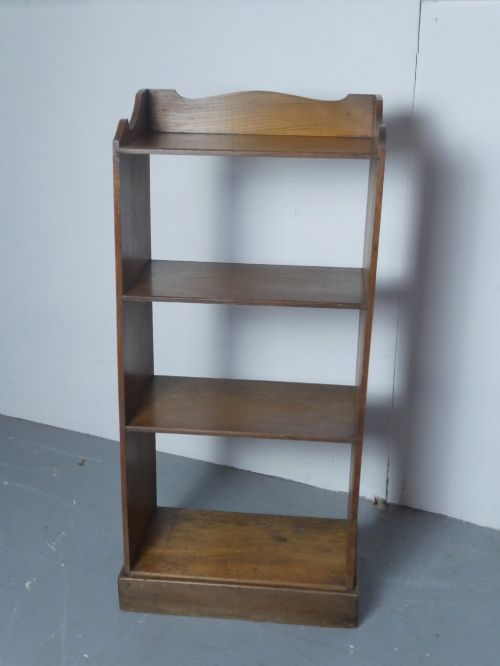


Tiered Book Storage
Tiered book storage groups books and volumes across multiple levels for easy access and orderly display in any room.
Tiered Book Storage
Tiered book storage encompasses diverse formats designed to hold volumes across multiple horizontal planes, ranging from compact revolving designs to tall sectional units. When exploring tiered book storage, buyers encounter pieces from the nineteenth and twentieth centuries including the Victorian, Edwardian, and mid-century modern eras. These items serve practical purposes in studies and libraries while providing distinct decorative character through periods like Gothic Revival and English Country styles.
How they were made
Makers utilised solid timbers and veneers, predominantly mahogany and oak, to construct these tiered structures. Carpenters joined these woods with traditional joinery methods suited to the demands of stacking sections, revolving mechanisms, and fixed shelves.
Hardware elements such as brass and cast iron appear in functional components like the stacking mechanisms of barrister bookcases or the rolling bases of revolving designs. Sliding glass doors and glazed panels also feature on cabinetry pieces, protecting contents while maintaining visibility.
Tiered Book Storage Retail Price Guide 2026
Typical asking prices for tiered book storage among the pieces listed under this phrase on Sellingantiques today, from the lower quarter to the upper quarter. They describe what is for sale here now, not the wider market.
Spinning a heavy oak revolving bookcase lets you pretend your study is a miniature law archive.
What varies in quality
The calibre of timber selection and the precision of joinery separate standard examples from finer pieces. Superior items display well-figured mahogany or quarter-sawn oak grains, alongside smoothly operating revolving mechanisms or tightly fitted stacking sections.
Stylistic detailing and maker attribution influence the distinction between everyday utility furniture and high-status examples. Pieces bearing specific maker marks or distinct period revival characteristics, such as Gothic Revival tracery, demonstrate greater artisan investment.
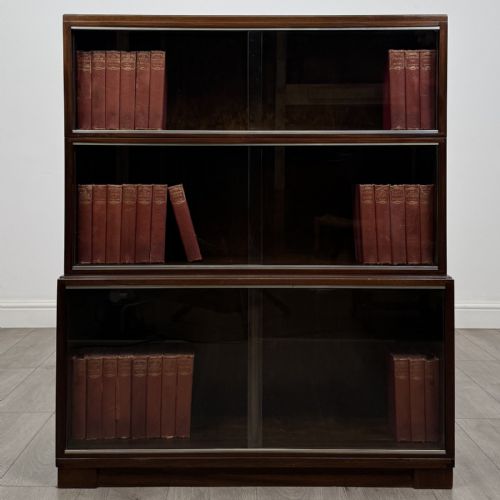
Lebus
The Tiered Book Storage Glossary
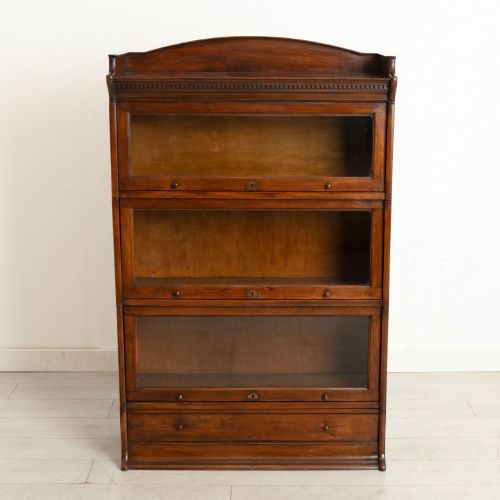
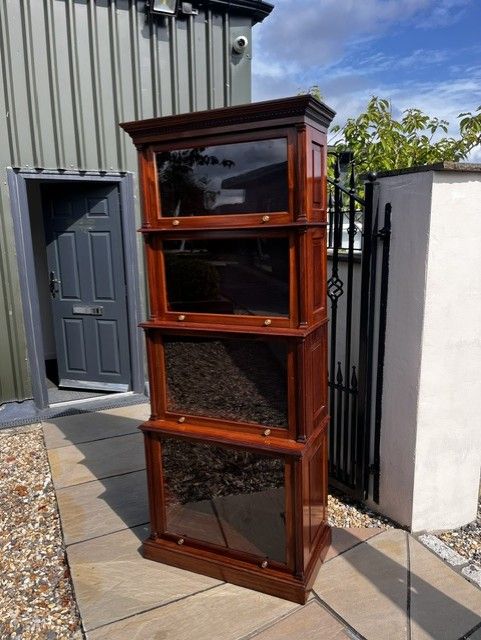
- Barristers bookcase
- A sectional bookcase composed of stacked modular tiers with glass doors that lift and slide inward above the books. This design protects volumes while allowing units to be added vertically.
- Waterfall bookcase
- A piece of furniture featuring open shelves that recede in depth from bottom to top, following a stepped profile. The configuration creates a cascading effect reminiscent of a waterfall.
- Revolving bookcase
- A compact bookcase mounted on a hidden rotating base or spindle, allowing users to spin the entire unit to access books from all sides. These pieces often sit upon floor-standing cruciform bases with castors.
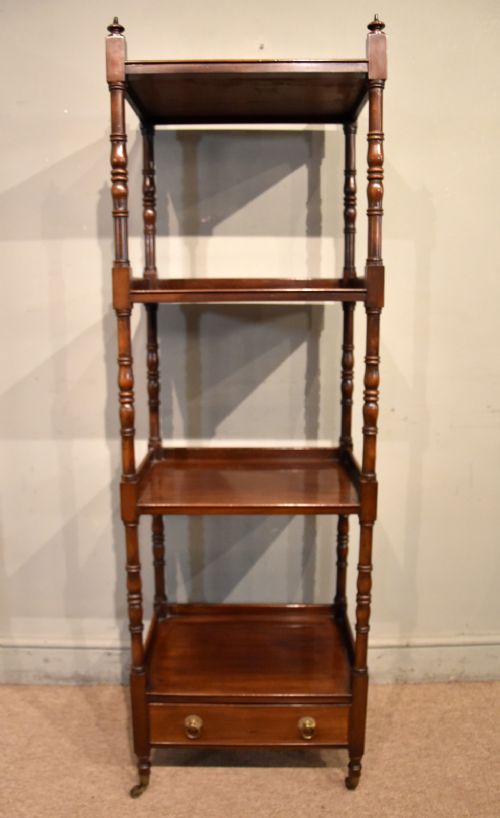
- Whatnot
- An open shelved piece of furniture designed for displaying ornaments, small objects, and books across multiple tiers. The form gained popularity in the nineteenth century for drawing room and parlour use.
- Sectional bookcase
- A modular storage system built in separate tiers or units that stack one upon another without permanent fixing. This construction method allows the furniture to be disassembled for transport and reconfigured as library needs change.
Tiered Book Storage: Frequently Asked Questions
What is a barristers bookcase?
A barristers bookcase is a modular storage unit made of stacked sections, each featuring its own glass door that lifts and recesses into the cabinet.
This design allows the bookcase to grow as a collection expands while keeping volumes free from dust.
How do revolving bookcases work?
Revolving bookcases rest on a concealed central pivot or ball-bearing mechanism attached to a stable base. The entire upper shelving structure spins freely to let users reach books from any angle.
These pieces suit placement beside armchairs or desks where floor space is limited.
What distinguishes a whatnot?
A whatnot is an open-shelved tiered piece designed primarily for display rather than heavy library storage. Nineteenth-century examples often feature three or four ascending levels supported by slender vertical posts.
They function well for holding smaller volumes and decorative objects in living spaces.