







Tier Wall Shelves
These tier wall shelves lift display space off the floor, bringing timber and brass into domestic rooms with practical elegance.
Tier Wall Shelves
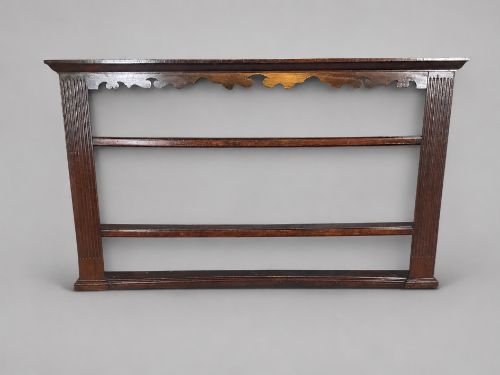
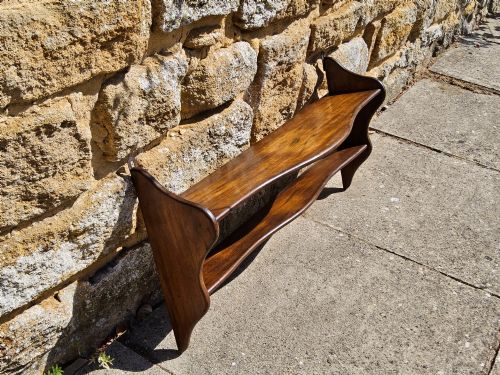
Tier wall shelves provide vertical hanging storage across multiple levels, designed to hold books, ceramics and ornaments in domestic rooms. The pieces seen here span periods from the Georgian era through Regency, Victorian and Edwardian times, alongside French examples.
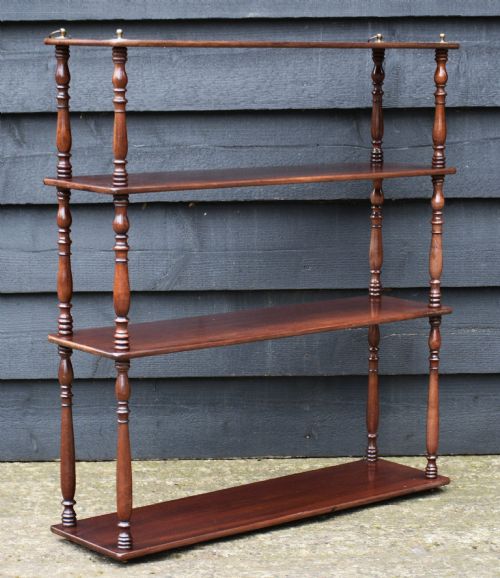
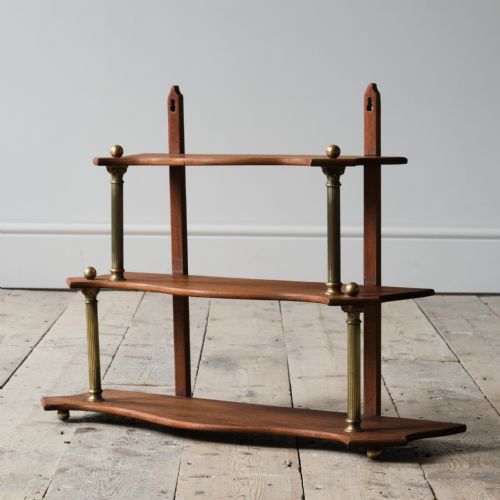
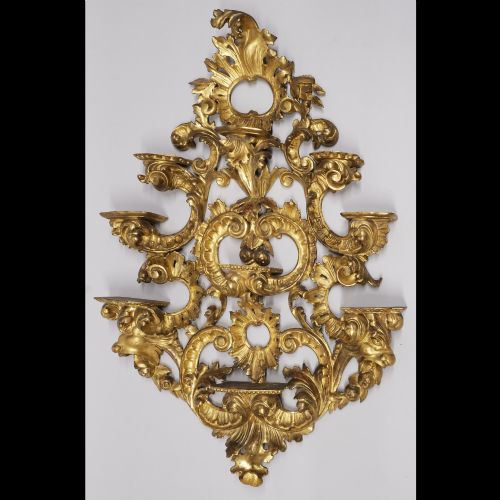
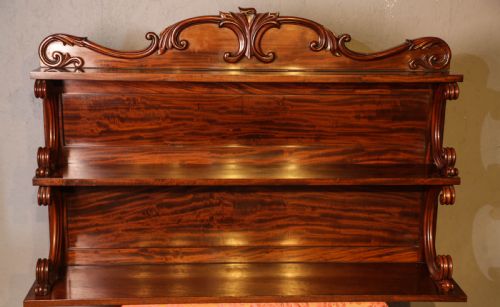
Mahogany forms the mainstay of these hanging units, accompanied by walnut, rosewood, satin birch and cherry wood. Many incorporate brass galleries, rods or brackets to secure the tiers, while others utilise ebonised wood or giltwood and gesso for decorative impact.
The format ranges from simple two-tier shelves to substantial four-tier and waterfall configurations, occasionally combining with wall cabinets, display shelves or mirrored backplates. Pieces frequently appear as whatnots or etageres adapted for wall mounting.
How they were made
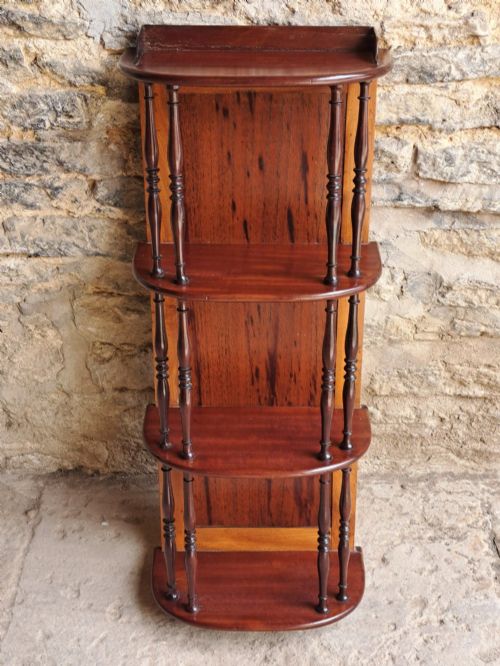
Cabinet makers constructed these wall units predominantly from solid hardwoods like mahogany and walnut, shaping shelves with fretwork, serpentine edges or graduated waterfall profiles. Uprights often feature turned details such as bobbin turning or barley twist supports.
Metalwork played a structural and decorative role, with brass rods and galleries fitted to retain items on the tiers. Giltwood and gesso pieces relied on carved wooden substrates finished with gold leaf applied over preparation layers.
Tier Wall Shelves Retail Price Guide 2026
Typical asking prices for tier wall shelves among the pieces listed under this phrase on Sellingantiques today, from the lower quarter to the upper quarter. They describe what is for sale here now, not the wider market.
Periods represented across the inventory include Georgian, Regency, William IV, Victorian, Edwardian, Aesthetic Period and French Chateau.
What varies in quality
Quality rests in the selection of timber grain, the crispness of turned supports and the precision of joinery where shelves meet uprights. Finer examples display thoughtful proportioning, such as tapering side supports or delicate fretwork cut cleanly through the wood.
The integration of secondary materials distinguishes standard utility pieces from finer work. Robust brass galleries, well-carved giltwood mouldings and intact original surface finishes separate workshop standards.
The Tier Wall Shelves Glossary
- Waterfall shelves
- Graduated wall shelves where each lower tier projects further forward than the one above, creating a cascading silhouette.
- Bobbin turning
- A form of lathe turning that produces a series of spherical or cylindrical shapes resembling spools of thread along a shaft.
- Whatnot
- A piece of furniture consisting of a set of open shelves for displaying small objects, frequently adapted for wall hanging.
- Gesso
- A plaster-like mixture applied to wood surfaces as a smooth base for gilding with gold leaf.
- Brass gallery
- A low protective metal rail fitted around the edge of a shelf to prevent items from sliding off.
Tier Wall Shelves: Frequently Asked Questions
How do I hang tier wall shelves safely?
These hanging units require secure fixings into wall studs or solid masonry using appropriate brackets or screw eyes mounted to the back frame.
Weight distribution matters greatly, so heavier books and ceramics belong on the lowest tier close to the wall support.
What rooms suit wall shelves best?
Hanging shelves function effectively in sitting rooms for books and ornaments, or in dining spaces to display ceramics and glass.
Smaller two-tier variations suit hallways and kitchens, keeping surfaces clear while providing accessible display space.
How do I tell Regency from Victorian shelves?
Regency pieces often display restrained classical lines, lighter mahogany timbers and simple brass rod supports dating from the early nineteenth century.
Victorian examples tend towards heavier proportions, turning variations like barley twists, and a wider range of woods including walnut and ebonised finishes.