



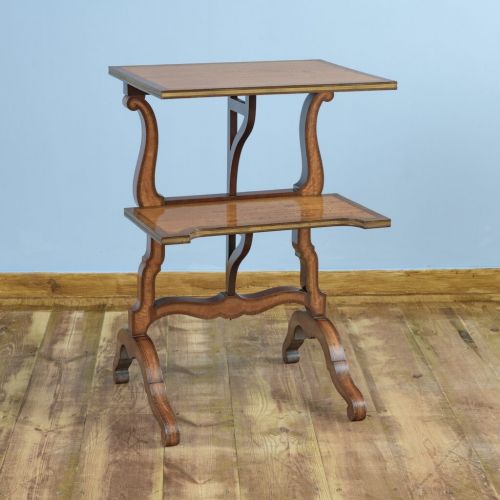

Tier Shelf Occasional Table
A tier shelf occasional table brings stacked surface space and compact utility to a room.
Tier Shelf Occasional Table
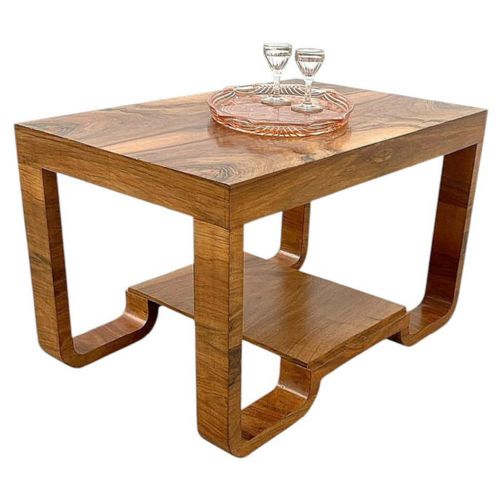
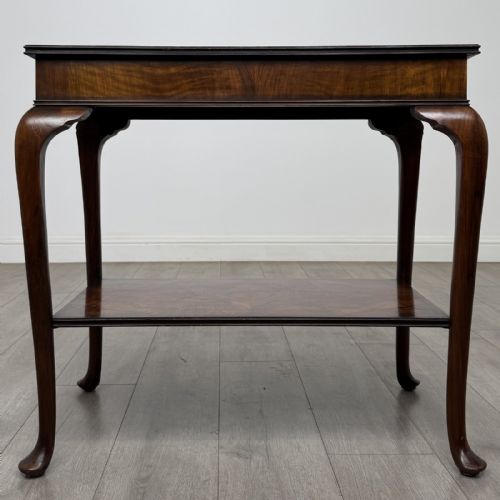
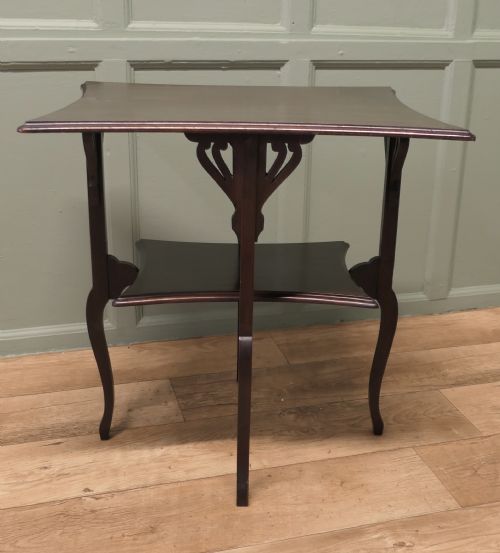
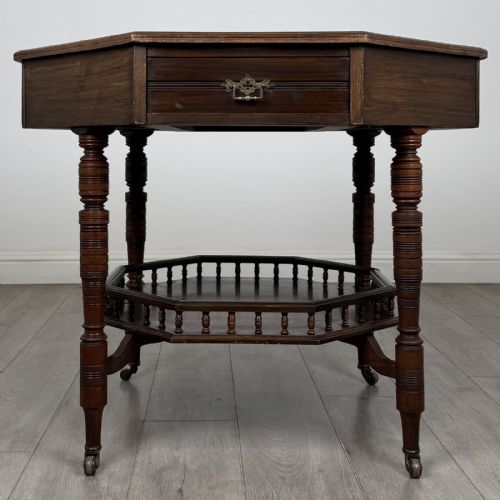
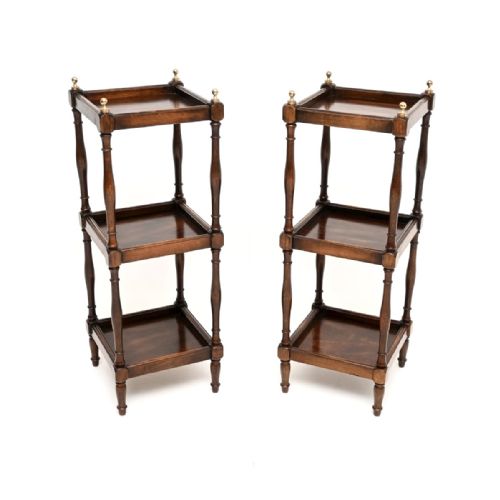
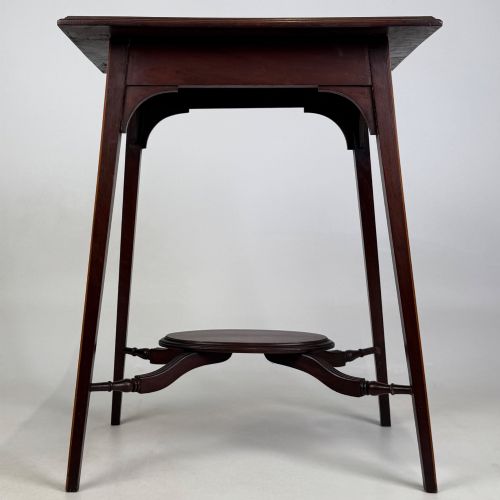
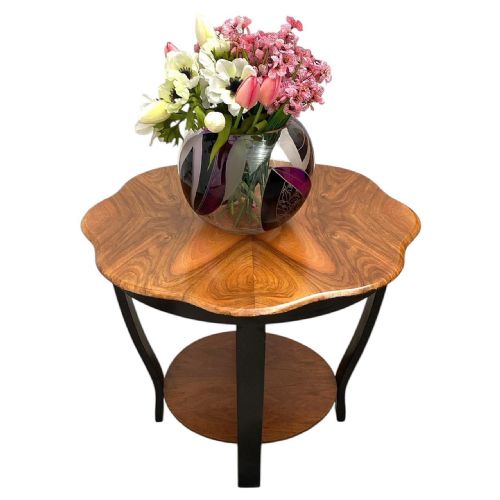
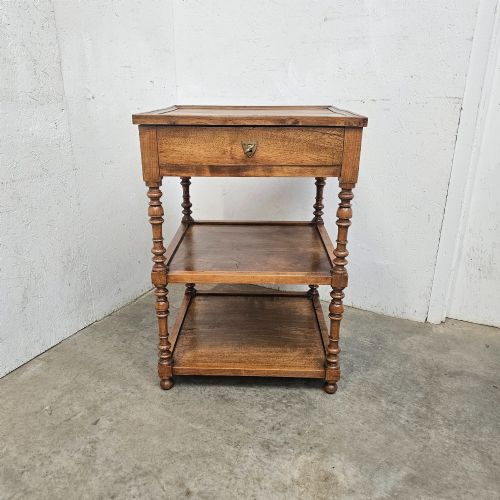
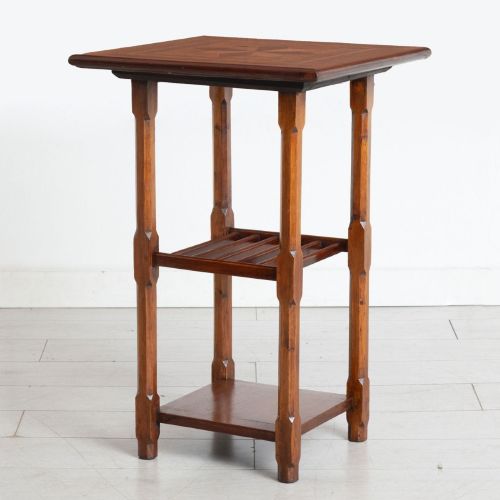
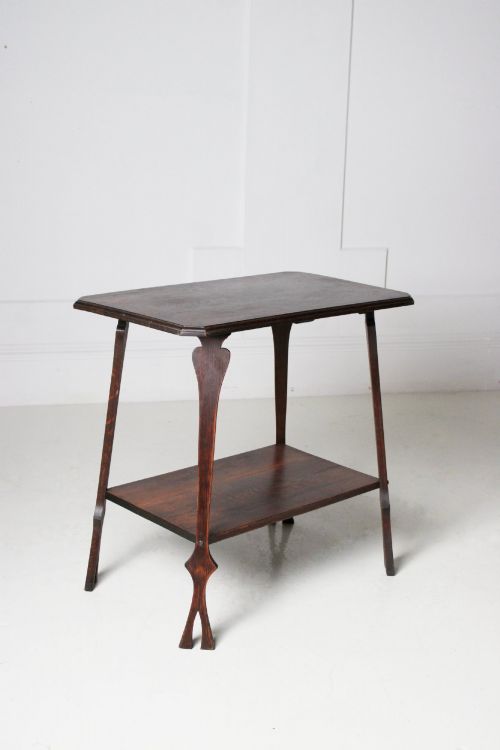
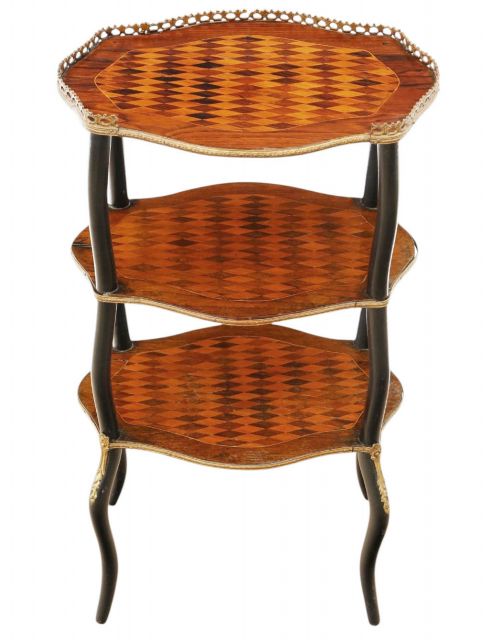
A tier shelf occasional table combines multiple levels for display and placement within living spaces. These pieces appear in forms such as etageres, whatnots, and side tables spanning the Victorian, Edwardian, and Art Deco periods. Buyers find structures designed to hold books, lamps, and decorative objects across two or more tiers.
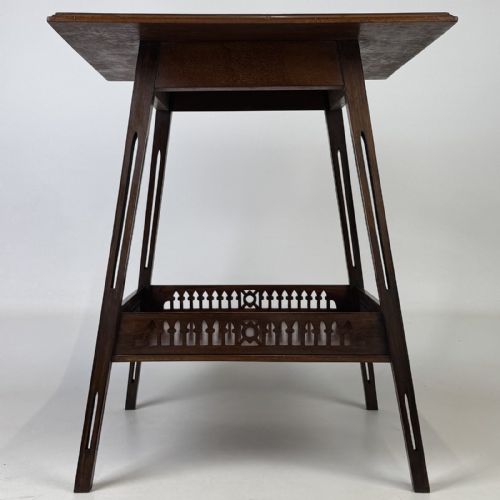
The selection ranges from Edwardian mahogany versions to Arts and Crafts oak designs and French inlaid marquetry pieces. Many examples utilise lower shelves to add stability and extra storage without expanding the overall floor footprint. This tier shelf occasional table category centres on functional versatility combined with period craftsmanship.
How They Were Made
Carpenters and cabinetmakers constructed these tables using timbers such as mahogany, walnut, oak, satinwood, and rosewood. Decorative techniques included parquetry, marquetry, and boxwood stringing, alongside brass mounts and cane panels. Turning and fretwork added detail to legs, supports, and galleries.
Joinery methods varied according to the workshop and period, joining solid woods and applied veneers to structural carcases. Surfaces received polishes or ebonising to highlight the grain and colour of the timber.
Tier Shelf Occasional Table Retail Price Guide 2026
Typical asking prices for tier shelf occasional table among the pieces listed under this phrase on Sellingantiques today, from the lower quarter to the upper quarter. They describe what is for sale here now, not the wider market.
Listings feature woods such as mahogany, walnut, oak, satinwood, boxwood, rosewood, and cane across various periods.
What Varies in Quality
The refinement of the timber selection and the precision of decorative inlays dictate the standard of execution. Pieces featuring intricate parquetry, Ormolu mounts, or detailed fretwork display higher levels of workshop skill than plain utility versions.
Structural integrity depends on the tightness of joints between tiers and legs, particularly in multi-level etageres and folding formats. Superior examples maintain balance and crisp carving across all visible surfaces.
Maison Giroux·Liberty and Co
The Tier Shelf Occasional Table Glossary
- Etagere
- A piece of furniture consisting of a set of open shelves for displaying small objects. These tiers provide vertical storage while keeping the floor space clear.
- Whatnot
- An open set of shelves used for books or ornaments, popular during the Victorian period. They often feature multiple tiers supported by slender uprights.
- Marquetry
- Decorative veneer work forming pictures or patterns by using thin slices of wood and other materials. This technique adorns the tops and shelves of many French and Edwardian tables.
- Parquetry
- A geometric mosaic of wood pieces used for decorative floors and table surfaces. It creates patterned squares and angles across the wood.
- Gueridon
- A small round table supported by one or more columns or figures. French examples often incorporate marble tops and brass mounts.
Tier Shelf Occasional Table: Frequently Asked Questions
Where do I place a tier shelf occasional table?
These tables fit easily beside a sofa, armchair, or in a hallway corner where extra surface space helps. The stacked shelves allow you to keep reading material on the lower tier while placing a lamp on top.
Because they take up minimal floor space, they work well in smaller rooms or narrow passageways without obstructing movement.
How do I clean wooden tiers?
Dust the surfaces regularly with a soft, dry cloth to prevent dirt accumulation on the polished wood. Avoid using harsh chemical sprays that can strip or damage antique French polish and wax finishes.
Period timbers benefit from occasional application of quality beeswax to nourish the grain and maintain a natural lustre.
Are multi-tier tables structurally stable?
Most designs distribute weight evenly across the upright supports and lower shelves, making them suitable for everyday items. Heavier objects belong on the bottom tier to keep the centre of gravity low.
Checking that the joints connecting the shelves to the legs remain tight ensures the table stays balanced during use.
How do I distinguish Edwardian from Victorian tables?
Victorian examples tend to use heavier timbers like walnut and mahogany with darker ebonised finishes and rich inlays. Edwardian pieces often favour lighter satinwood, simpler lines, and influences from the Arts and Crafts movement.
Examining the construction methods and secondary woods helps clarify the manufacturing period of each piece.