




Tier Drop Crystal Light
These tier drop crystal light fixtures illuminate a room through cascades of cut glass and brass.
Tier Drop Crystal Light
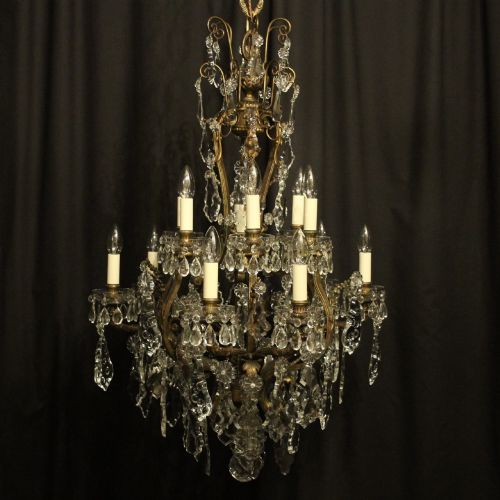
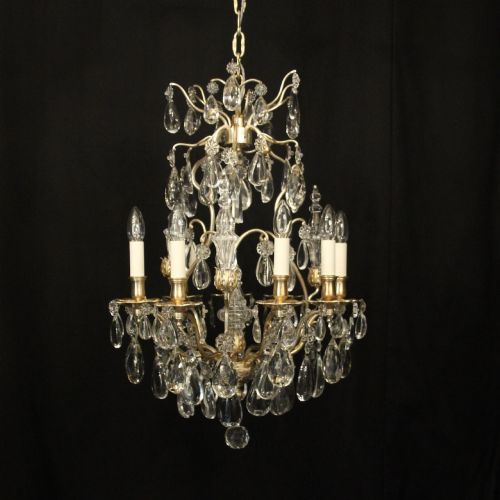
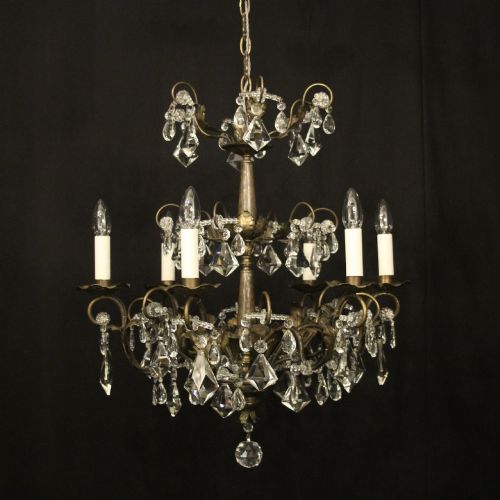
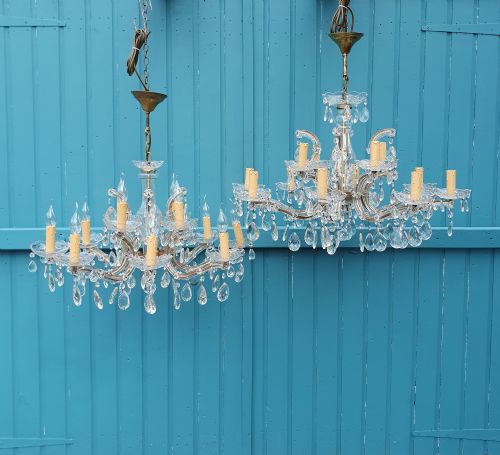
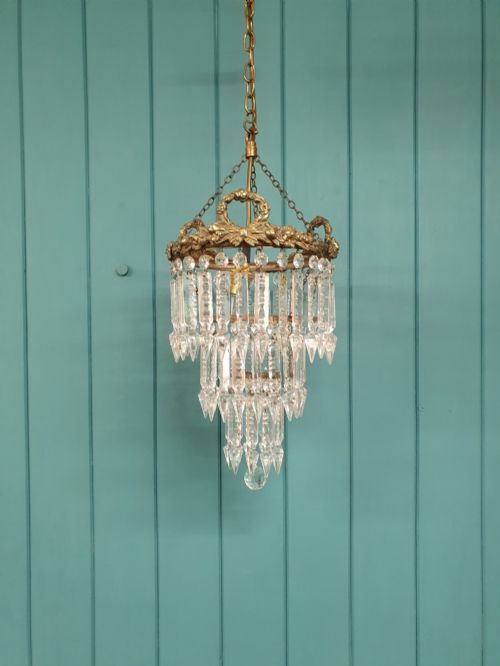
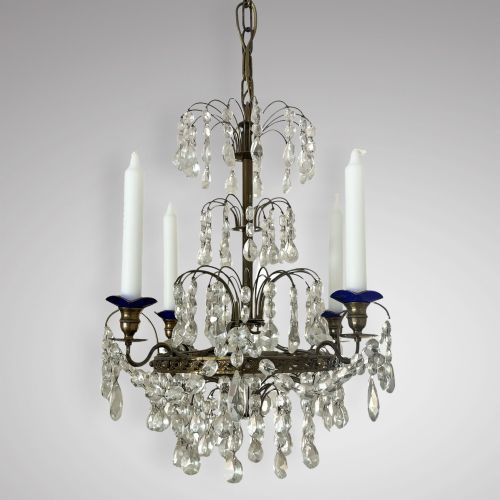
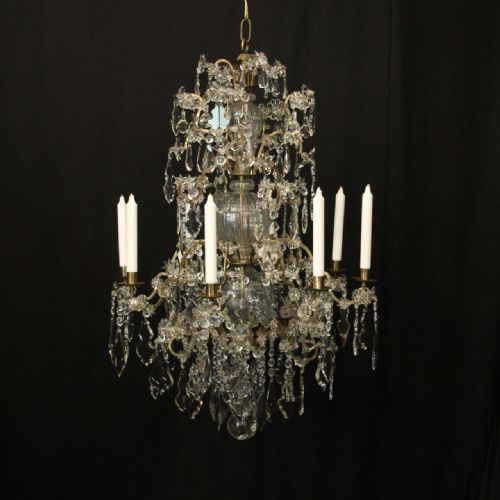
A tier drop crystal light brings together cascading glass pendants and metal frames across various historical periods, ranging from the nineteenth century through the nineteen-thirties. Buyers searching this phrase meet multi-armed chandeliers, smaller wall lights, and ceiling pendants featuring tiered or waterfall constructions.
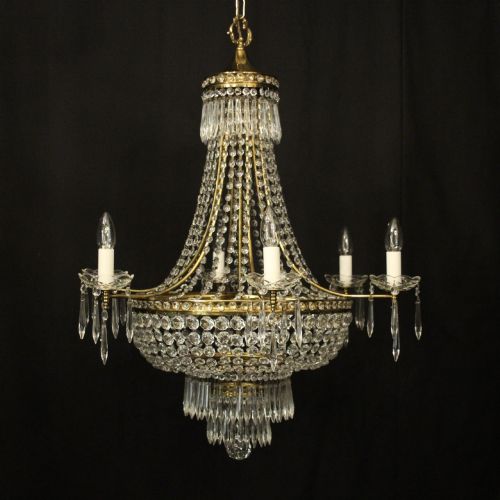
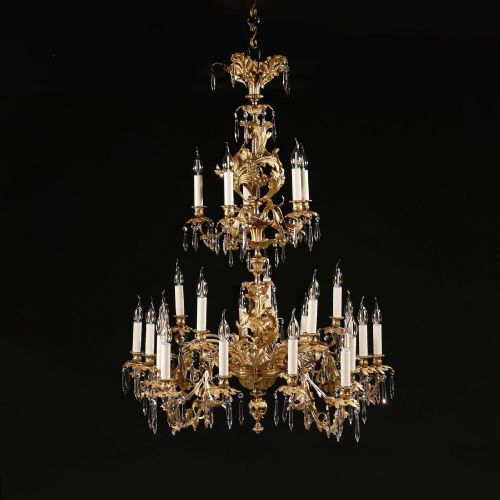
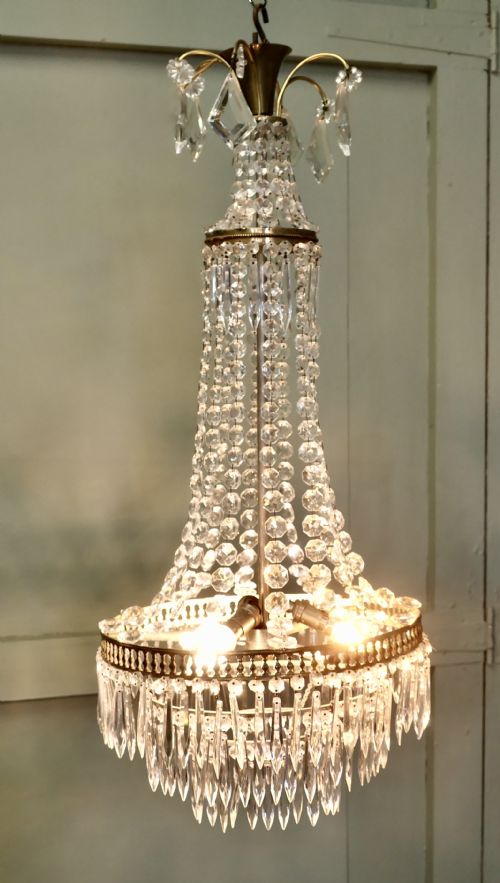
The selection on this page relies heavily on early twentieth-century pieces, Edwardian examples, and nineteenth-century designs influenced by French styles such as Empire and Rococo. Common formats include tent and waterfall layouts, multi-tiered chandeliers, and singular drop fixtures hung with cut glass.
Makers and origins span English, French, Italian, Bohemian, and Swedish workshops, producing everything from intimate single-light plafonieres to massive multi-armed electroliers. The defining characteristic across all these forms remains the downward drape of glass drops, beads, or spikes designed to refract light.
Materials and Construction
Metal frames form the structural backbone of each tier drop crystal light, utilising brass, gilt bronze, silver-gilded bronze, and gilt metal. These armatures support the weight of numerous glass elements while providing decorative scrolling or tiered tiers.
Crystal and cut glass supply the reflective surfaces, shaped into drops, beads, spikes, and oblong drips that hang from wired or pinned connections. Skilled artisans cut and polish the glass to maximise light dispersion throughout the room.
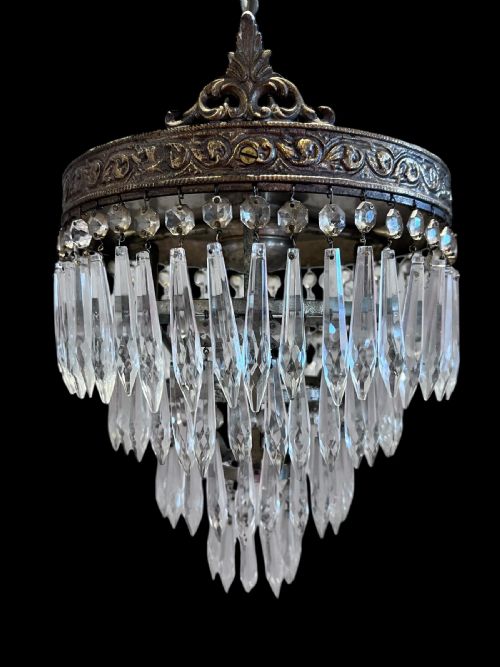
Some spike chandeliers feature oblong drips designed to catch the soft flicker of early candlelight.
Assessing Quality and Execution
Quality in a tier drop crystal light rests upon the precision of the glass-cutting and the weight of the metal armature. Superior pieces exhibit crisp facets on the crystal drops that catch and scatter light cleanly, paired with densely detailed cast bronze or brass frames.
The harmony of the assembly dictates the overall presence of the fixture, where balanced tiers and complete original glass drops elevate the piece far above simpler, sparsely hung alternatives.
Baccarat
The Tier Drop Crystal Light Glossary
- Waterfall chandelier
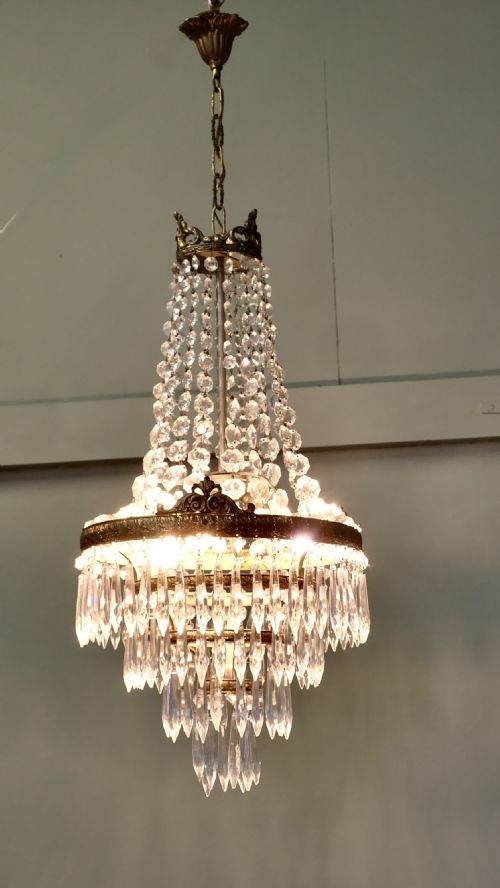
- A lighting fixture where crystal drops cascade in overlapping tiers, resembling falling water. This construction creates a dense curtain of glass.
- Tent and waterfall
- A specific chandelier layout featuring an upper canopy of gathered crystal strands forming a tent shape above a cascading waterfall drop section below.
- Cut glass
- Glass shaped and faceted on a wheel to produce sharp edges that refract light efficiently. It forms the primary hanging element on these fixtures.
- Electrolier
- A light fixture originally designed for candles or gas that has been converted to electricity, or built as an early electric hanging lamp.
- Plafoliere
- A ceiling-mounted light fixture that sits flush or close to the ceiling surface, often utilising a glass bowl or hanging crystal drops.
Tier Drop Crystal Light: Frequently Asked Questions
How do I clean a tier drop crystal light?
Cleaning requires a specialist glass cleaner applied by hand to each individual drop and arm using a soft cloth.
Taking down the smaller crystal components allows for safe washing in warm soapy water before drying and rehanging.
Are these lights compatible with modern wiring?
Many older chandeliers and ceiling lights undergo professional rewiring to meet modern electrical standards prior to installation in a home.
Consulting a qualified electrician ensures the ceiling can support the weight of the metal and glass frame safely.
How do I determine the period of a chandelier?
Dating relies upon examining the casting methods of the brass or bronze frame alongside the specific cut of the glass drops.
Edwardian and nineteen-thirties pieces often show different arm configurations and drop shapes compared to nineteenth-century examples.
Where should I hang a multi-tier light?
These fixtures suit rooms with adequate ceiling height, such as dining spaces, hallways, or living rooms where the cascading drops can hang freely.
Positioning the light centrally allows the cut glass to distribute reflected illumination evenly across the surrounding space.