

Tier Corner Display Stand
A tier corner display stand puts neglected angles to work, holding books and porcelain on graduated shelves built for corners.
Tier Corner Display Stand
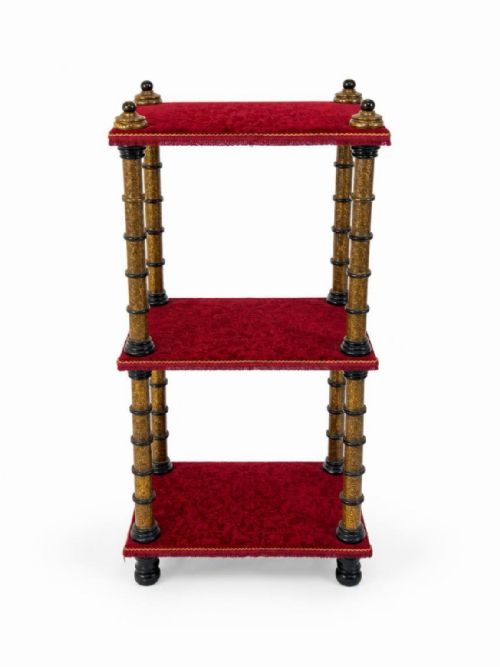
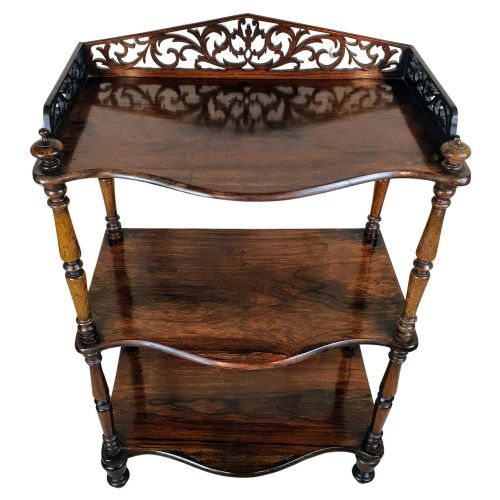
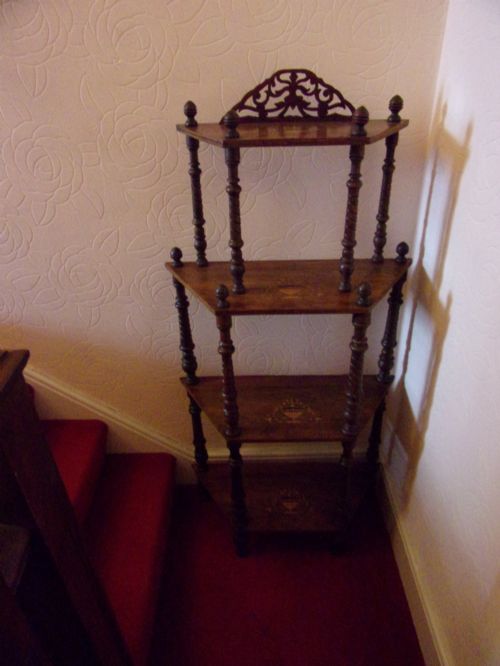
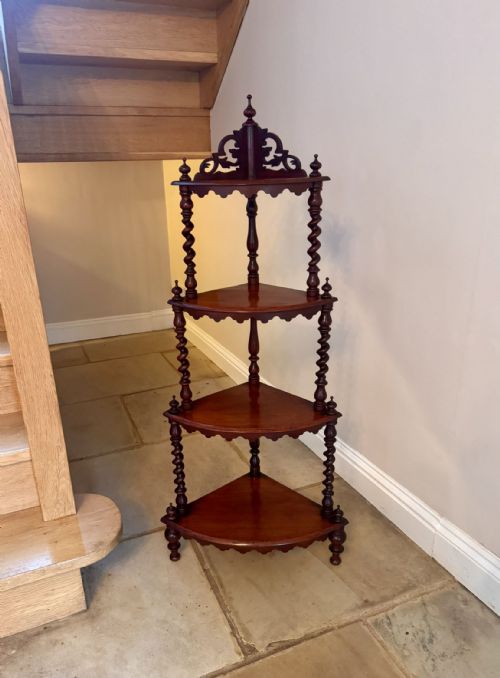
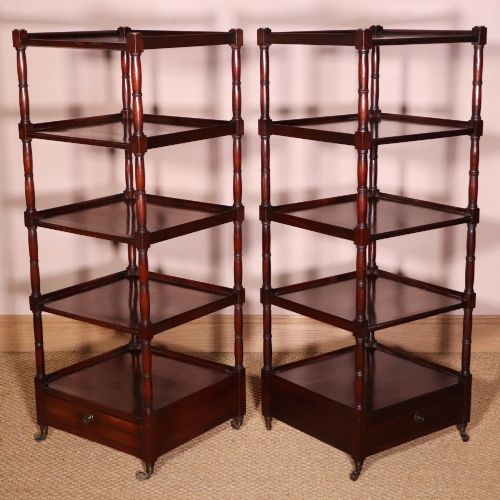
A tier corner display stand appears in multiple iterations across the Georgian, Victorian and Edwardian periods, taking the form of open whatnot shelves, etageres and enclosed corner cupboards.
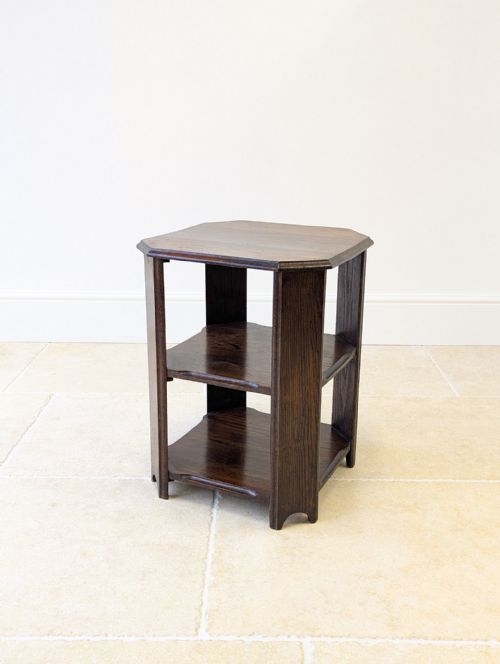
The pieces on this page span the eighteenth, nineteenth and early twentieth centuries, constructed in mahogany, walnut, oak and rosewood to fit awkward domestic angles.
Makers utilised graduating tiers to maximise vertical storage, combining the function of a display surface with the space-saving geometry of a corner unit.
Materials and construction
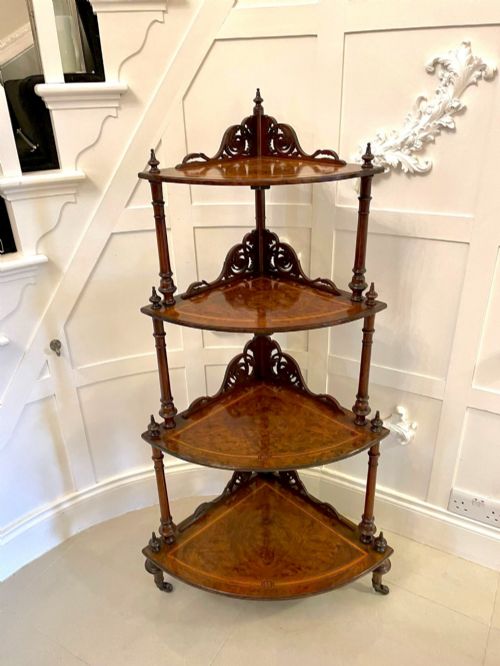
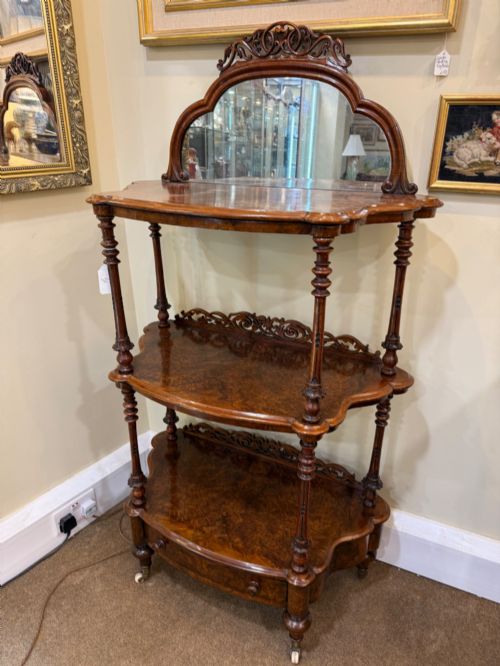
Cabinet makers relied on solid timbers like mahogany, oak and walnut, frequently applying burr walnut veneers or elaborate parquetry and marquetry inlay to primary display surfaces.
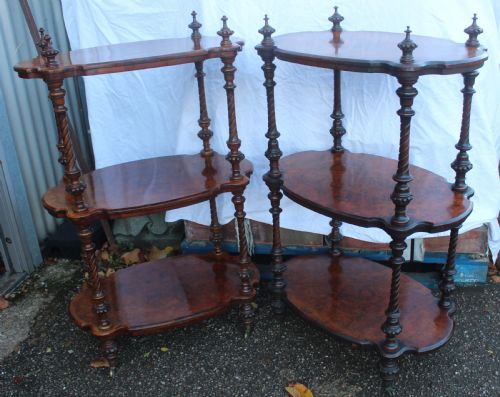
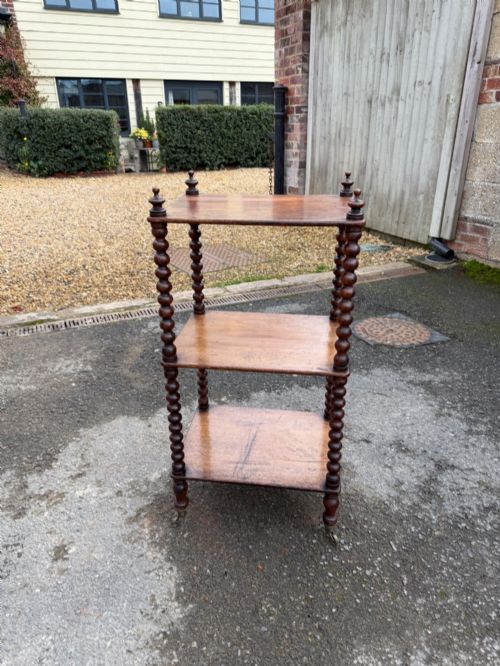
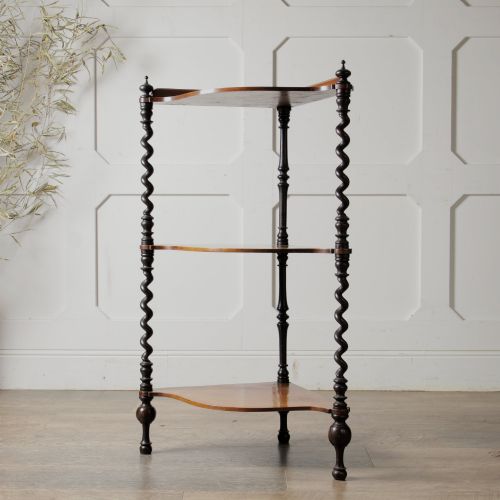
Structural integrity relied on stable joints and turned supports, including barley twist columns, alongside brass or gilt metal mounts and glass panels for glazed doors.
Tier Corner Display Stand Retail Price Guide 2026
Typical asking prices for tier corner display stand among the pieces listed under this phrase on Sellingantiques today, from the lower quarter to the upper quarter. They describe what is for sale here now, not the wider market.
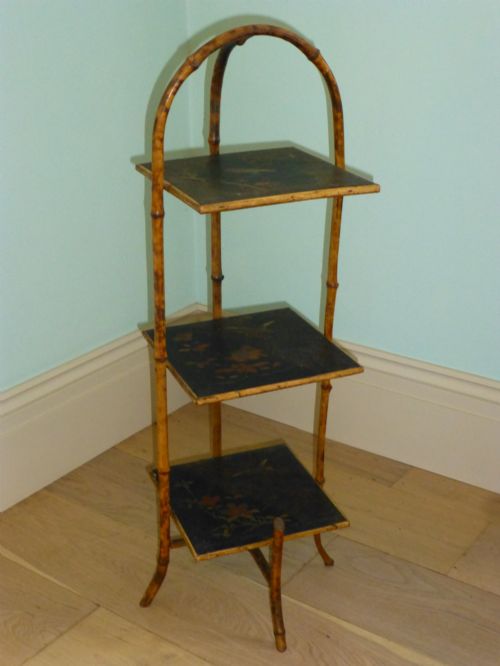
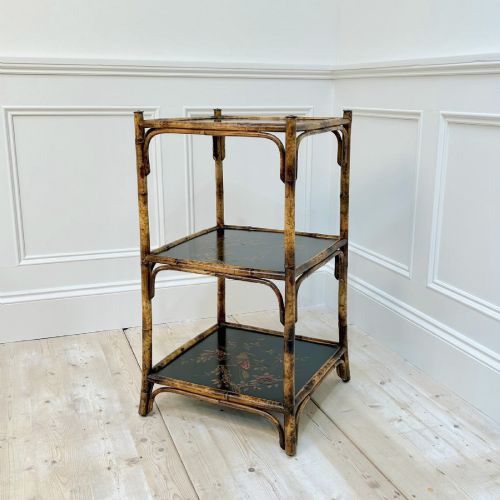
One surviving Victorian stand is constructed entirely from humble bamboo, proving that even exotic style trends reached everyday utility.
Assessing the work
Quality reveals itself in the choice of timber figure, such as richly patterned burr walnut or dense mahogany, and the crispness of hand-carved details or inlaid stringing.
The sophistication of the joinery and the balance of the graduated tiers determine how successfully the stand holds its weight without sagging at the joints.
Gillows·Liberty of London
The Tier Corner Display Stand Glossary
- Whatnot
- A piece of furniture consisting of a set of open shelves for displaying small objects or books. These multi-tiered stands became popular in the nineteenth century for parlour use.
- Etagere
- A piece of furniture with a set of open shelves for displaying ornaments. They differ from standard shelving units by placing a decorative emphasis on lightness and grace.
- Parquetry
- Geometric mosaic woodwork used for floors and furniture tops. This technique creates a patterned surface using contrasting timber blocks.
- Astragal
- A moulding attached to the meeting stiles of double doors or glazing bars on a cabinet. In glazed corner cupboards, these slender wooden strips divide the glass panes.
- Barley twist
- A type of turning that resembles a twisted rope. Cabinet makers utilised this decorative lathe technique for the upright supports of Victorian stands.
Tier Corner Display Stand: Frequently Asked Questions
What is a tier corner display stand?
A tier corner display stand is a multi-shelved piece of furniture designed specifically to fit into the internal angle of a room. These units make use of otherwise dead space to hold books, ceramics and decorative objects across graduating platforms.
Depending on the period, the construction might be an open set of whatnot shelves or an enclosed cabinet with glazed doors. The design prioritises vertical display over a small floor footprint.
How were these stands used originally?
In nineteenth-century parlours and drawing rooms, these stands served to display prized ornaments, family Bibles and collections of small porcelain pieces. They kept decorative items visible and accessible without crowding main tables.
Enclosed versions also functioned as cupboards for storing precious items away from dust, while open tiered versions acted purely as stages for display.
Where should I place a corner stand?
These units belong in unused room angles where straight furniture fails to fit comfortably. They suit living rooms, studies and hallways, anchoring bare corners while adding vertical interest.
Ensure the unit has adequate room to clear skirting boards so it sits flush against both walls for stability.
How do I distinguish Victorian from Georgian stands?
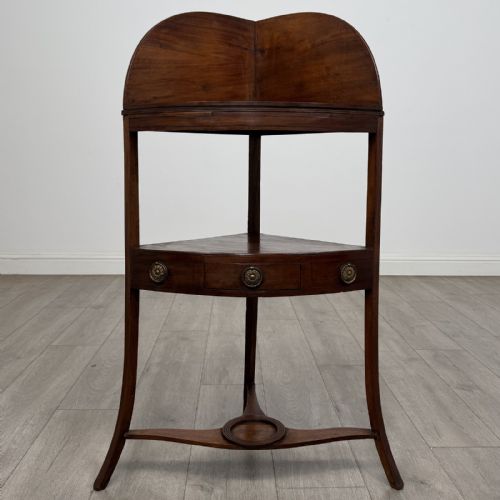
Georgian stands tend to display restrained classical proportions, often featuring solid mahogany or oak with simpler lines and architectural cornices. They date from the eighteenth and early nineteenth centuries.
Victorian pieces often introduce more exuberant decorative elements, such as burr walnut veneers, barley twist uprights, ebonised finishes and elaborate marquetry inlay reflecting later nineteenth-century tastes.