
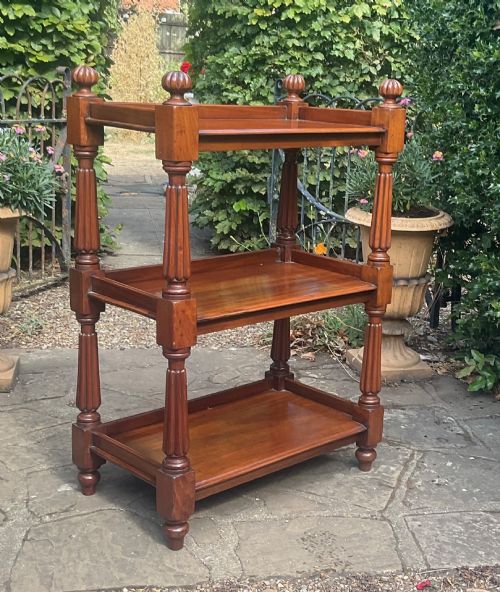
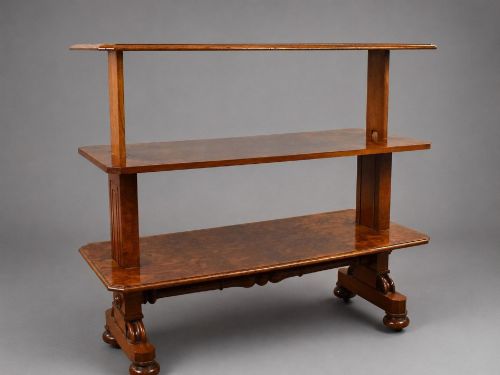
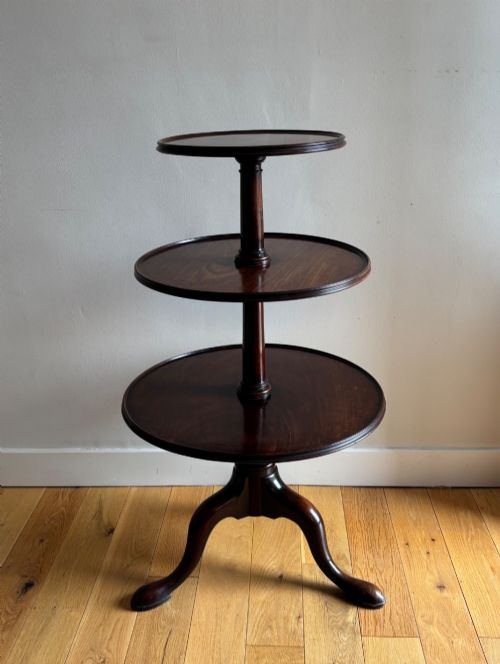
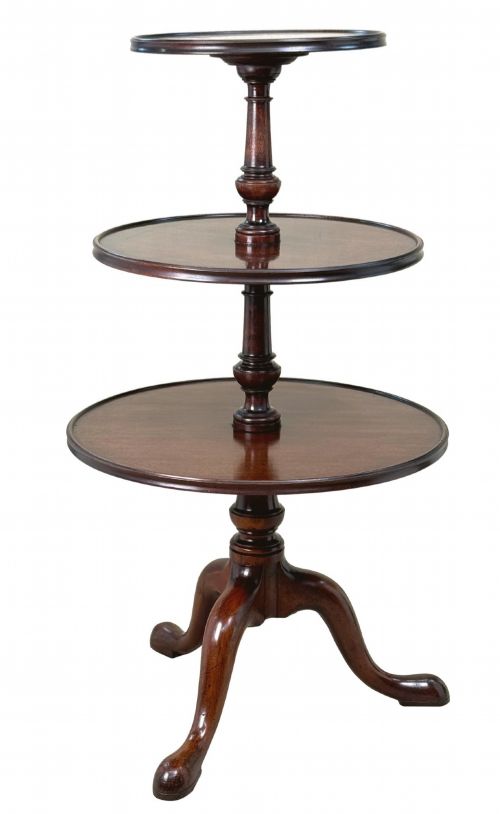
Tier Buffet Table
A tier buffet table brings multi-level serving utility and timeless character to a room, spanning periods from George III to the late Victorian era.
Tier Buffet Table
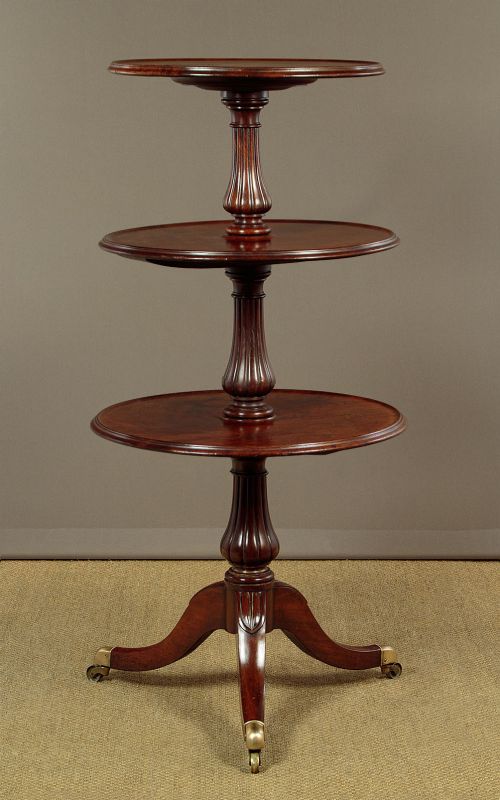
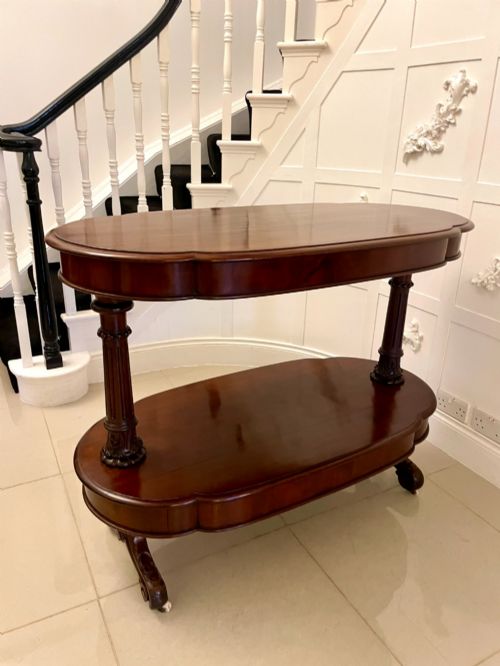
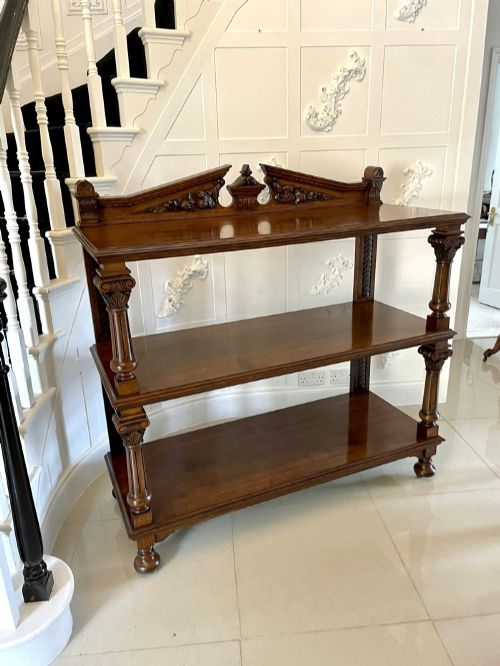
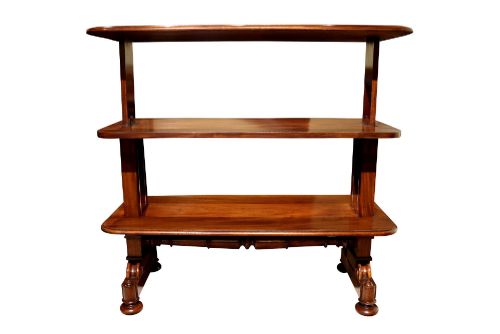
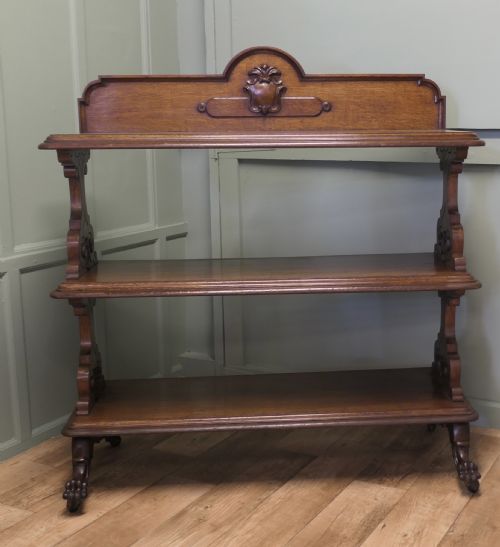
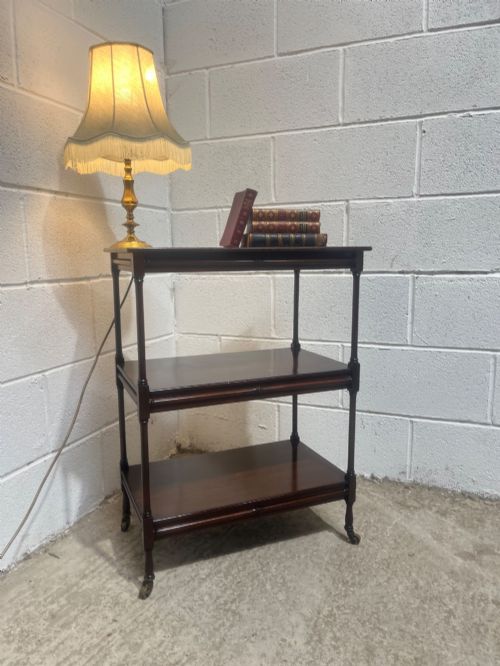
When searching for a tier buffet table, a buyer explores multi-tiered serving pieces historically used for dining service and display. These items bridge categories such as dumb waiters, etageres, and serving tables.
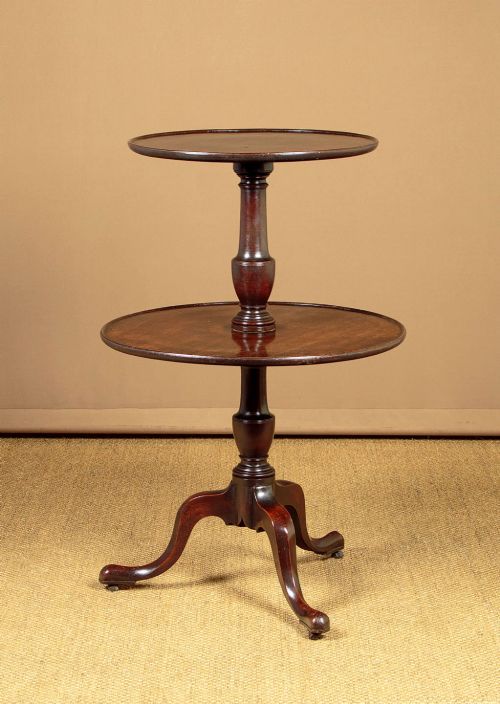
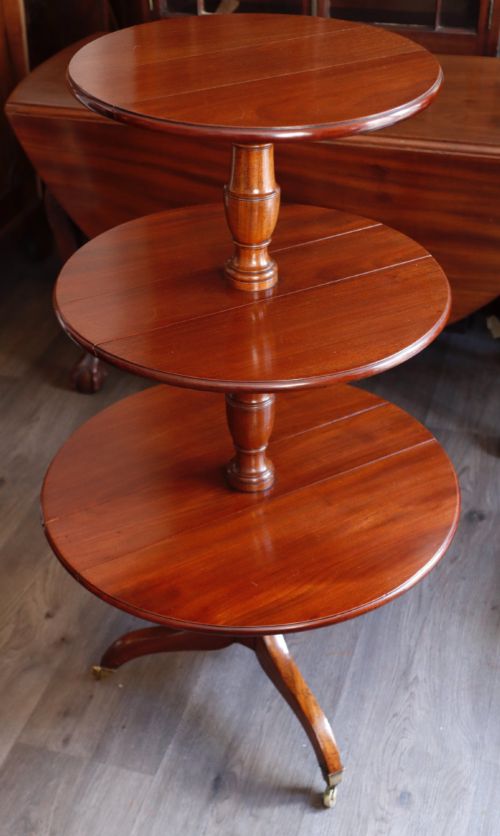
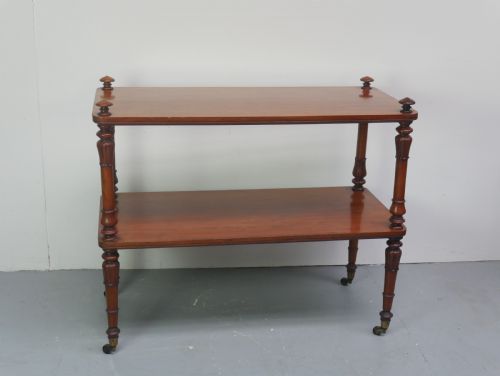
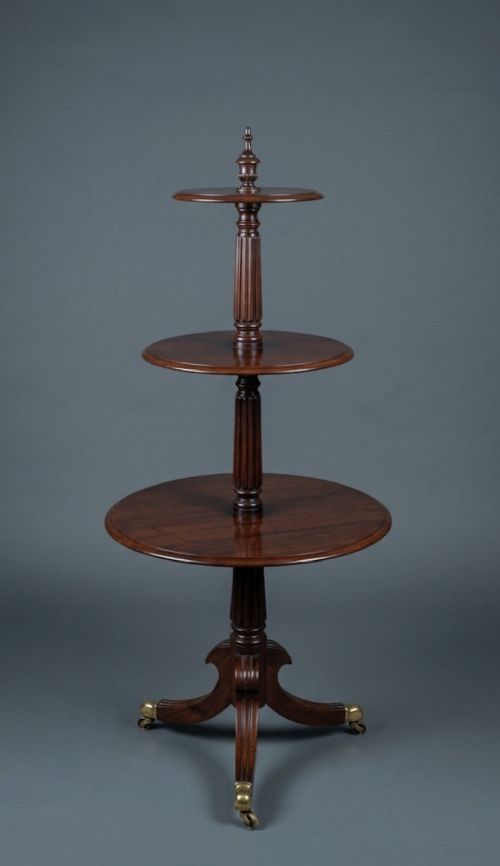
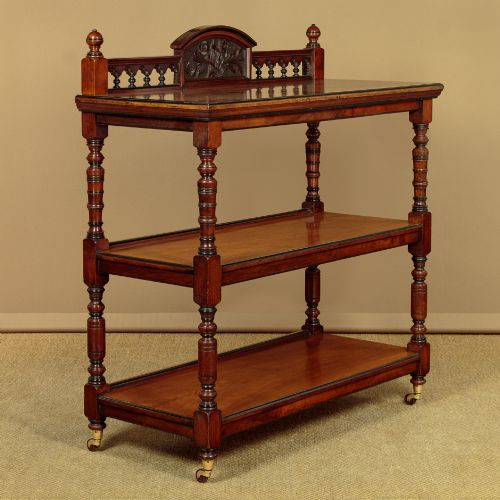
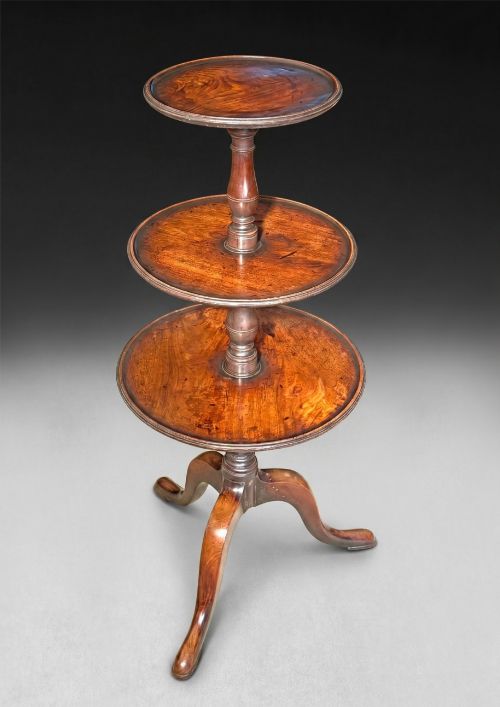
The most common versions encountered on this page date from the eighteenth and nineteenth centuries, taking the form of circular tiered dumb waiters or multi-level mahogany and oak buffets.
Pieces span various stylistic interpretations including George III, Regency, William IV, and Victorian designs, often featuring revolving tiers or folding mechanisms.
How they were made
Cabinet makers built these pieces primarily using solid mahogany, oak, and walnut, frequently incorporating figured veneers such as burr walnut and pollard oak on prominent surfaces.
Structural elements often include turned columns, tripod bases fitted with original castors, and precise joinery to support multiple stacked shelves or tiers.
Mechanisms range from simple fixed shelves to sophisticated rise and fall, telescopic, or revolving actions executed in brass and wood.
Listings feature pieces spanning the 18th, 19th, and early 20th centuries, constructed from mahogany, oak, walnut, teak, and pollard oak.
What varies in quality
The distinction between tiers rests upon the choice of timber and the crispness of carved details, such as the depth of foliage or scrollwork on oak and walnut examples.
Engineering of movement defines the upper tier of examples; smooth operation in revolving, telescopic, or metamorphic mechanisms indicates superior original construction.
Proportion and stability, particularly in tall multi-tiered forms on tripod bases, separate standard production from exceptional cabinet work.
The Tier Buffet Table Glossary
- Dumb waiter
- A freestanding piece of dining room furniture with multiple stacked tiers used for holding dishes and bottles without servants present. These often feature revolving circular trays supported on a central pillar and tripod legs.
- Etagere
- A piece of furniture consisting of a set of open shelves for displaying small objects or serving. This form provides multiple tiers for vertical display.
- Pollard oak
- Oak timber taken from trees that have been pollarded, producing a heavily gnarled and highly decorative grain pattern. Cabinet makers valued this wood for its rich texture on Victorian buffet doors and surfaces.
- Rise and fall
- A mechanical function allowing the height of a tier or surface to be adjusted. It is commonly found in sophisticated nineteenth-century serving pieces.
- Tripod base
- A three-legged support structure commonly utilised on circular tables and dumb waiters for stability on uneven floors. These often terminate in castors.
Tier Buffet Table: Frequently Asked Questions
What was a tier buffet table used for?
These tables served dining rooms by holding extra courses, glassware, and silver away from the main dining table. They allowed diners to help themselves or enabled staff to manage service efficiently during large meals.
Over time, their utility expanded into living spaces as display stands for decorative objects, lamps, and tea service items. Today, they function well as versatile side tables in hallways or sitting rooms.
How do I identify a George III tier buffet table?
George III examples typically feature rich solid mahogany timber, elegant proportions, and fine circular graduated tiers supported on slender turned columns. Cabinet makers of this eighteenth-century period focused on clean lines and understated tripod bases.
Look for traditional joinery methods and patination that develops over centuries of use. Many incorporate subtle turning or brass fittings characteristic of the period.
Are these tables sturdy enough for daily use?
Most tier buffet tables are constructed from dense hardwoods like mahogany and oak, making them structurally robust for everyday placement. Multi-tiered designs distribute weight effectively across their supporting columns or legs.
It is sensible to check that revolving or telescopic mechanisms operate smoothly without undue strain on the central support. Placing heavier items on the lowest tier helps maintain overall stability.