

Tier Book Display
These tier book display pieces offer multiple levels for holding volumes and decorative objects.
Tier Book Display
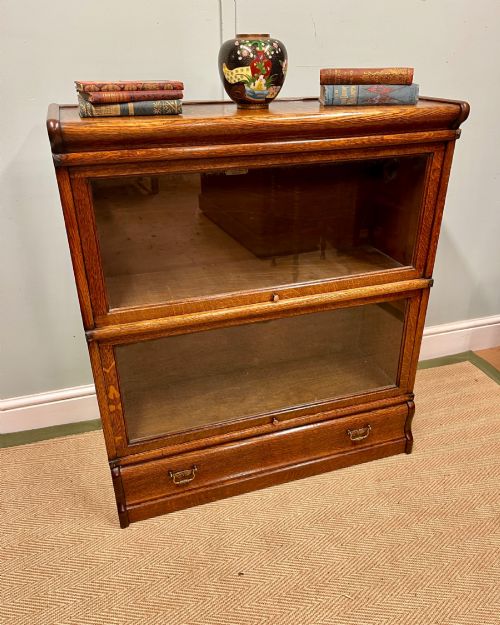
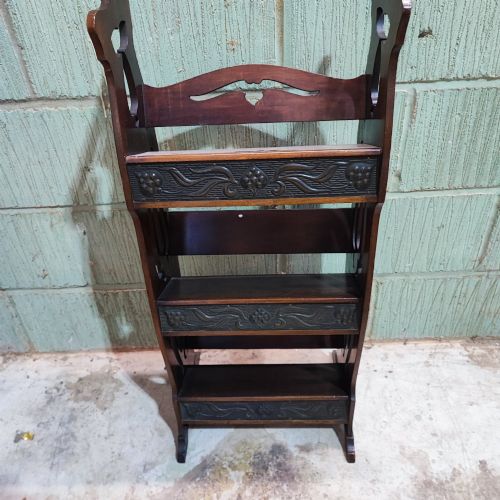
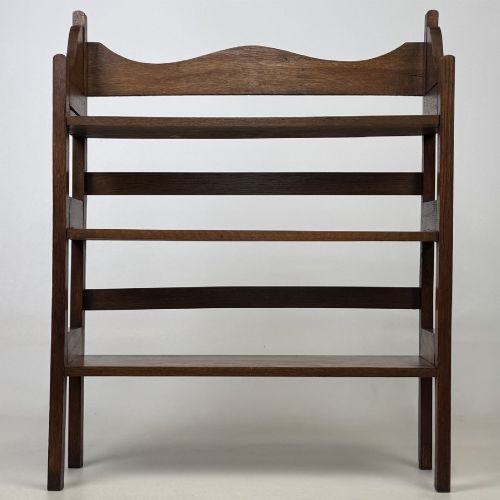
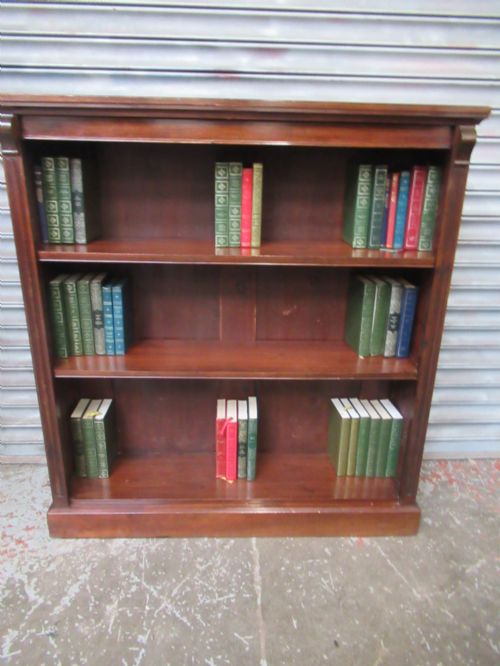
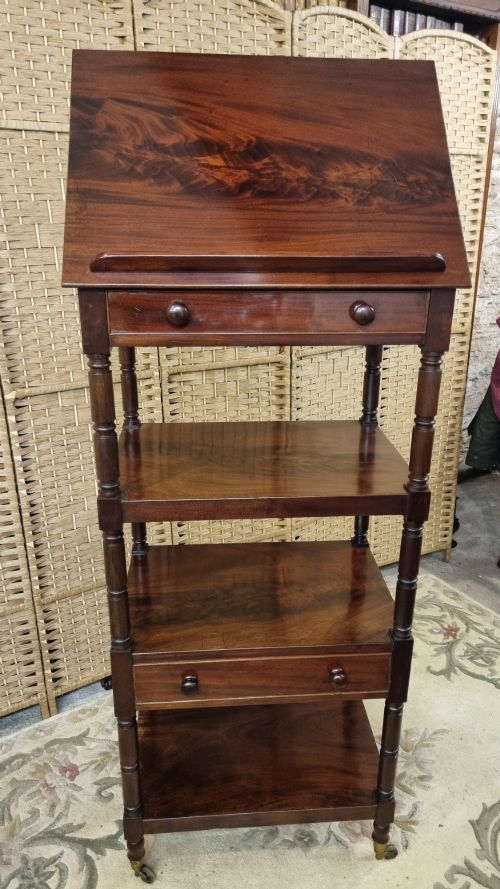
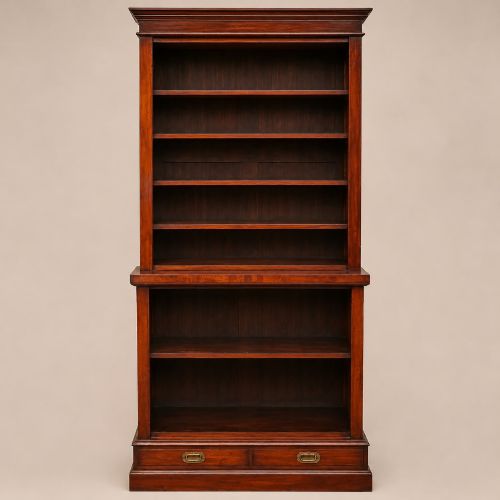
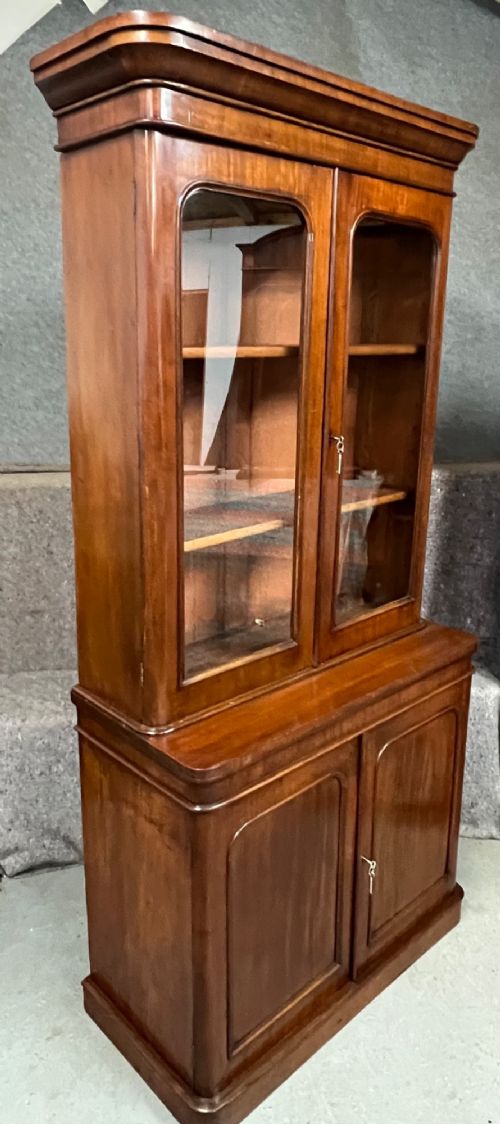
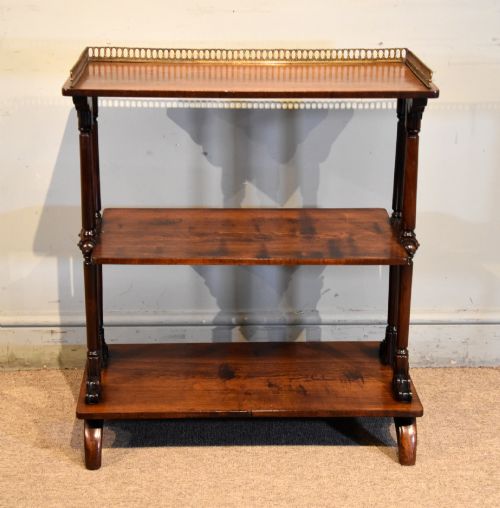
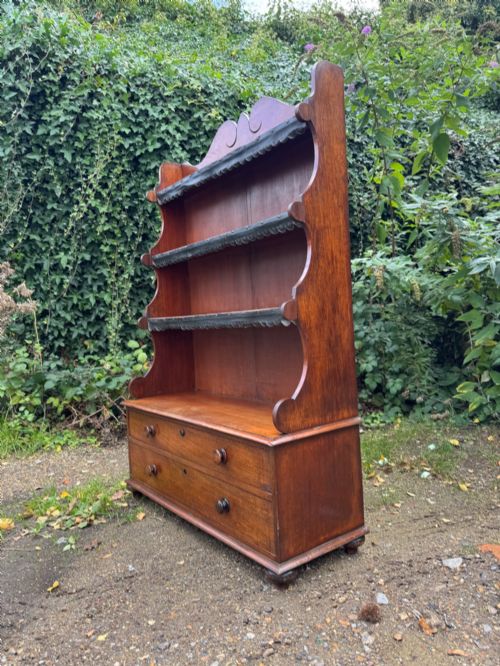
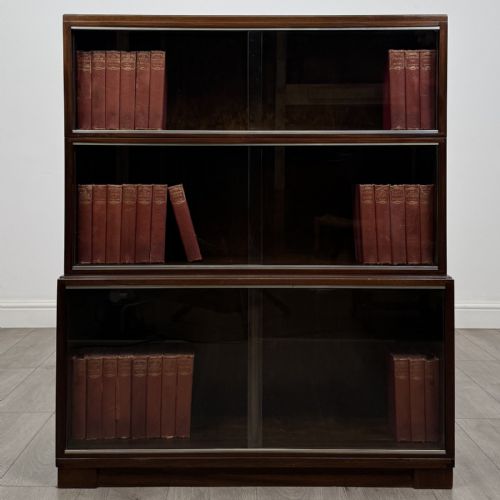
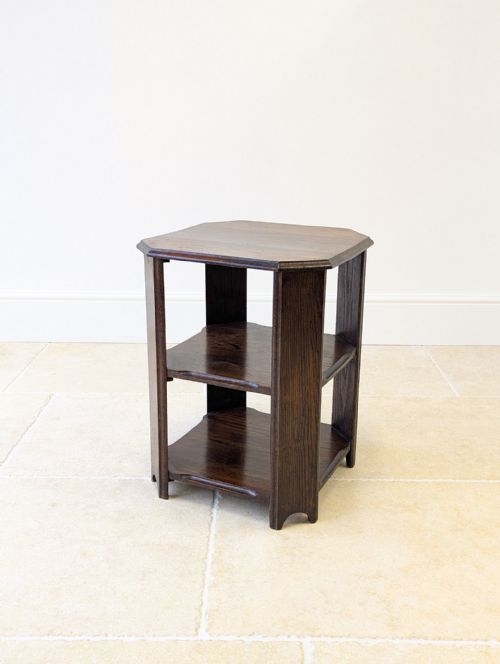
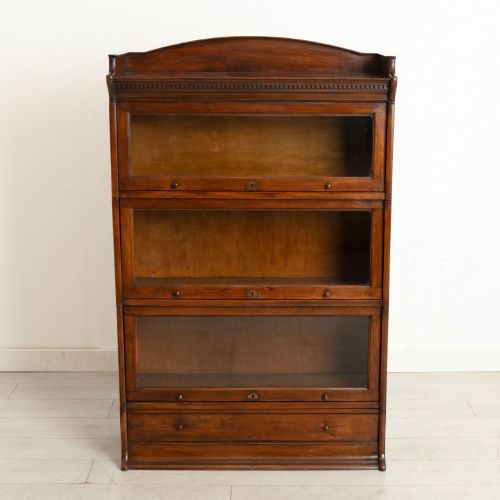
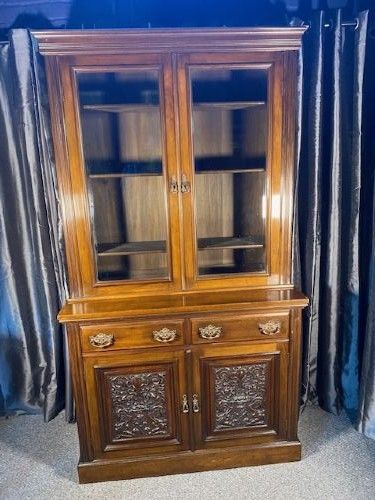
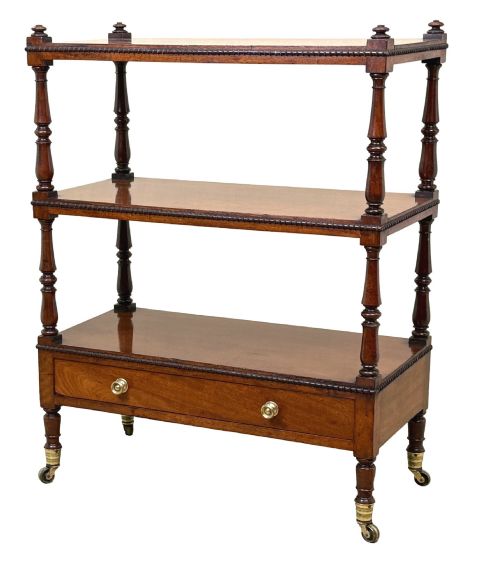
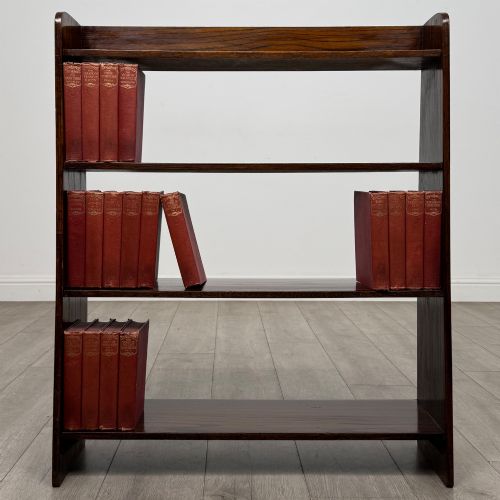
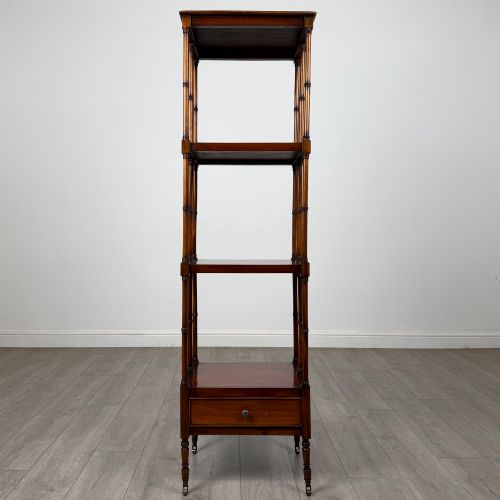
A tier book display encompasses tiered shelving units, whatnots, etageres, and bookcases designed to present books across multiple levels. Buyers seeking a tier book display find items originating from periods such as the Georgian, Regency, Victorian, and Edwardian eras, alongside pieces from the 1920s and 1930s. The forms vary from open shelving to cabinets with glass doors, wall shelves, and portable bookshelves.
The configurations on this page include mahogany, oak, and rosewood whatnots, alongside sectional bookcases and waterfall bookcase designs. Many examples feature graduated shelves supported by slender pillars, brass galleries, or fret-cut sides. These multi-level pieces serve both functional storage and ornamental display in domestic interiors.
Materials and construction methods
Cabinet makers utilised dense hardwoods including mahogany, oak, rosewood, and walnut for the primary structure of these shelving units and bookcases. Timber selection dictated the stability needed for stacked tiers and multi-shelved cabinets. Brass fittings such as castors and decorative galleries appear frequently on Regency and Victorian examples.
Construction techniques involve jointed shelving, raised galleries, and glazed doors fitted to cabinets. Sectional bookcases employ modular stacking boxes, while other forms utilise fret-cut woodwork and inlaid mahogany surfaces. Makers also shaped specialised pieces like revolving or portable book troughs.
Tier Book Display Retail Price Guide 2026
Typical asking prices for tier book display among the pieces listed under this phrase on Sellingantiques today, from the lower quarter to the upper quarter. They describe what is for sale here now, not the wider market.
Current listings feature multi-tiered formats spanning mahogany, oak, rosewood, and teak across 19th-century and early 20th-century periods.
Distinctions in quality and execution
The standard of a tier book display rests upon the selection of timber veneers and solid hardwoods, such as figured rosewood, birdseye maple, or well-grained mahogany. Higher grade pieces demonstrate refined joinery in the execution of fret-cut woodwork, swan neck pediments, and inlaid details. The integration of solid brass hardware rather than plated metal marks superior manufacture.
Proportion and structural harmony separate standard production from exceptional work. Pieces attributed to prominent workshops display careful attention to the scaling of multiple tiers and the turning of slender support pillars. The stability of stacked sectional units and the precision of sliding or glazed doors indicate the level of craftsmanship.
Gillows·Lebus·Globe Wernicke
The Tier Book Display Glossary
- Whatnot
- An open tiered piece of furniture with multiple shelves used for displaying ornaments and books. It originated in the 18th century and evolved into various multi-tiered formats.
- Etagere
- A piece of furniture consisting of a series of open shelves for displaying small objects. This term is often used interchangeably with whatnot in Regency and Victorian contexts.
- Waterfall bookcase
- A set of open shelves where each tier steps back progressively from the one below it. This style gained popularity across the 19th and early 20th centuries.
- Sectional bookcase
- A modular bookcase built from stackable units that can be rearranged or added to over time. Notable examples include barrister bookcases with glass up-and-over doors.
Tier Book Display: Frequently Asked Questions
What is a tier book display?
A tier book display refers to multi-leveled furniture items designed to hold and present volumes. These include whatnots, etageres, and multi-shelf bookcases.
Such pieces provide vertical storage while keeping books and objects visible across stacked platforms.
How were these tiered bookcases used?
These pieces functioned as practical storage for everyday reading material and display space for decorative items. They stood in libraries, parlours, and living rooms.
Portable versions and smaller whatnots allowed owners to move collections between rooms as needed.
How do I date a tier book display?
Dating relies on identifying the prevailing style, timber choices, and construction methods of the period. Regency pieces often feature mahogany with brass galleries, while Edwardian examples show lighter woods and slender pillars.
Modular sectional designs typically point to the early 20th century.
Where should I place a whatnot in my home?
These pieces suit corners, alcoves, or wall spaces where vertical display is beneficial without occupying excessive floor area. Open shelving allows books to remain accessible from multiple angles.
Matching the wood tone to existing furniture helps integrate the piece into the room.