




Three Tier Oak Shelf
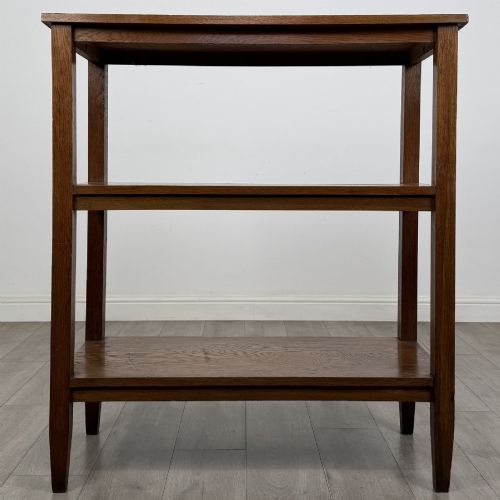
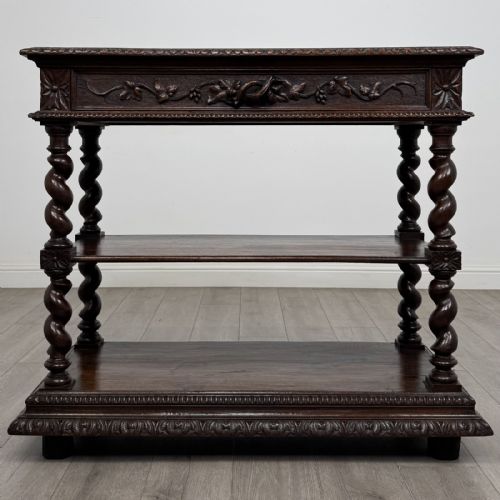
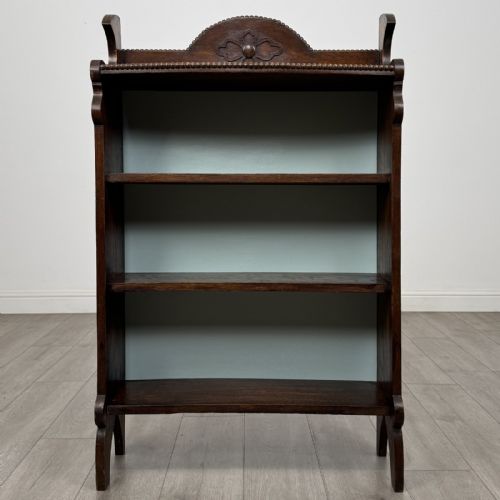
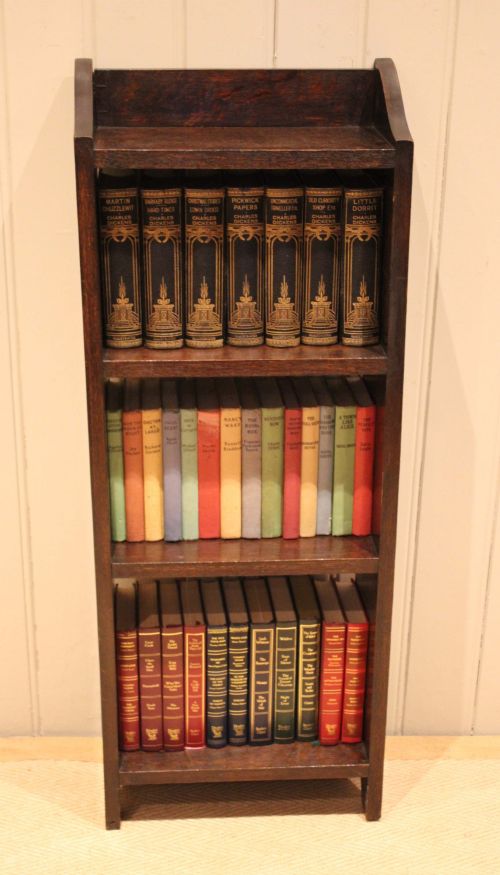
A three tier oak shelf brings character and layered display space to a room, ranging from simple open bookshelves to finely carved tables.
Three Tier Oak Shelf
A three tier oak shelf provides practical levels for storage and display across several distinct historical periods. These tiered furnishings appear in various forms, including open bookcases, occasional tables, etageres, and wall-mounted shelves.
The pieces encountered on this page span from the Regency era through the Victorian period, Edwardian years, and into the 1920s and 1930s. Oak serves as the primary timber, sometimes complemented by pollard oak, brass, marble, or cane.
Design influences vary from classic Victorian and Gothic expressions to Arts and Crafts simplicity and French Provincial elegance. Buyers encounter everything from compact wall shelves to taller standing bookcases and rolling tea trolleys.
Materials and construction
Makers utilised solid oak and figured pollard oak to build durable frames capable of supporting multiple tiers of weight. Timber selection determined the natural grain pattern and richness of each finished surface.
Construction techniques combined traditional joinery with decorative elements such as barley twist turnings and brass details. Some sophisticated examples integrated contrasting materials like inset marble tops and woven canework panels.
Three Tier Oak Shelf Retail Price Guide 2026
Typical asking prices for three tier oak shelf among the pieces listed under this phrase on Sellingantiques today, from the lower quarter to the upper quarter. They describe what is for sale here now, not the wider market.
Listings span the nineteenth and twentieth centuries, featuring oak alongside marble, brass, and cane across bookcase and etagere forms.
Judging quality in tiered oak furniture
Quality rests upon the selection of timber and the crispness of the carpentry, distinguishing standard utilitarian items from finer examples. Superior pieces display thoughtful grain matching and well-proportioned tiered structures.
Design ambition elevates certain items, from simple standing bookshelves to elaborate etageres featuring matched pairs or integrated marble and brass components. The integration of period styles, such as Arts and Crafts restraint or Regency proportion, dictates the refinement of the piece.
The Three Tier Oak Shelf Glossary
- Whatnot
- A piece of furniture consisting of a series of open shelves for books or ornaments. It gained popularity during the Regency and Victorian periods.
- Barley twist
- A woodworking technique turning wood into a spiral shape resembling a twisted rope. This decorative detail frequently appears on Edwardian supports.
- Pollard oak
- Timber taken from trees that have been pollarded, producing a richly figured grain pattern. Cabinet makers used this decorative wood on prominent surfaces.
- Buffet
- A sideboard or set of shelves used for displaying plate and serving food. Victorian iterations often incorporated an elevated top shelf.
Three Tier Oak Shelf: Frequently Asked Questions
Where should I place a three tier shelf?
These tiered pieces suit living rooms, hallways, or studies where vertical display space is needed without blocking light. Wall-mounted versions fit smaller rooms, while standing etageres work well as freestanding room accents.
Ensure the footprint matches your floor space and that heavier items sit comfortably on the lower tiers for stability.
How do I care for oak furniture?
Maintain oak surfaces by dusting regularly with a dry, soft cloth to prevent particulate buildup. Avoid placing the wood in direct sunlight or near heat sources to prevent drying and splitting.
Apply a quality beeswax periodically to nourish the grain and preserve the natural sheen of the timber.
What is the difference between an etagere and a bookcase?
An etagere is designed primarily for display, featuring open sides and multiple decorative tiers intended for ornaments or small collections. Bookcases prioritise storage for volumes, often featuring enclosed sides or adjustable shelving.
Some tiered oak pieces bridge both categories, functioning equally well for books and decorative objects.
How can I date an oak shelf?
Dating relies on stylistic clues, construction methods, and material combinations seen in the woodwork. Regency and Victorian pieces often show heavier proportions and formal carving, while Arts and Crafts examples favour honest construction and simple lines.
Edwardian and later 1920s items frequently incorporate lighter turns like barley twist supports.