




Three Tier Cart
A three tier cart brings tiered surface space and mobility into a room, offering practical service with distinct period character.
Three Tier Cart
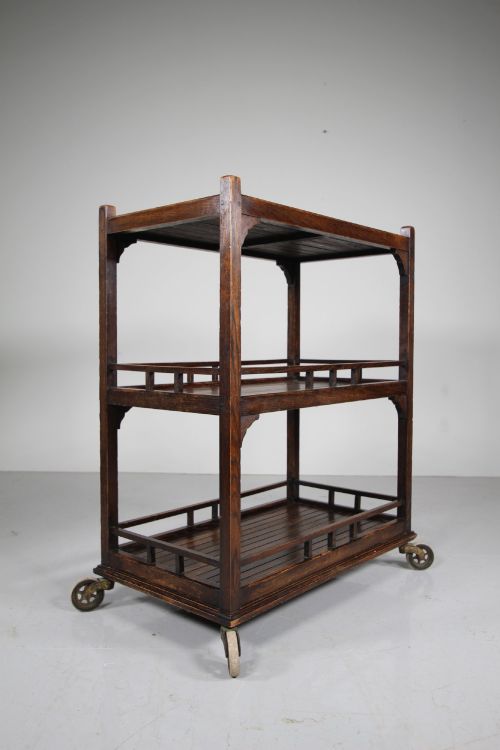
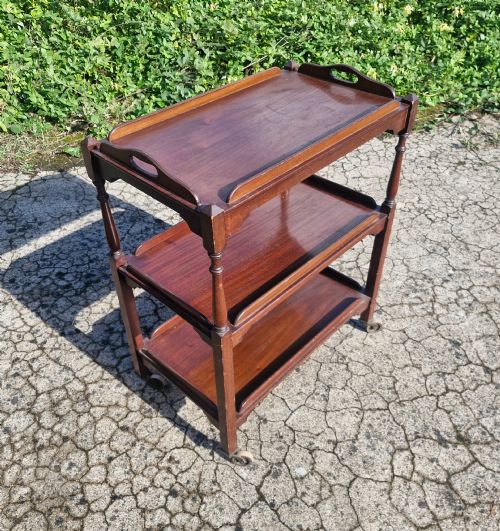
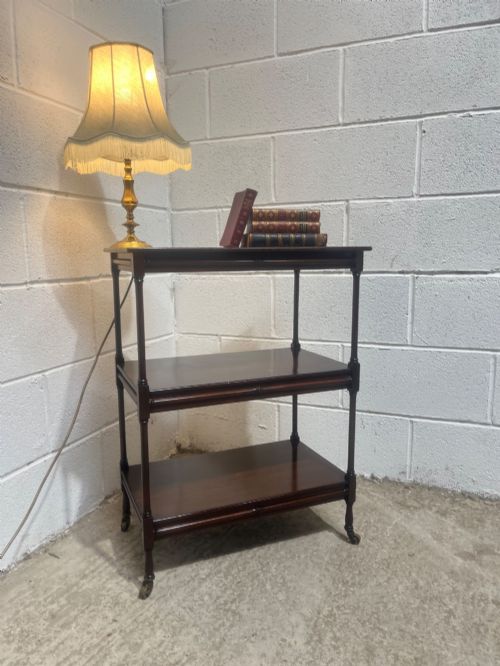
A three tier cart offers multiple open levels for serving and display, appearing across periods from the Victorian era through the 1930s. These pieces function as drinks trolleys, tea carts, buffets, and display stands depending on their primary configuration.
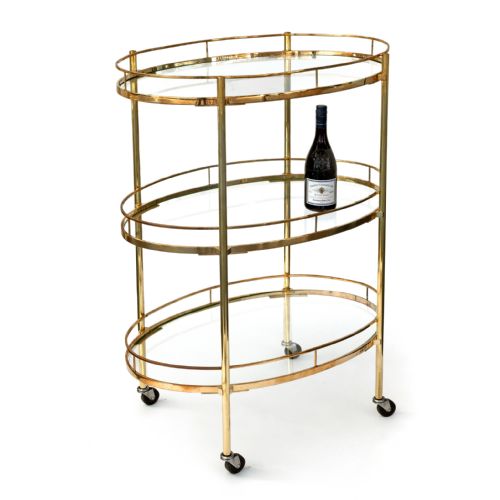
Buyers will most frequently encounter walnut and mahogany examples alongside brass and glass frames, reflecting styles from Edwardian to Art Deco. Formats range from circular bar carts and rectangular serving trolleys to Chinese hardwood tea carts and French galleried display stands.
The lineage stretches from mid-19th century dumb waiters and 1860s mahogany buffets to 1910s brass etageres and streamlined 1930s hostess trolleys. Each iteration adapts the three-tier format for domestic hospitality and entertaining.
Materials and construction
Makers utilised solid timbers such as mahogany, oak, walnut, and Chinese hardwood, frequently highlighting figured grain patterns on serving surfaces. Carved details appear on traditional wooden frames, while other examples employ bent wood and circular geometries.
Metal and glass combinations introduce transparent shelving paired with brass frameworks and galleried edges to secure items in transit. Removable carrying trays add versatility to wooden frameworks through integrated handles and fitted ledges.
Three Tier Cart Retail Price Guide 2026
Typical asking prices for three tier cart among the pieces listed under this phrase on Sellingantiques today, from the lower quarter to the upper quarter. They describe what is for sale here now, not the wider market.
One Edwardian oak trolley bears the mark of Heals of London, proving that even a humble tea run deserves proper establishment pedigree.
Assessing quality and finish
Construction standards separate standard utility pieces from finer examples, evident in the choice of figured walnut or solid mahogany over basic hardwoods. Joinery precision and the weight of brass framing determine the structural integrity of multi-tiered designs.
Heals of London
The Three Tier Cart Glossary
- Tier
- A single level or shelf within a multi-level structure. These carts utilise three distinct horizontal surfaces for placement.
- Etagere
- A piece of furniture consisting of a set of open shelves for displaying small objects. Brass and glass versions function as mobile display stands.
- Dumb waiter
- A tiered serving table used to hold food or drink without the need for attending servants. Victorian examples form part of this lineage.
- Gallery
- A raised decorative edge or railing around a shelf. This feature prevents items from sliding off during movement.
- Bar cart
- A low wheeled table designed specifically for holding bottles and glassware. Art Deco examples often adopt circular formats for this purpose.
Three Tier Cart: Frequently Asked Questions
What is a three tier cart?
A three tier cart is a mobile serving or display unit featuring three horizontal surfaces stacked vertically. These pieces evolved from Victorian dumb waiters into Edwardian tea trolleys and 1930s cocktail carts.
They provide ample space for bottles, glassware, or tea services while remaining easy to wheel between rooms during gatherings.
How were these carts used historically?
Historically, these items served domestic hospitality by transporting tea, meals, or drinks without requiring constant trips to the kitchen. Servants used early wooden dumb waiters for holding dishes, while later twentieth-century versions became central to cocktail culture.
Their mobility made them essential accessories for hosting guests in period drawing rooms and dining spaces.
What materials are common?
The listings show a strong reliance on traditional cabinet timbers like mahogany, walnut, and oak alongside exotic options such as Chinese hardwood. Metal and glass also feature prominently in brass etageres and twentieth-century bar carts.
Some iterations combine solid woods with removable wooden trays for added convenience during service.
How do I date a three tier cart?
Dating relies on observing the prevailing style, materials, and construction techniques visible in the piece. Heavy carved mahogany and oak point towards Victorian and Edwardian origins, whereas streamlined curves and circular walnut structures indicate 1930s Art Deco design.
Brass and glass combinations often reflect early twentieth-century French or English production methods.