



Three Tier Brass Stand
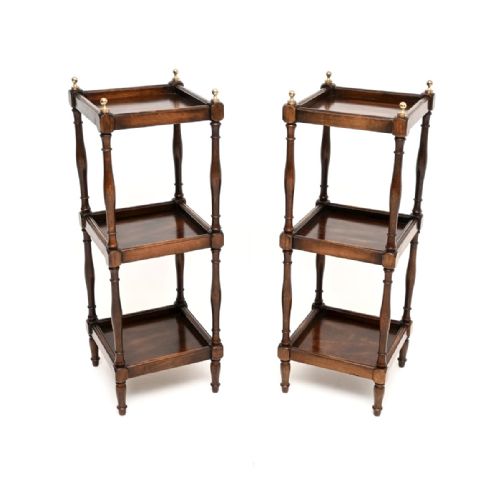
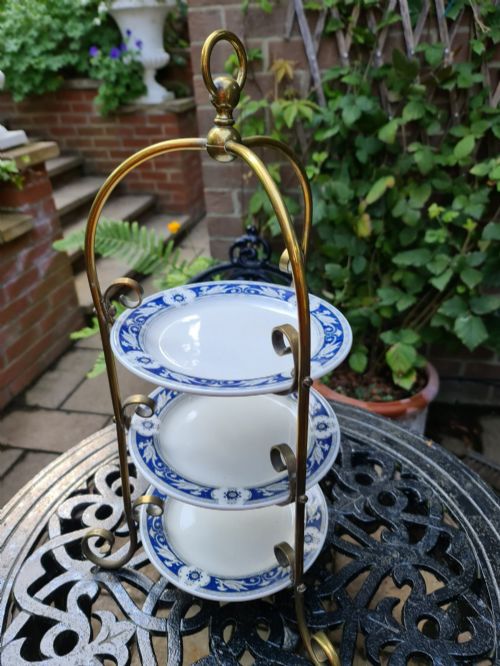
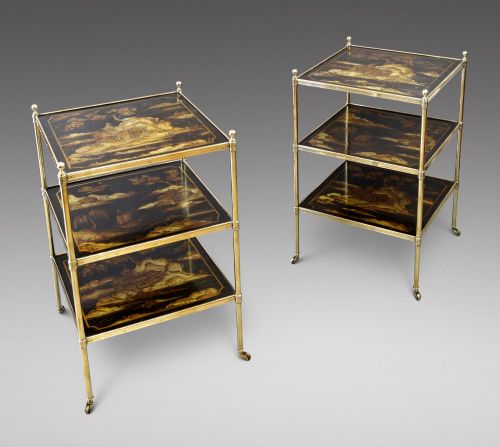
A three tier brass stand offers tiered vertical display, combining metal framework with shelves of glass, marble, or polished timber.
Three Tier Brass Stand
A three tier brass stand is a multi-level display piece designed to hold decorative objects, plants, or tableware across stacked surfaces.
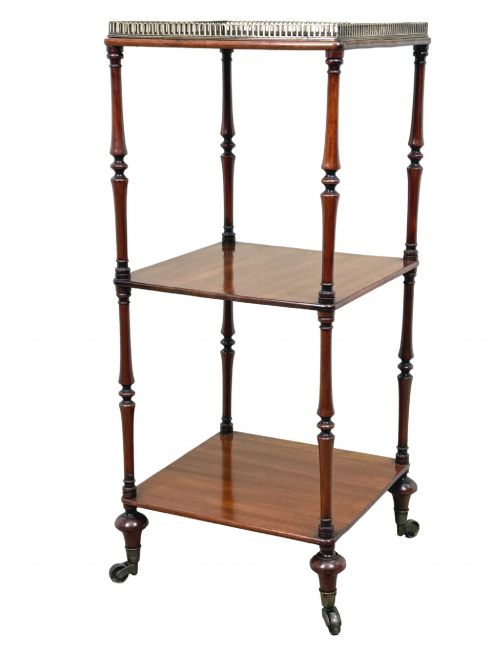
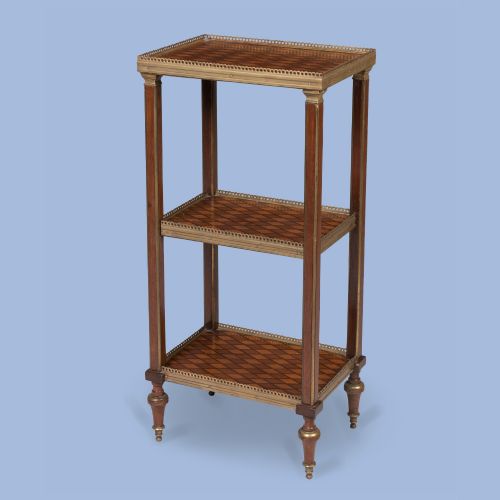
The versions met on this page range from French display tables and Edwardian cake stands to campaign washstands and Victorian étagères.
Materials span brass, bronze, and gilt metal frames paired with walnut, mahogany, rosewood, amboyna, marble, and glass tiers.
How they were made
Construction relies on cast or tubular brass frameworks supporting individual shelves of timber, glass, or stone.
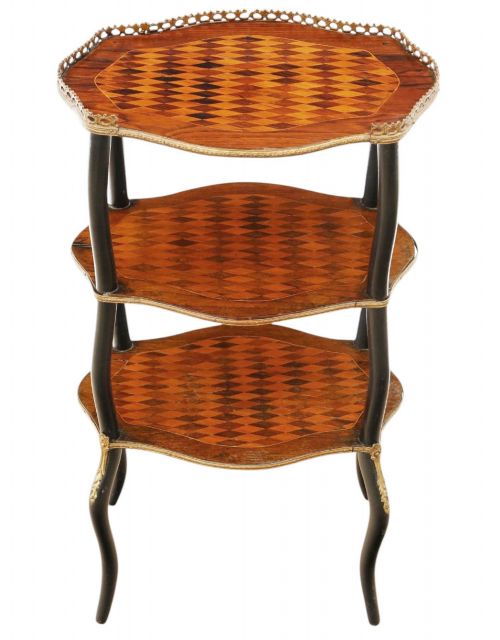
Wood tiers utilise rich veneers like marquetry, parquetry, and burr walnut, often edged with pierced brass galleries.
Makers integrated brass mounts, ormolu, and shaped legs reflecting Regency, Victorian, and French stylistic influences.
Listings feature pieces spanning the 19th century, Victorian period, Regency era, and 1920s, constructed from brass, mahogany, walnut, and glass.
What varies in quality
Quality rests in the precision of the brass casting, the crispness of gallery work, and the depth of timber figure.
Finer examples demonstrate heavier gauge metal, substantial marble or glass inserts, and intricate marquetry rather than simpler painted finishes.
The Three Tier Brass Stand Glossary
- Étagère
- A piece of furniture consisting of a set of open shelves for displaying small objects. They appear frequently in 19th-century French and English interiors.
- Whatnot
- A multi-tiered shelving unit used for books or ornaments. These domestic pieces date predominantly from the Victorian and Edwardian periods.
- Gallery
- A raised decorative border around the edge of a shelf or table top. Brass versions prevent items from sliding off upper tiers.
- Marquetry
- Decorative veneer work forming pictorial or geometric patterns using various woods. Craftsmen cut thin slices of tinted timber to fit precisely into a design.
- Ormolu
- Gilded bronze mounts applied to furniture. This decorative technique is common on French pieces from the 19th century.
Three Tier Brass Stand: Frequently Asked Questions
What were three tier brass stands used for?
These tiered stands served varied domestic purposes, holding plants, display items, or servingware in 19th and early 20th century rooms.
Their vertical design allowed households to display collections or serve afternoon tea without taking up excessive floor space.
How do I style a three tier brass stand?
Place them in reception rooms or hallways to display ceramics, small books, or potted plants across the separate levels.
Balance heavier objects on the lower shelf while keeping lighter decorative pieces on the upper tiers.
Are all these stands French?
While many pieces reflect French Louis XV, Louis XVI, and Neoclassical styles with marquetry and ormolu mounts, English examples also appear.
English pieces often take the form of walnut or mahogany whatnot étagères and campaign washstands.
How can I tell the period?
Dating relies on timber choice, such as burr walnut, rosewood, or amboyna, combined with structural joinery and metal characteristics.
Victorian and Edwardian versions often feature elaborate veneering, whereas 1920s examples lean towards simpler glass and metal combinations.