



Three Strand Pearls
Three strand pearls bring together multiple rows of lustrous beads fastened by intricate precious metal clasps, offering classic elegance for the discerning collector.
Three Strand Pearls
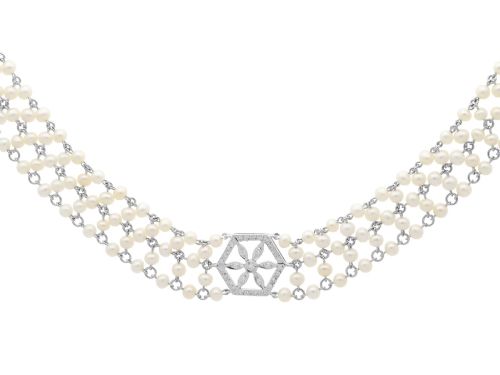
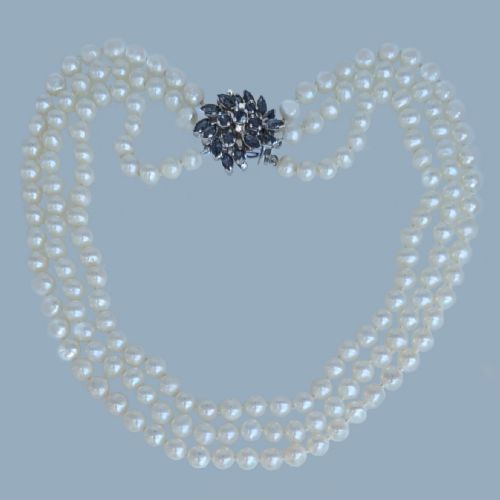
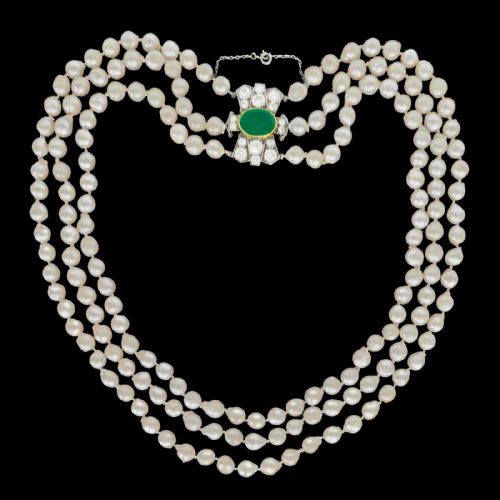
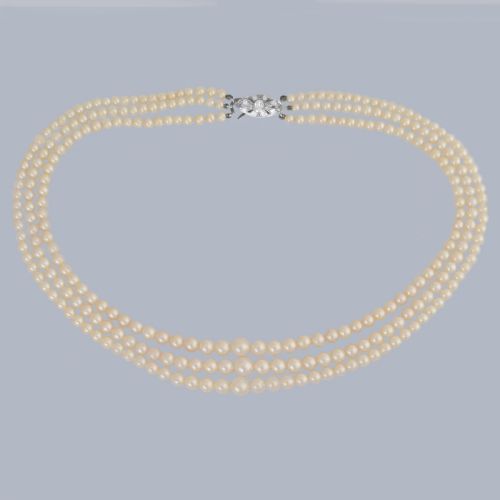
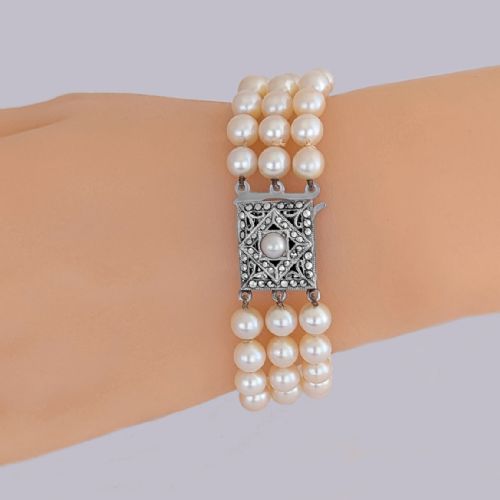
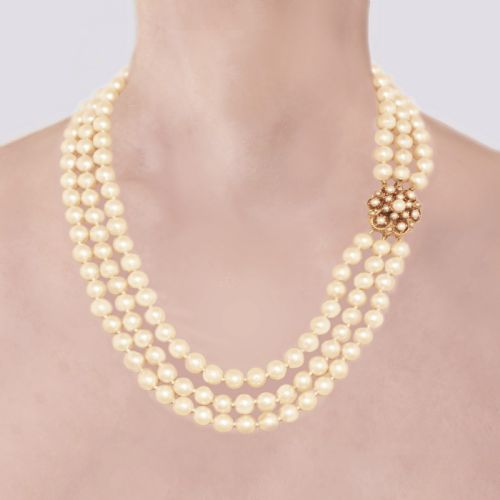
When you search for three strand pearls, you encounter multi-row necklaces and bracelets spanning the Victorian era through the mid-century decades. These pieces showcase parallel strands of pearls complemented by decorative clasps set with diamonds, sapphires, emeralds, jadeite, and marcasite.
The selections on this page are predominantly mid-century and Art Deco creations, featuring both cultured pearls and natural saltwater varieties. Necklaces dominate the offerings, occasionally accompanied by matching multi-row bracelets housed in original boxes.
How they were made
Craftsmen strung pearls onto durable threads, pairing the multi-row strands with secure clasps fashioned from 9ct gold, 18ct white gold, platinum, and silver. These mountings often incorporate platinum or gold settings to hold diamonds, emeralds, and sapphires.
Clasps utilise fine metalwork techniques, including floral clusters, geometric Art Deco designs, and ornate locks set with rose-cut diamonds or carved jadeite. Assay offices such as Birmingham provided hallmark stamps on gold and silver mounts to guarantee metal purity.
Three Strand Pearls Retail Price Guide 2026
Typical asking prices for three strand pearls among the pieces listed under this phrase on Sellingantiques today, from the lower quarter to the upper quarter. They describe what is for sale here now, not the wider market.
This site's listings span the Victorian era, Art Deco period, and the 1920s through the 1960s, utilising gold, silver, and platinum.
What varies in quality
The grade of the pearls themselves establishes the primary tier of quality, with uniform lustre, smooth skin, and matching orient distinguishing finer pieces. Natural saltwater pearls and certified Basra origins command distinct attention compared to cultured varieties.
Clasp craftsmanship and gemstone selection further differentiate the range, where fine platinum mountings set with substantial diamonds or Columbian emeralds elevate the work beyond standard gold floral settings.
The Three Strand Pearls Glossary
- Cultured Pearl
- A pearl formed with human intervention by inserting a nucleus into an oyster, resulting in cultivated layers of nacre. These are widely utilised in mid-century jewellery.
- Natural Saltwater Pearl
- A pearl that develops organically in marine oysters without human assistance. These pieces often date to earlier periods like the Victorian era.
- Basra Pearl
- A natural pearl originating from the Persian Gulf region, historically prized for exceptional purity and lustre. They frequently appear in Victorian pieces.
- Marcasite
- Small faceted pyrite stones set closely in silver mountings to resemble diamonds, popular in vintage and Art Deco jewellery.
- Jadeite
- A dense mineral carved into ornamental shapes for clasps, characteristic of Art Deco designs.
Three Strand Pearls: Frequently Asked Questions
How do I wear three strand pearls?
These multi-row necklaces sit high on the collarbone, making them suitable for formal occasions and evening attire. Their substantial presence means they work best as the focal point of an outfit.
Pairing a necklace with a matching multi-row bracelet creates a coordinated look. Ensure the clasp is securely fastened before wearing them out.
Are these pearls natural or cultured?
The listings include both natural saltwater specimens and cultured pearls. Victorian pieces often feature natural varieties, while mid-century examples frequently utilise cultured pearls.
Gem reports and certificates provided with specific items verify the origin of the pearls. Inspecting the listing details confirms whether a piece is cultured or natural.
How should I care for my pearls?
Pearls require gentle handling because organic nacre is softer than precious gemstones. Wipe them clean with a soft cloth after wearing to remove perfumes and oils.
Store them flat in a lined box to prevent the silk threads from stretching. Avoid exposing them to harsh chemicals or ultrasonic jewellery cleaners.
How can I date my pearl necklace?
Clasp styles and metal hallmarks provide the clearest indicators of age. Art Deco pieces display geometric platinum designs, while 1950s and 1960s items often feature 9ct gold floral or cluster clasps.
Assay office marks and original boxes offer further historical context. Comparing the design motifs to known periods helps narrow down the decade of manufacture.