

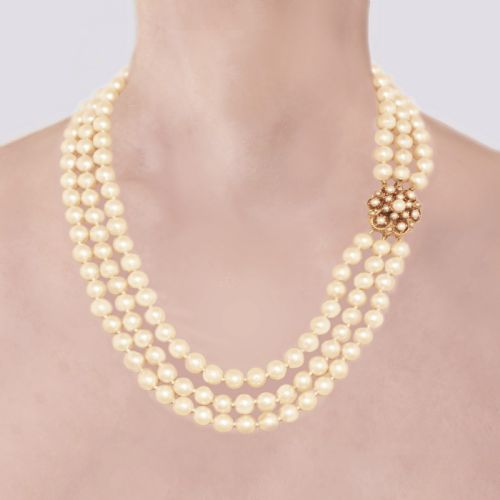


Three Strand Necklace
A three strand necklace offers a sophisticated accumulation of pearls or beads that sits closely and dramatically upon the collarbone.
Three Strand Necklace
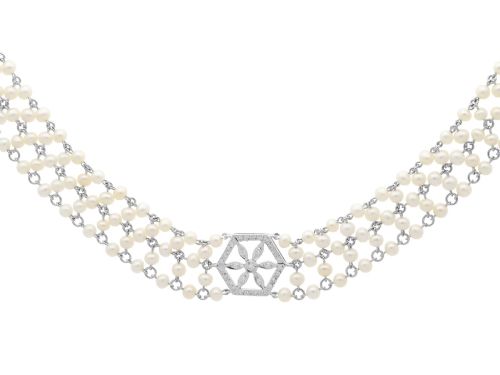
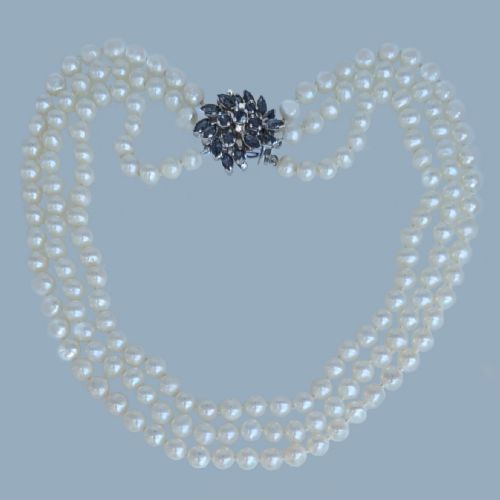
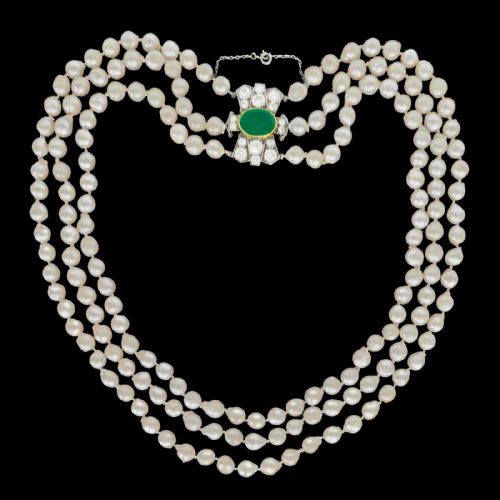
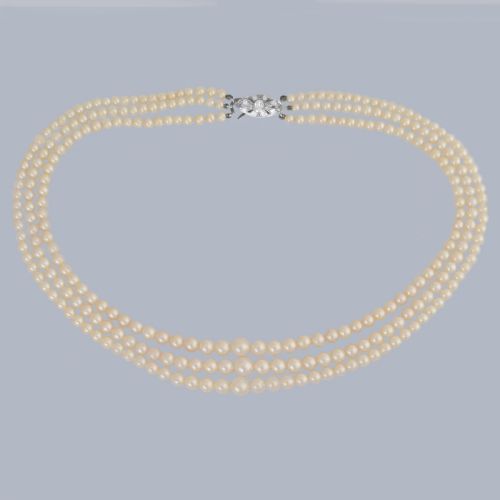
A three strand necklace brings together three distinct rows of pearls, beads, or gems united by a singular decorative clasp, creating a rich and layered profile. These pieces appear across the Victorian, Edwardian, and Art Deco periods, as well as the 1950s and 1960s mid-century eras.
The pearls and beads used to construct these multi-row pieces include cultured pearls, saltwater pearls, natural pearls, and coral. Alongside these bead varieties, fine jewellers incorporate diamonds, sapphires, emeralds, jadeite, and precious metals.
Examples from this selection span from Victorian natural pearl creations to 1930s Art Deco designs and mid-century 9ct gold clasps. Buyers encounter both delicate chokers and longer lengths secured with silver, white gold, or yellow gold fastenings.
Materials and construction methods
The structural integrity of a multi-row necklace relies upon durable stringing materials, with silk thread traditionally employed to tether individual pearls or beads in a secure sequence. Metal components such as platinum, 18ct white gold, and 9ct gold form the settings for clustered diamonds and gemstones.
Clasps serve as both structural closures and ornamental centerpieces, often featuring hand-set rose cut diamonds, sapphires, or carved jadeite mounted in silver or gold. Goldsmiths and lapidaries paired these clasps directly with the strands to distribute weight evenly across the collar.
Three Strand Necklace Retail Price Guide 2026
Typical asking prices for three strand necklace among the pieces listed under this phrase on Sellingantiques today, from the lower quarter to the upper quarter. They describe what is for sale here now, not the wider market.
Some clasps are reversible, letting you hide your diamonds when you fancy being mysteriously understated.
Distinctions in craftsmanship and materials
The quality of a multi-row necklace rests upon the uniformity and lustre of the pearls or beads chosen for each strand, alongside the complexity of the gemstone clasp. Pieces set with natural saltwater pearls or high-carat diamonds display superior material selection compared to standard cultured variants.
The architectural design of the clasp separates standard production from finer work, particularly where jewellers integrated multi-stone floral clusters or certified gemstones. Hallmarks, assay office reports, and platinum or 18ct white gold mountings further indicate the elevated tier of a piece.
The Three Strand Necklace Glossary
- Choker necklace
- A short necklace designed to sit high and tight around the neck. These pieces measure shorter than standard lengths and rest directly upon the collarbone.
- Cultured pearl
- A pearl formed by the introduction of a nucleus into an oyster by human intervention. These pearls develop layers of nacre over time.
- Saltwater pearl
- A pearl grown within marine molluscs in ocean waters. They typically exhibit a distinct lustre and deep nacre.
- Rose cut diamond
- An antique diamond cut featuring a flat base and a domed crown with triangular facets. This cut predates modern brilliant faceting.
- Jadeite
- A dense pyroxene mineral valued for its vibrant green colour and smooth polish. It appears frequently in Art Deco clasps.
Three Strand Necklace: Frequently Asked Questions
How do I wear a three strand necklace?
These multi-row necklaces are designed to rest high on the chest, making them well-suited for open necklines and evening wear where the layered strands remain visible.
The prominent clasp can be worn at the back for a traditional look or rotated to the front to display the diamonds, sapphires, or jadeite as a pendant feature.
What is the difference between cultured and natural pearls?
Natural pearls form entirely without human intervention inside molluscs in the wild, whereas cultured pearls begin with a human-inserted nucleus.
Both varieties appear across different periods in these multi-row designs, with natural pearls typically associated with earlier Victorian and Edwardian examples.
How can I tell the period of the necklace?
Stylistic markers such as geometric platinum settings indicate Art Deco origins, while floral gold clusters or specific hallmarks point towards mid-century or Victorian manufacture.
Gem reports and assay office documentation also provide precise chronological context for the materials and gold standards used.