




Three Stone Cluster Ring
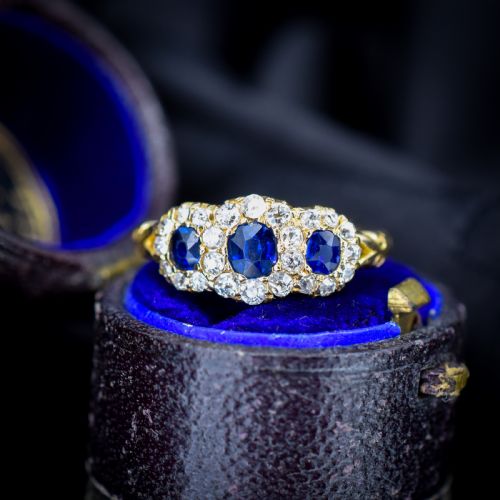
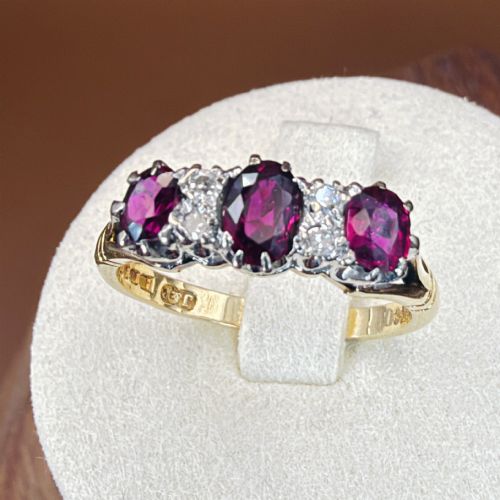
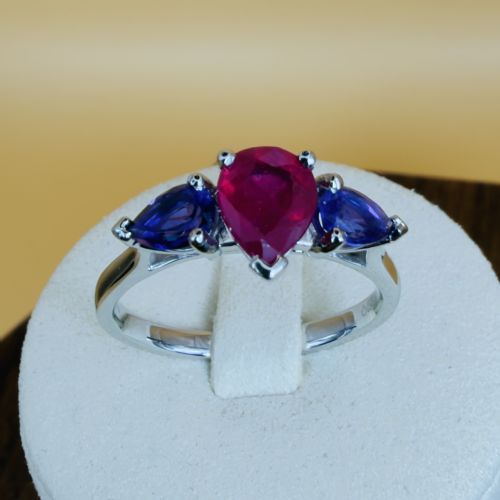
A three stone cluster ring brings together central gemstones and surrounding stones across Victorian, Edwardian, and Art Deco designs.
Three Stone Cluster Ring
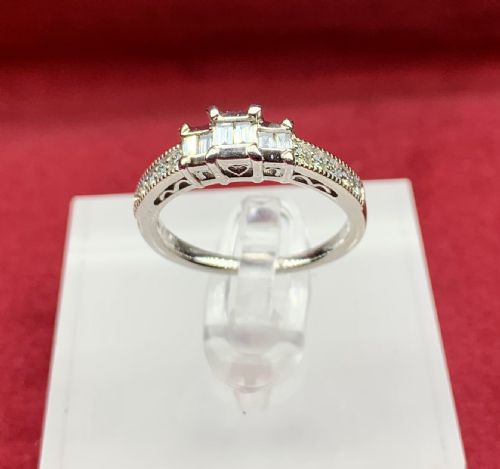
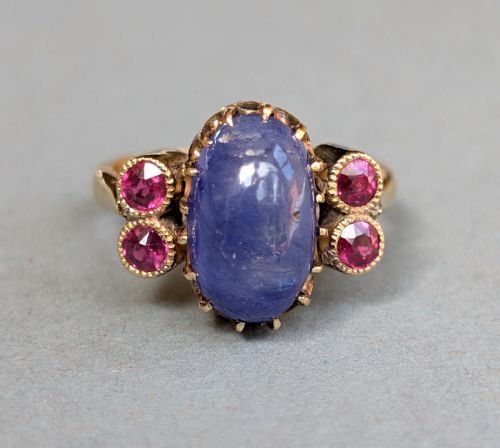
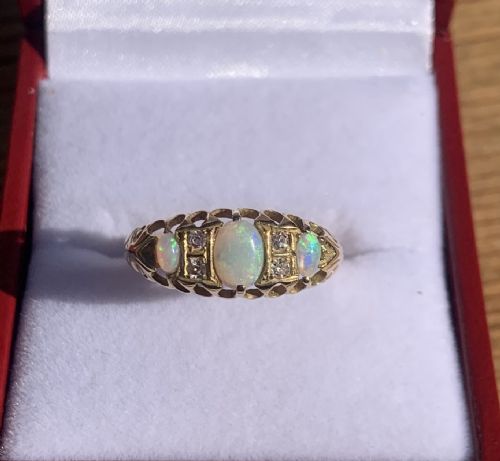
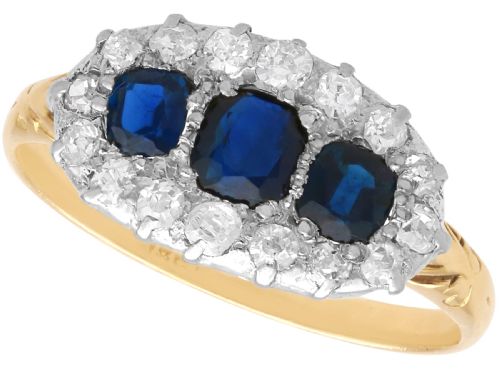
A three stone cluster ring combines triple stone layouts with tight cluster formations, presenting options from the Victorian, Edwardian, and Art Deco periods. Buyers search for these pieces to wear distinct historic configurations featuring diamonds alongside sapphires, rubies, and emeralds.
The most common examples on this page span late nineteenth century Victorian pieces through to nineteen twenties Art Deco designs. These rings utilise yellow gold, white gold, and platinum to support arrangements of old cut and pear cut gems.
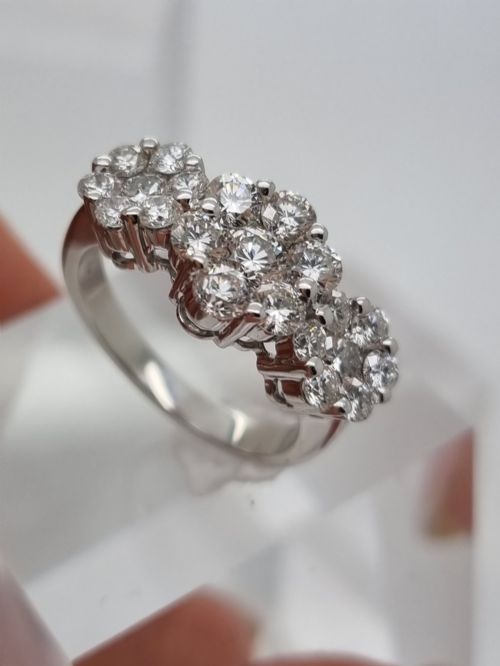
Trilogy and trefoil formats appear frequently alongside traditional daisy clusters and multi-stone settings. Each period contributes specific metal colours and stone combinations, from turquoise and pearls to unheated sapphires.
Materials and construction methods
Goldsmiths set stones primarily in eighteen carat yellow gold, eighteen carat white gold, and platinum mounts. These enduring metals securely hold old cut diamonds, sapphires, rubies, and emeralds within close-fitting bezel and claw settings.
Craftsmen during the Victorian and Edwardian eras relied on hand-forged gold bands, transitioning into the geometric platinum and white gold frameworks characteristic of the nineteen thirties.
Current selections span Victorian, Edwardian, and Art Deco periods, utilising diamond, sapphire, ruby, emerald, and opal set in gold and platinum.
Variations in quality and execution
Quality rests upon the proportion and matching of the central stones relative to their surrounding cluster elements. Fine examples display well-matched colour saturation in sapphires and rubies alongside lively old cut diamonds.
The precision of the metalwork defines the superior end of the range, visible in neat rubover settings and refined gallery wirework. Lesser pieces exhibit uneven stone spacing or heavy-handed past repairs to the original shank.
The Three Stone Cluster Ring Glossary
- Trilogy ring
- A ring featuring three principal stones set in a row across the finger, traditionally symbolising past, present, and future.
- Cluster ring
- A ring design where a central stone is surrounded by a border of smaller accent stones, resembling a flower.
- Old cut
- A diamond cut style predating modern brilliant cuts, characterised by a smaller table, higher crown, and open culet.
- Trefoil cluster
- A three-part cluster arrangement styled to resemble a clover leaf or three-lobed form.
- Rubover setting
- A metal setting style where a thin collar of precious metal is pushed over the edge of the stone to secure it.
Three Stone Cluster Ring: Frequently Asked Questions
How do I date a three stone cluster ring?
Dating relies on combining the specific cut of the diamonds, such as old cuts, with the choice of precious metals like platinum or yellow gold. Hallmarks, if present inside the band, offer the most precise chronological markers.
Stylistic cues such as Edwardian filigree work or Art Deco geometric layouts further help assign pieces to periods spanning from the Victorian era to the mid-twentieth century.
What is the difference between a trilogy and a cluster?
A trilogy ring specifically arranges three distinct stones side by side along the finger. In contrast, a cluster ring centres on one primary stone encircled by a tight ring of smaller gems.
Some hybrid designs combine both concepts by placing three clustered groupings or surrounding all three main stones with shared accent diamonds.
Are these rings suitable for everyday wear?
Most eighteen carat gold and platinum settings provide the durability required for daily wear when maintained properly. Harder gemstones like diamonds, rubies, and sapphires withstand regular use well.
Soft materials found in certain Victorian and Edwardian examples, including pearls or turquoise, demand greater care to avoid impact and moisture damage.
Can I resize an antique cluster ring?
Resizing depends on the construction of the shank and the proximity of side stones or intricate shoulder engravings. A skilled jeweller can usually alter plain metal portions of the band without disturbing the central cluster.
Heavily decorated or fully engraved antique shanks require specialist attention to preserve the original decorative work during adjustment.