


18k Gold Cluster Ring
When choosing an 18k gold cluster ring, you select a multi-stone jewel combining high-carat gold with diamonds and coloured gems.
18k Gold Cluster Ring
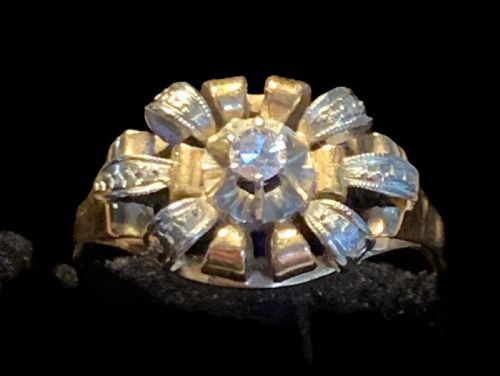
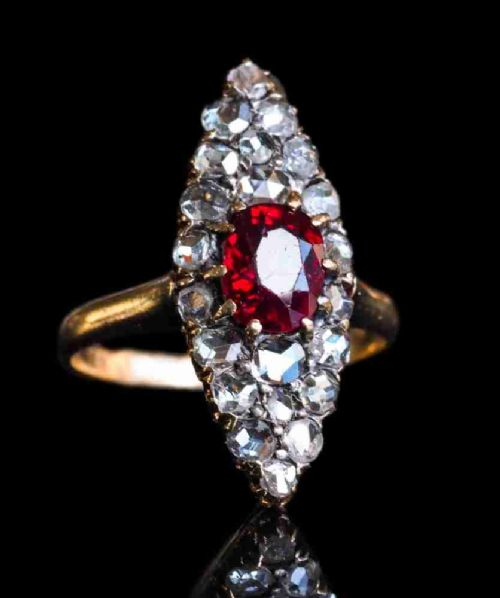
An 18k gold cluster ring centres on a prominent gemstone or central diamond surrounded by a border of smaller stones. These rings appear frequently in Victorian, Edwardian, and Art Deco designs spanning from the late nineteenth century through the 1930s. Engagement rings and dress rings form the primary categories available to collectors.
Victorian examples utilise yellow gold alongside turquoise, opal, pearl, ruby, and old-cut diamonds, often shaped in navette or multi-cluster formats. Edwardian pieces incorporate platinum and yellow gold with seed pearls, amethysts, and emeralds. Art Deco pieces favour white gold and platinum settings holding diamonds, sapphires, rubies, and aquamarines in geometric target or daisy configurations.
How They Were Made
Goldsmiths fabricated the foundations using 18ct yellow gold, 18ct white gold, and frequently combined platinum with gold in later Edwardian and Art Deco pieces. Stones were secured using claw settings, bezel mounts, or grain settings tailored to old European cuts, rose cuts, and emerald cuts.
Early Victorian workshop techniques often mounted silver over gold to enhance the brilliance of rose-cut diamonds against dark backgrounds. Later periods embraced milling, piercing, and channel work in white metal alloys to emphasise geometric symmetry.
Some Victorian makers tucked tiny seed pearls into cluster borders so tight they resemble frosted morning dew.
What Varies in Quality
The precision of stone matching and the symmetry of the outer cluster dictate the visual harmony of each piece. Superior examples display closely matched coloured gems and uniformly cut diamond borders that follow the central motif without gaps.
The integrity of the metalwork, including hand-carved shoulders and secure claw placement, distinguishes finer workshop output from standard commercial production. Preservation of original cut stones without modern recutting maintains historical character.
The 18k Gold Cluster Ring Glossary
- Cluster ring
- A ring featuring a central stone encircled by a border of smaller gems. This layout maximises visual presence and light reflection.
- Navette
- A boat-shaped gemstone arrangement that tapers to points at both ends. This elongated silhouette distinguishes many Victorian pieces.
- Target ring
- A concentric cluster design with distinct coloured rings surrounding a centre stone. Art Deco jewellers favoured this optical style.
- Old European cut
- An early diamond cut characterised by a small table, high crown, and large culet facet. These stones predate modern brilliant cutting standards.
- Seed pearl
- A tiny, naturally formed saltwater pearl used in Victorian and Edwardian cluster borders. They add delicate texture around central gems.
18k Gold Cluster Ring: Frequently Asked Questions
How do I identify a Victorian cluster ring?
Victorian examples typically feature 18ct yellow gold, organic motifs like navette shapes, and hand-cut stones such as rose-cut diamonds, opals, turquoise, and seed pearls. The metalwork often includes closed-back foils or silver-topped gold settings.
Later periods shifted towards platinum and white gold with geometric symmetry, making the warmer gold tones and natural gem pairings reliable indicators of nineteenth-century origin.
Are these rings suitable for daily wear?
Eighteen-carat gold provides a durable foundation for daily wear, though older cluster settings require sensible care due to their delicate age. Softer centre stones like opals and pearls need protection from hard impacts and harsh chemicals.
Checking the security of the claws holding the outer cluster stones ensures that antique mountings remain stable during regular use.
What is the difference between Art Deco and Edwardian rings?
Edwardian cluster rings lean towards graceful platinum-topped yellow gold frames holding pearls, soft emeralds, and old-cut diamonds in lace-like pierced designs. They reflect a romantic and flowing aesthetic.
Art Deco pieces introduce stark white gold and platinum symmetry, utilising calibre-cut sapphires, rubies, and bold geometric shapes such as target clusters or elongated silhouettes.