
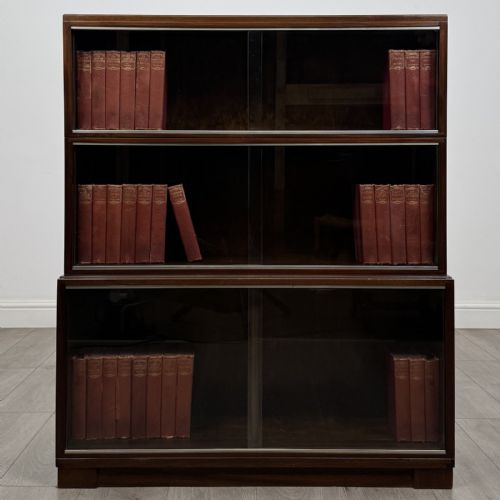
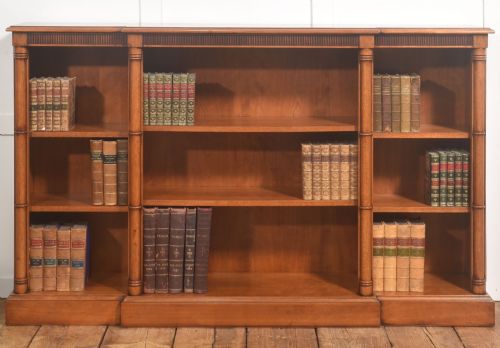
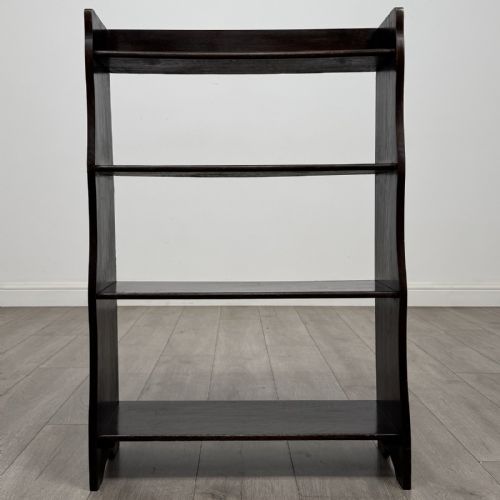
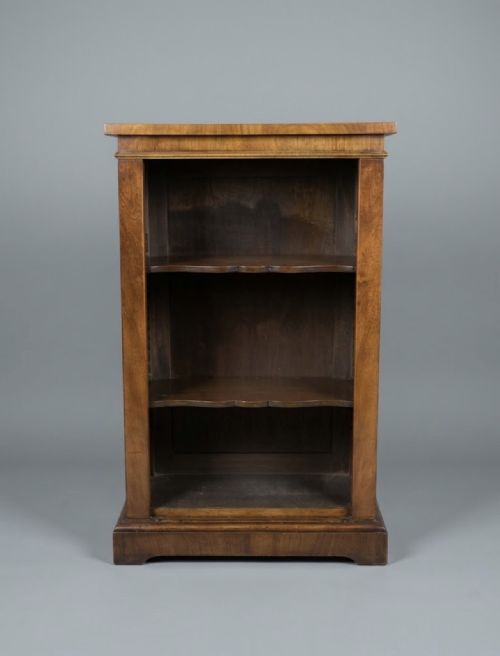
Three Shelf Bookcase
A three shelf bookcase offers practical open storage for everyday volumes, appearing in mahogany, oak, and walnut across Victorian and Edwardian periods.
Three Shelf Bookcase
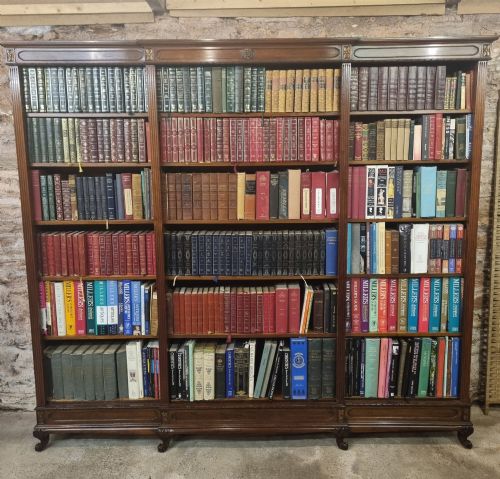
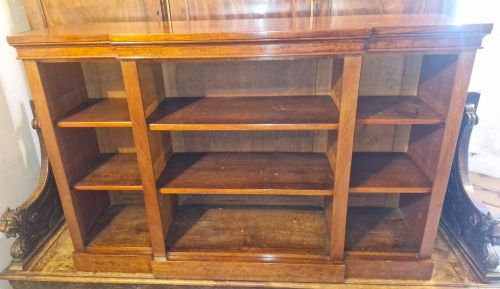
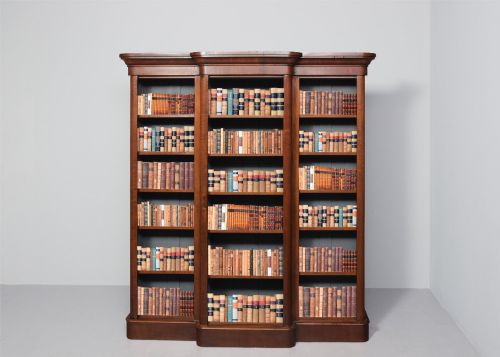
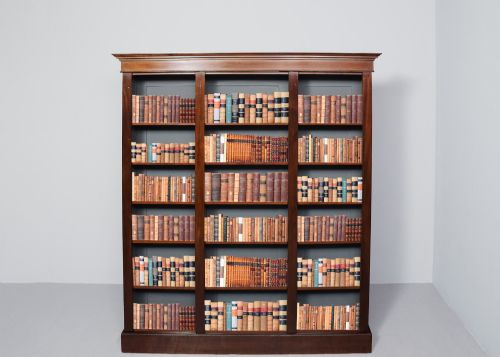
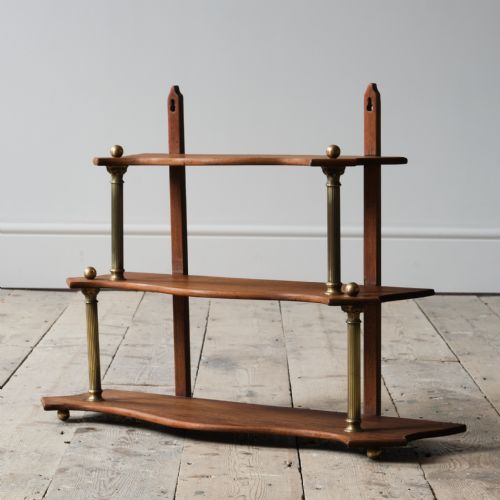
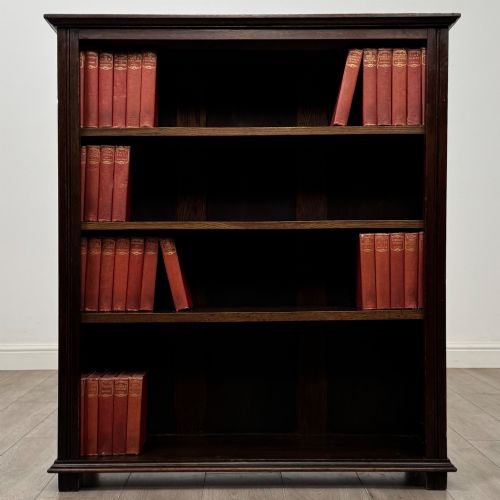
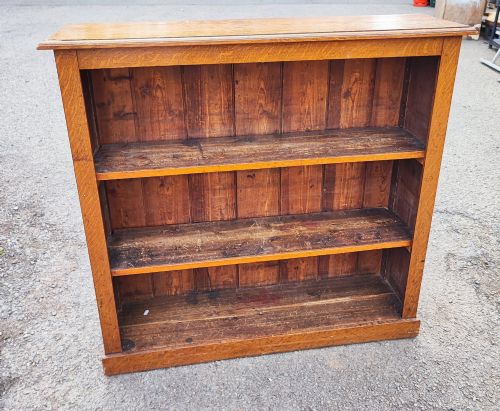
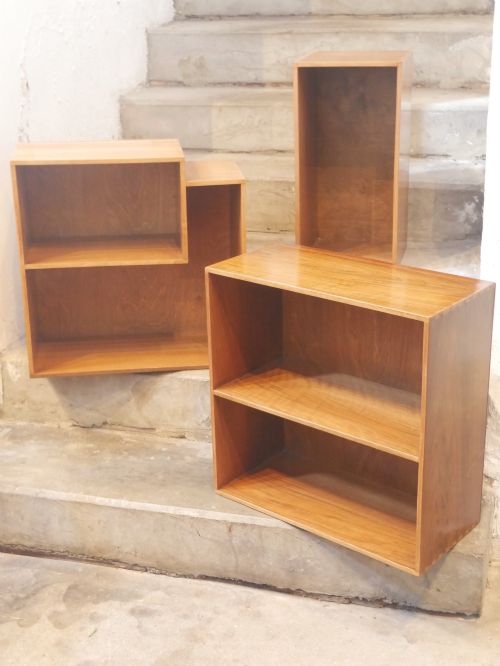
A three shelf bookcase provides compact open shelving for domestic spaces, appearing most often in mahogany and oak across Victorian and Edwardian periods. These pieces range from simple wall hanging shelves and small dwarf units to larger breakfront forms with multiple sections.
Makers designed these utilitarian pieces for home libraries, parlours, and offices, utilising timbers suited to the domestic interior. Alongside traditional open bookcases, the selection includes related forms such as whatnots, etageres, and stacking office bookcases.
The prevalent examples date from the nineteenth century into the early decades of the twentieth century. Buyers encounter regional variations and stylistic influences ranging from plain classical lines to Arts and Crafts inlays and Gothic detailing.
Materials and construction
Joiners constructed these units primarily using solid timbers and veneers of mahogany, oak, and walnut, often enhanced with burr walnut figuring or decorative string inlay. Brass hardware appears on adjustable shelf fittings and hanging mounts.
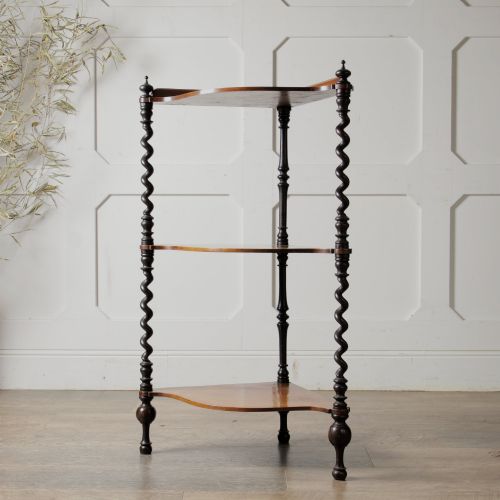
Construction techniques include fixed and adjustable wooden shelving supported by side panels, upright divisions, or wall fixings. More complex forms incorporate turned columns, barley twist supports, and carved architectural details.
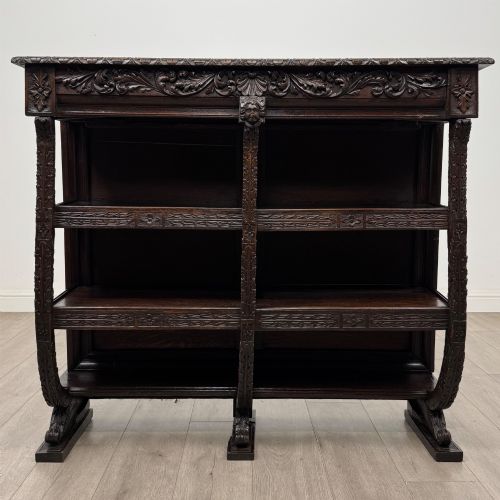
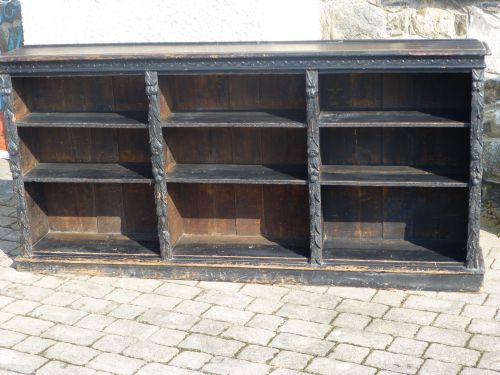
Green man carvings occasionally peer out from ebonised dwarf bookcases, watching over the library.
What separates the grades
The selection of timber grain and veneer figure dictates the visual appeal of an individual piece, with highly figured burr walnut or dense mahogany sitting above plain softwood carcasses. Careful matching of grain across breakfront sections indicates superior workshop practice.
Integration of mechanical elements, such as smoothly functioning adjustable shelf racks and tidy brass fittings, separates standard utilitarian units from finer cabinet work. The crispness of carved mouldings and the precision of inlaid details reveal the maker's hand.
Heal s·Globe Wernicke
The Three Shelf Bookcase Glossary
- Breakfront
- A cabinet or bookcase whose central section projects forward from the flanking wings. This architectural arrangement creates depth and visual interest on larger library pieces.
- Etagere
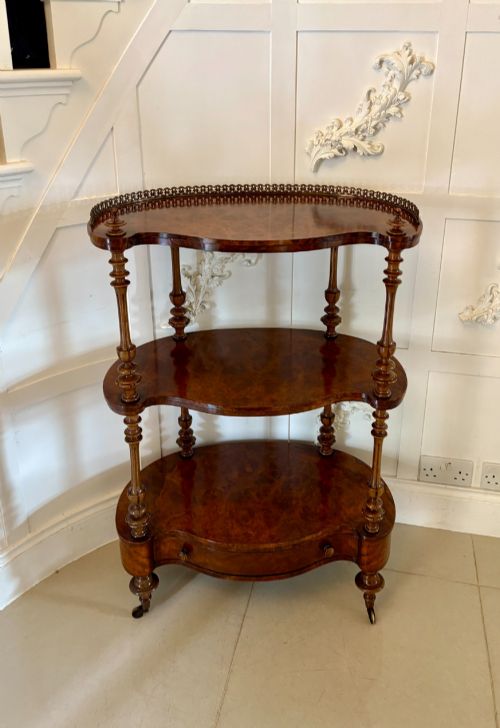
- A set of open shelves for displaying small ornaments and books, typically supported on slender columns. These pieces gained popularity during the nineteenth century.
- Whatnot
- A freestanding piece of furniture consisting of several open tiers for storing books or displaying ornaments. They often feature turned uprights and decorative carving.
- Dwarf bookcase
- A low open bookcase designed to sit beneath dado height. These units allow wall space above them to remain clear for pictures.
- Adjustable shelves
- Shelving supported on movable pegs or ratchets that allows the internal vertical spacing to be altered. This system accommodated varying book heights in domestic libraries.
Three Shelf Bookcase: Frequently Asked Questions
What is a three shelf bookcase?
A three shelf bookcase is a low or mid-height storage unit featuring three tiers for holding books, designed in various timbers such as mahogany, oak, and walnut.
These pieces function effectively in smaller rooms where full-height library shelving would overwhelm the available wall space.
How do I spot a Victorian bookcase?
Victorian examples typically display dense timbers like mahogany or walnut, often incorporating turned supports, carved architectural moulding, or brass shelf adjustment mechanisms.
Construction methods from this era rely on solid timber framing and hand-finished joints rather than modern manufactured board.
Are shelves usually adjustable?
Many period examples feature adjustable shelving supported by wooden rack strips or brass pins, allowing users to alter the internal vertical spacing.
Some simpler utilitarian or provincial pieces feature fixed shelves secured permanently into the side uprights.
Where should I place a small bookcase?
Compact bookcases suit alcoves, hallways, or beneath windows where taller furniture obstructs light or access.
Open front formats allow for easy access to frequently read volumes while displaying bookbindings as part of the room interior.