

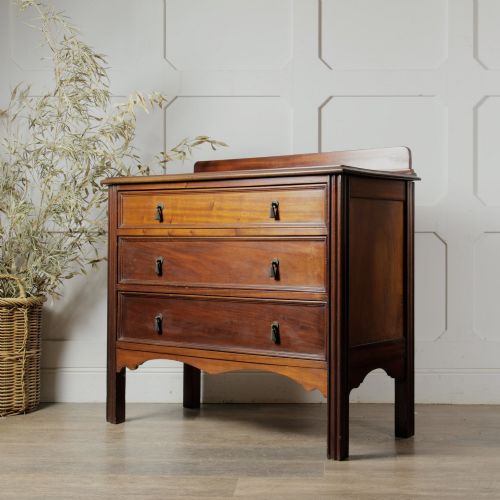
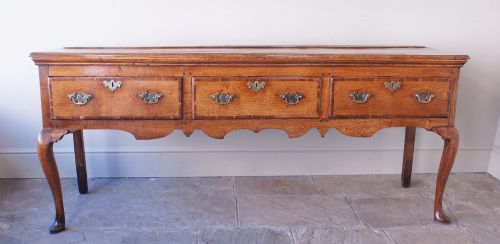
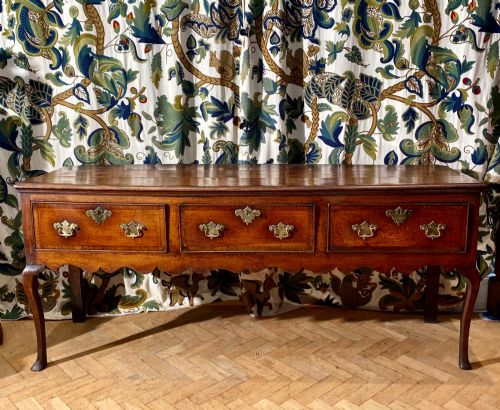
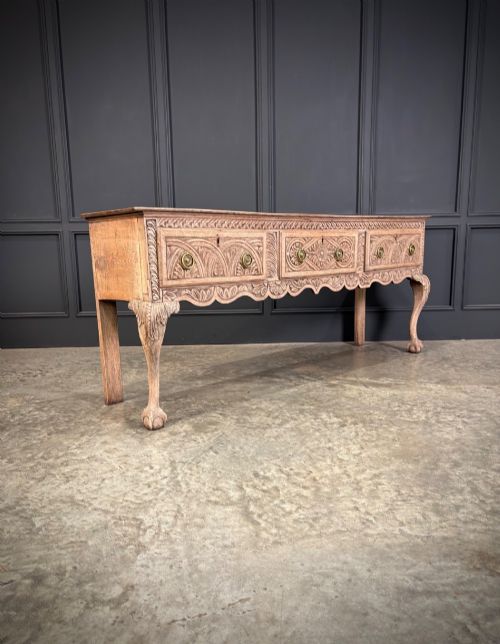
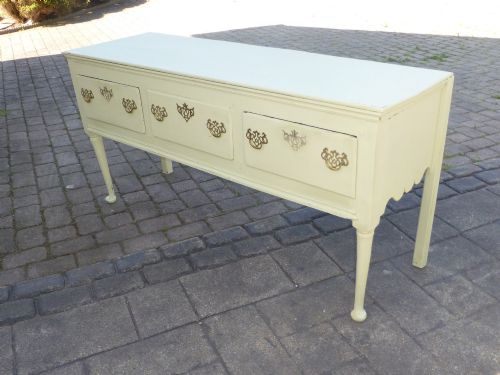
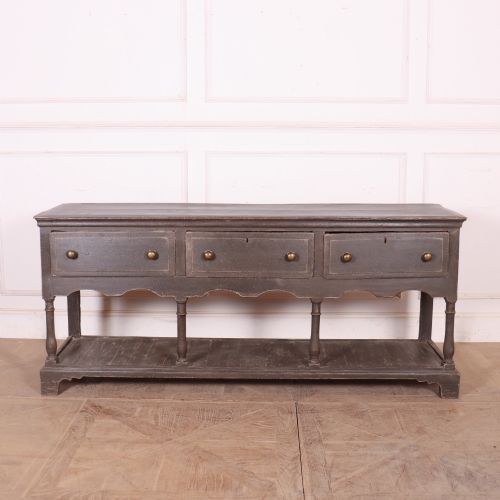


Three Drawer Low Dresser
A three drawer low dresser offers generous kitchen or dining storage with a low-slung profile that anchors a room without blocking sightlines.
Three Drawer Low Dresser
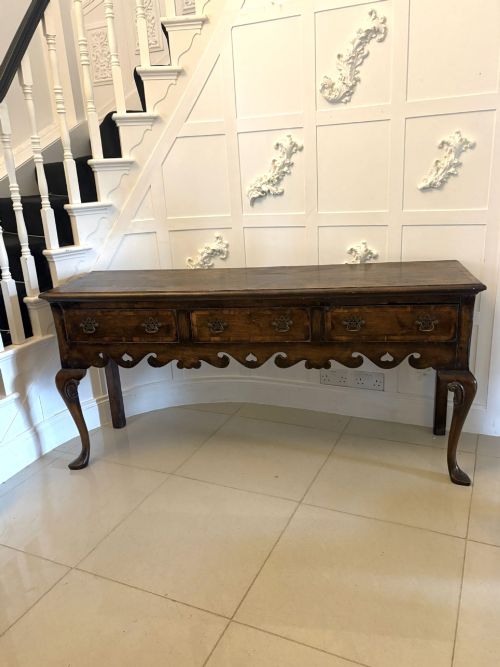
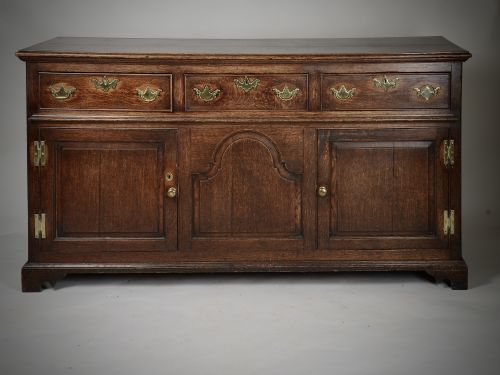
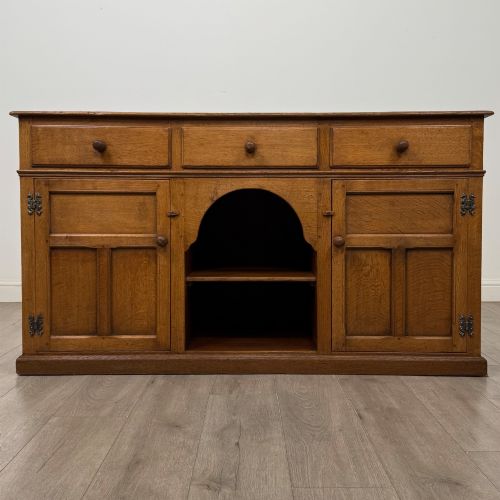
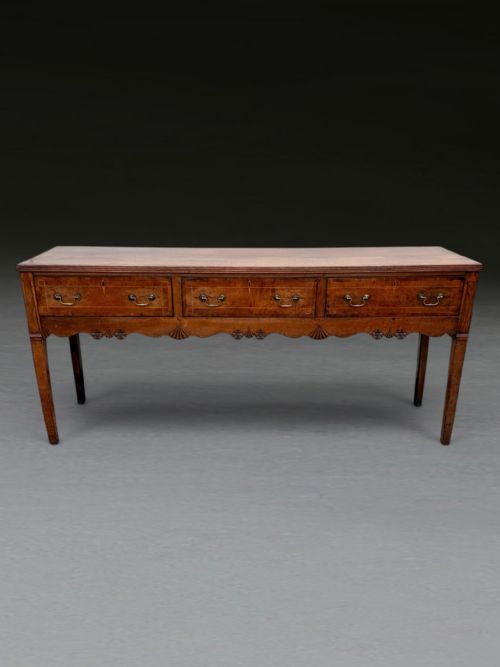
A three drawer low dresser typically stands at sideboard height, designed for serving and storage rather than displaying shelves above. The form appears across the eighteenth and nineteenth centuries, spanning Georgian, Victorian, and Edwardian periods with distinct regional interpretations.
The layout prioritises a row of three drawers above a lower potboard or open space, though related low chests and sideboards also surface. Oak and pine dominate the surviving examples, carrying the working history of English country and Georgian interiors.
What varies in quality
The grade of timber and the crispness of the hand-cut joinery dictate the distinction between everyday utility pieces and finer formal furniture. Early examples with undisturbed potboards and original brass hardware command greater appreciation among collectors.
Proportion and stance separate the best proportions, such as those with slender cabriole legs or well-balanced bracket feet, from heavier vernacular builds. Surface patination accumulated through decades of domestic use also defines the visual appeal.
Three Drawer Low Dresser Retail Price Guide 2026
Typical asking prices for three drawer low dresser among the pieces listed under this phrase on Sellingantiques today, from the lower quarter to the upper quarter. They describe what is for sale here now, not the wider market.
Listings for three drawer low dressers span from 1750 through the Georgian, Victorian, and Edwardian eras, predominantly built in oak, pine, and walnut.
WC Burt
The Three Drawer Low Dresser Glossary
- Potboard
- A lower shelf fitted beneath a dresser base, traditionally used for storing earthenware and pots. This open platform sits close to the floor on four or more legs.
- Dresser base
- The lower portion of a kitchen or dining dresser, comprising drawers and cupboards without the upper plate rack. These function independently as sideboards.
- Dovetail
- A joint formed by interlocking wedge-shaped fingers, used primarily in drawer construction. Hand-cut versions show slight irregularities that indicate age.
- Patina
- The surface sheen and colour developed by timber over years of handling, waxing, and exposure to light. This accumulated layer distinguishes old wood from recent finishes.
Three Drawer Low Dresser: Frequently Asked Questions
How do I date a three drawer low dresser?
Examine the construction methods visible inside the drawers and around the frame. Hand-cut dovetails and pegged joints generally point to eighteenth or early nineteenth century origins, whereas later Victorian pieces utilise different assembly marks.
Hardware and timber choices also provide clues. Oak and elm point heavily toward earlier vernacular periods, while walnut and pine span broader Georgian and Victorian timelines.
Where should I place a low dresser?
These pieces work effectively in dining rooms or kitchens as serving surfaces and storage units for tableware. Their reduced height also makes them suitable for hallways and living rooms where taller furniture would overwhelm the space.
Keep them away from direct heat sources and strong sunlight to protect the aged timber and wax finishes from drying out.
What is the difference between a dresser base and a sideboard?
A dresser base traditionally originates from kitchen environments where open potboards were required for heavy utilitarian items. Sideboards often evolved with more formal dining rooms, featuring enclosed cupboards and finer decorative veneers.
In practice, eighteenth and nineteenth century makers used the terms interchangeably as domestic layouts shifted over time.
How do I care for antique oak and pine?
Maintain the wood by applying a natural beeswax polish occasionally to nourish the dry grain. Avoid modern silicone sprays that can damage the historic surface sheen.
Dust regularly with a soft, dry cloth and protect the top surface from moisture rings by using coasters or mats beneath serving items.