



Three Bottle Glass Tantalus
A three bottle glass tantalus locks away spirits behind precious metal frames, offering both security and display for the after-dinner table.

Three Bottle Glass Tantalus
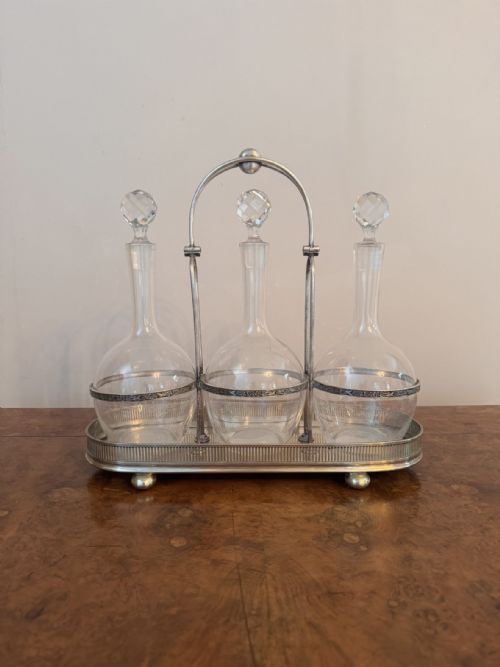
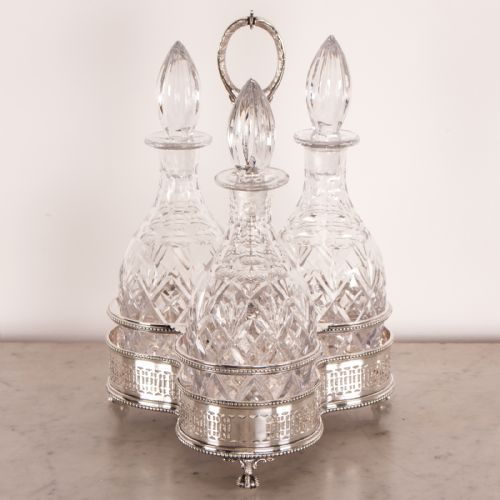
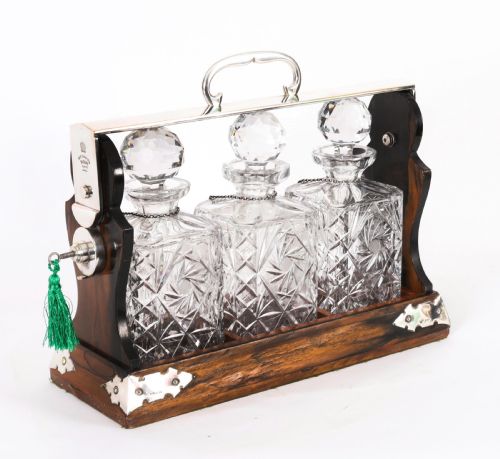
A three bottle glass tantalus holds a trio of decanters within a secure locking frame, designed to prevent unauthorized access to spirits in the Victorian and Edwardian household. These drinking cabinets appear frequently in oak, coromandel, and satinwood, often fitted with silver-plated or brass mechanisms.
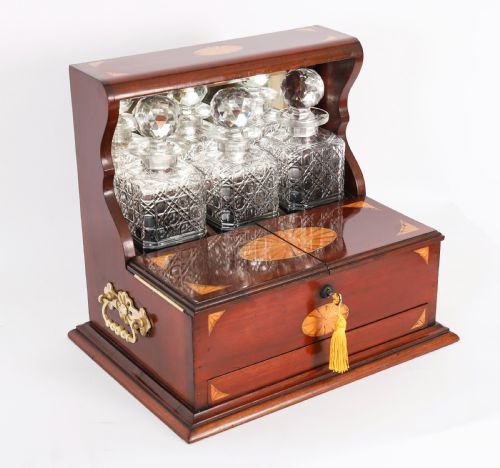
Most examples date from the late nineteenth century through to the Edwardian period, uniting barware with elaborate cabinetry. The form combines fitted wooden stands or frames with cut crystal or glass decanters, frequently accompanied by games compartments or folding trays.
Surviving pieces span Victorian, Edwardian, and later nineteenth-century manufacturing, reflecting changing social habits around after-dinner entertaining. The most common versions pair sturdy oak frames with silver-plated mounts and three matching cut glass decanters.
Materials and construction
Cabinetmakers utilised dense hardwoods such as oak, coromandel, and satinwood to construct the frames, often enhancing the surfaces with marquetry stringing, brass mounts, and mirror glass panels. The internal structure requires precise joinery to secure the locking arms that engage the stoppers of the decanters.
Metal components involve silver plate, Old Sheffield plate, and brass to form the handles, lock plates, and holding bars that restrict the decanters until the key is turned. The glass bottles themselves feature heavy cut crystal or moulded glass, shaped to fit snugly within the metal retaining framework.
Listings feature pieces from the Victorian and Edwardian eras, predominantly constructed in oak, coromandel, and silver plate.
What separates the finest examples
The refinement of the locking mechanism and the quality of the cabinetry distinguish superior pieces from standard production. Elaborate marquetry, exotic woods like coromandel, and heavy silver plating indicate higher workshop standards.
The completeness and matching nature of the three cut crystal decanters influence the integrity of the ensemble. Maker attribution, through hallmarked silver mounts or maker's marks on the hardware, elevates the standing of an individual piece.
Walker & Hall·Betjemann’s·Elkington·The Goldsmith Co.·Philip Ashberry
The Three Bottle Glass Tantalus Glossary
- Tantalus
- A locking drink cabinet holding decanters so they remain visible yet out of reach. The name derives from the mythological figure punished with eternal thirst.
- Decanter stand
- An open frame holding bottles without a locking mechanism. These pieces served the same social function on the dining table without the security feature.
- Coromandel
- A dense, heavily figured exotic timber from Asia utilised in high-end nineteenth-century cabinetmaking. Its dark brown grain with black streaks provides a striking surface.
- Old Sheffield plate
- An early form of composite metal made by fusing a thin sheet of silver to a thicker copper base before rolling. This technique predates modern electroplating.
- Marquetry stringing
- Inlaid lines of contrasting wood used to decorate the edges and panels of furniture. Artisans cut thin strips into channels in the primary wood.
Three Bottle Glass Tantalus: Frequently Asked Questions
How does the locking mechanism work?
Turning the key lowers or releases a metal bar that traps the glass stoppers within the frame.
This prevents the decanters from being lifted out until the owner unlocks the top bar.
Were these used in dining rooms?
Hosts placed these security stands on sideboards or after-dinner tables for the household spirits.
They allowed the host to control access to port, whisky, and brandy during domestic service.
How do I date a wooden frame?
Cabinet timbers, lock types, and metal plating methods indicate the period of manufacture.
Oak and brass mounts dominate the Victorian decades, while Edwardian pieces often show lighter woods.
Are the three decanters usually matching?
Original sets feature three bottles cut with identical patterns to fit the specific frame.
Replacement decanters occur frequently due to breakage over decades of domestic use.